The science fiction genre is filled with fantastical tales that often go unnoticed in a world overflowing with television shows. In fact, there are so many great sci-fi series out there that it’s likely there are a few you’ve never even heard of. So, in our streaming era where there are more programs than you could ever watch, we’ve compiled a list of some of the shows that were better than they were ever given credit for.
These underrated sci-fi shows range from stories about robots and androids to alien invasions of both the extraterrestrial and deep-sea varieties. Whether you love hard sci-fi or softer explorations into the unknown, many of these shows will likely be right up your alley. From short one-season dramas to long-form narratives, give these often overlooked sci-fi gems a chance.
10
‘Terminator: The Sarah Connor Chronicles’ (2007-2009)
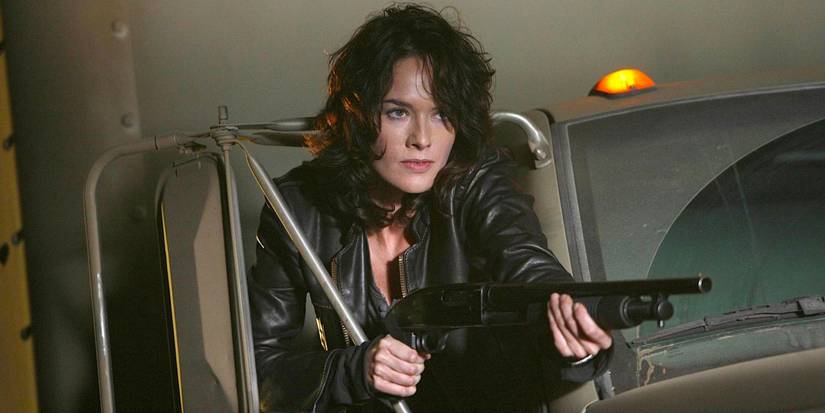
It may be daunting to jump into a franchise as convoluted and misdirected at times as Terminator, but Terminator: The Sarah Connor Chronicles is easily one of the best entries in the entire time-traveling saga. All you need to know for this one are the basic plots of The Terminator and Terminator 2: Judgment Day, and from there The Sarah Connor Chronicles takes on a whole new life of its own. Following Sarah (Lena Headey) and her teenage son John (Thomas Dekker) as they escape the clutches of Skynet, they take the fight to the A.I. in the year 2007 to stop the apocalypse from ever occurring.
With compelling takes on what it means to be a cybernetic organism and powerful examples of how time travel can actively change the future, The Sarah Connor Chronicles is effectively what everyone wanted from the franchise after T2. Ignoring all other sequels besides the two James Cameron films, it spends 31 episodes diving deeper into the psychology of the Connors and their allies than any other medium. It’s also just great television.
9
‘Almost Human’ (2013-2014)
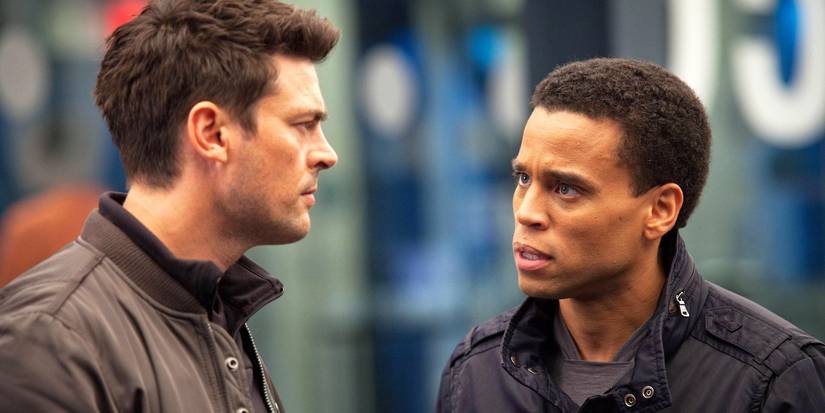
Another sci-fi series canceled by Fox too soon, Almost Human is set in the future of 2048 where crime has risen to exponential rates, leading to every human law enforcement officer being partnered with an android “synthetic” on the job. After returning to the field in the wake of a terrible accident, Detective John Kennex (Karl Urban) is paired with a unique DRN-0167 model nicknamed “Dorian” (Michael Ealy), who shows capability for near-human emotion. As the two learn to work together, they protect New Pittsburgh from new threats.
Created by J.H. Wyman, Almost Human was a compelling look into the future that, sadly, only lasted a single season of 13 episodes. Nevertheless, the performances of Urban and Ealy (who make a great “odd couple”) are dynamite and could very well have carried this futuristic procedural for years if given the chance. Although it ended prematurely, it certainly deserves to be revisited.
8
‘Continuum’ (2012-2015)

An additional time-traveling take on the genre, Continuum follows City Protective Services (CPS) agent Kiera Cameron (Rachel Nichols) as she steps back in time from 2077 to pursue a terrorist group known as Liber8 to the year 2012. Set in contemporary Vancouver, Kiera must find a way to stop Liber8 from creating a world where her son no longer exists, only to find herself torn between wanting to rewrite history for the better or save her future son. It’s certainly a mind-bending adventure that spans an impressive four seasons and 42 episodes.
Partnered with future tech mogul Alec Sadler (Erik Knudsen) who would become a corporate overlord by Kiera’s time and VPD Detective Carlos Fonnegera (Victor Webster), Kiera is one of the most complex protagonists in science fiction. A mother with a pure desire to keep her son from fading out of existence and also a cop trying to uphold the law, she finds herself trapped in a world where neither her son nor her futuristic rules exist. With plenty of flashbacks to 2077 (or are they flashforwards?) and alternate timelines to boot, this is one sci-fi series you won’t want to miss.
7
‘V’ (1983–1985)