Manifest became a streaming hit following its Netflix debut. A central mysterious plot that explores the ramifications of an otherworldly event that affects a handful of people is one of the most appealing formulas in TV. With the show having been rescued by Netflix for a final season, it’s now been two years since its finale. If you were left craving more, a 2004 USA show made the most of this same sci-fi formula. René Echevarria and Scott Peters’ The 4400 recounted the story of 4,400 people who went missing in different periods of time, then one fateful day reappeared together at Mount Rainier through a ball of light. While the show lasted only four seasons, its relevant message is worth revisiting.
The Expanding Power of ‘The 4400’ Finds a Way to Feel Personal
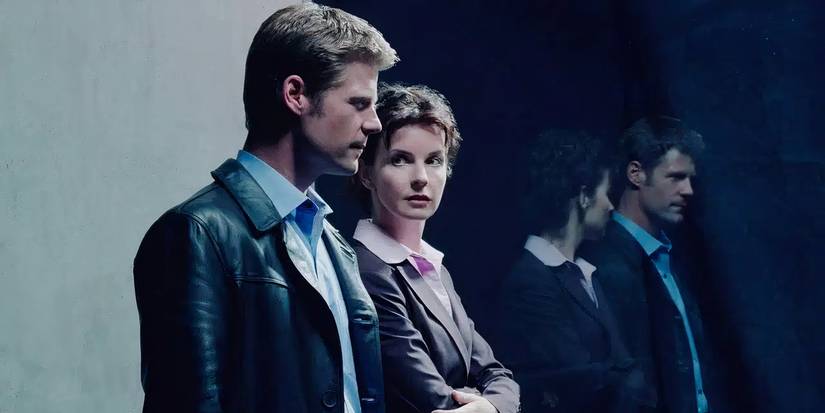
The 4400 is a story of major scope that still feels personal. Since the returned start developing superhuman abilities, the National Threat Assessment Command (NTAC) gets involved in tracking their lives post-return. Through the eyes of Agents Tom Baldwin (Joel Gretsch) and Diana Skouris (Jacqueline McKenzie), we slowly uncover the story of several of the returned. Tom’s son Kyle (Chad Faust) ended up in a coma after hanging out with his abducted nephew Shawn (Patrick Flueger), so he shows an immediate interest in taking part in the investigation of the returned. Diana is paired up with him and shows a heightened interest in the returned as people, not just as subjects of study. That’s why she takes in the youngest of the returned, Maia (Conchita Campbell), whose precognition powers have freaked out everyone around her.
By placing Tom and Diana front-and-center, The 4400 has an air of The X-Files’ Murder and Scully to it. As they get to solve their week-to-week cases regarding the returned, they start to unfold the expanding consequences that the powers of the 4400 have. First, they discover a ripple effect that takes the world in a better direction every time they make use of them. Then, by deepening their entanglement with the returned, they become the liaison between the masterminds behind their abduction and the rest of the human race. As their influence expands across the globe, the 4400 create a religion, develop a substance to give powers to Earth’s population, and get to the bottom of the mystery regarding who took them away.
‘The 4400’ Is a Story About Survival That Resonates With Our Political Climate
Almost 20 years ago, The 4400 dealt with an issue that is of the utmost relevance nowadays – the refugee crisis. After being returned, the 4400 are exposed to a world that doesn’t understand them or have a place for them anymore. The expected generational clash isn’t exclusive to those who disappeared half a century ago; it’s also present for those who were abducted three years before. That’s how fast the world keeps changing ever since the 21st century kicked in. The process of readjustment is a harsh one, at times triggering their abilities in less-than-ideal ways. But this pushes the 4400 to forge new paths where they can really fit in.
The 4400, very much like any marginalized community nowadays, face the rage of a growing conservative community against them. By reclaiming their place in the world, they become the target of people who place their fears upon them. At several points during the show, they are doxxed, they are attacked by terrorists, and they are persecuted by the government and placed into camps. If any of this sounds familiar, it’s because this is a story we’re destined to repeat if we don’t learn from past mistakes.
After Its Cancellation, The Story of ‘The 4400’ Continued in Further Media Projects

Ever since its first season, The 4400 dealt with agents from the future that tried to change the course of the world through its past. Sadly, what those agents couldn’t prevent was the show’s inevitable cancellation. Declining ratings, budget constraints, and other issues stemming from the 2007 WGA strike were reasons attributed to the show not being renewed after its fourth season. Perhaps this was for the best, as the show’s scope was widening by the minute, but its budget didn’t seem to be able to catch up with what the story demanded.
Still, The 4400 found ways to keep telling its increasingly intricate story. Two sequel books were written to cap off the original saga – Greg Cox’s Welcome to Promise City and David Mack’s Promises Broken. Both continue the story of promicin – the substance made available to develop abilities – and the transformation of Seattle into Promise City, which became the main command post for both 4400 and promicin-powered people. The consistency of keeping Tom Baldwin and Billy Campbell’s Jordan Collier as central figures makes it feel like we’re truly reading Seasons 5 and 6 of the show.
‘The 4400’ Featured a Mix of Past, Present, and Future Legendary Actors

The same way time-displaced people converged in The 4400, legendary actors from past, present, and future collided in this show as well. From E.T. The Extra-Terrestrial, actor Peter Coyote brought to life a relentless but corruptible leader in NTAC director Dennis Ryland. Known for her many contributions to sci-fi genre works and fresh off Firefly , Summer Glau joined from season two on as mind-controlling returnee Tess Doerner. Lastly, peeking into his stellar future,The 4400 showcased Mahershala Ali in one of his earliest roles. As Richard Tyler,Ali portrayed a returnee with telekinetic abilities whose moral compass ends up being his greatest power.
Just likeManifest ,the magic ofThe 4400 relies on its twists. In just four seasons,the show rebooted our world – never losing sight of its personal angle. Thus,this sci-fi tale always kept its resemblance with real life. Through its fleshed-out characters,The 4400 managed to stay relevant and relatable during its complete run, making it an essential watch (or rewatch for those who were there first time).
The first seasonofThe 4400is currently available for purchase on Prime Video in U.S.