Editor’s Note: The following contains spoilers for A Knight of the Seven Kingdoms Episode 5.
A Knight of the Seven Kingdoms has shown what a book-accurate adaptation can look like, but it cannot be exact. The series adapts the first story in George R. R. Martin‘s Tales of Dunk and Egg with only a handful of minor changes to the original version. Though it isn’t as expansive as Game of Thrones or House of the Dragon, HBO’s latest spinoff has earned a well-respected place within the franchise. Yet, as Season 1 approaches its end, the series left out one of the most significant and horrific book scenes.
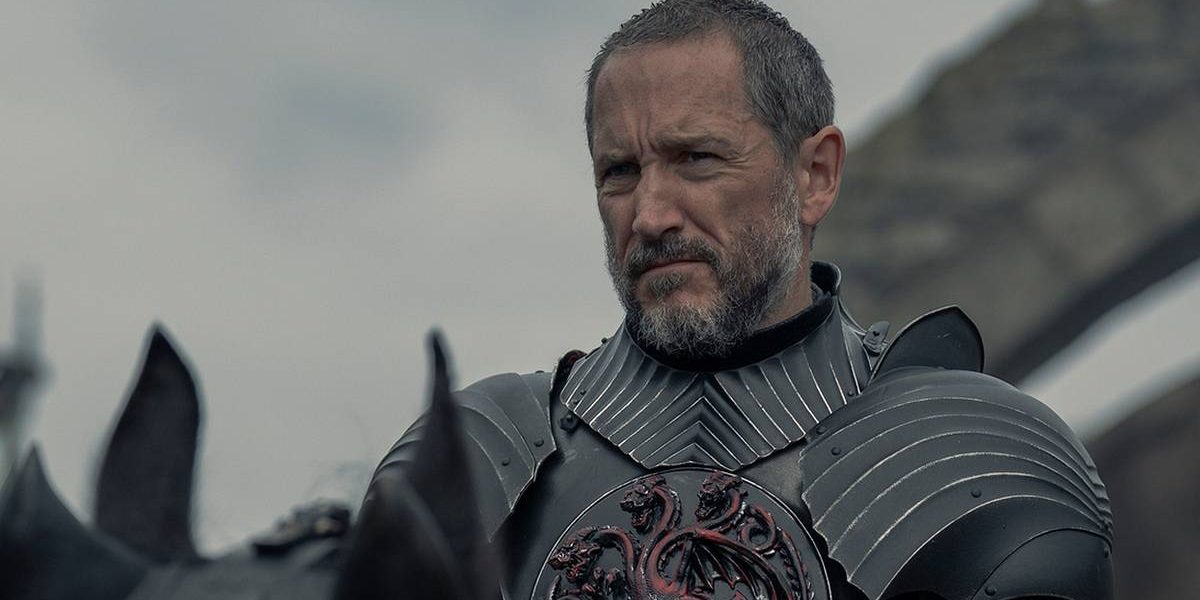
Season 1 details the events of the Ashford tourney, which goes from a seemingly routine gathering to a history-shaping event, all because of the unlikely hero, Ser Duncan the Tall (Peter Claffey). However, a large part of that is due to Baelor Targaryen’s (Bertie Carvel) death, and A Knight of the Seven Kingdoms didn’t let the audience see that fight. Episode 5, “In the Name of the Mother,” reaches the Trial of Seven, picking up just after Baelor volunteers as a champion, yet the battle is laser-focused on Dunk, depriving the audience of a gory and emotional confrontation as one brother attacks the other.
‘A Knight of the Seven Kingdoms’ Only Shows Dunk in the Trial
The Trial of Seven is what A Knight of the Seven Kingdoms has been building to, as Dunk proves his innocence, and that is what Episode 5 centers on, yet as the 14 combatants fight, only two get any significant screen time: Dunk and Aerion (Finn Bennett). These two have a bloody fight that leads to Dunk’s victory, and it makes sense that they are the focus, as the drama has been between them. This continues a trend that Dunk has always been the show’s undeniable focus. The franchise rarely has a distinct lead, but A Knight of the Seven Kingdomss does and, as Carvel explains, “we very much stay with Dunk, and so I guess you see that sequence through Dunk’s eyes.” Yet, Episode 4 was all about how Dunk needed champions, so it’s an odd choice that they don’t really factor into the fight, especially given what happens to Baelor.
Baelor’s death comes as a surprise in the final moments of Episode 5 as he goes from seemingly fine to collapsing in Dunk’s arms after he removes his helmet to reveal a lethal wound to his head. This tragedy is a central part of the series, but the audience doesn’t get to see Baelor and Maekar’s (Sam Spruell) fight at all. In fact, the episode has to explain that the damage to his helmet came from Maekar’s mace because otherwise viewers wouldn’t have known. Yet, this plays out somewhat differently in Martin’s novella. While it is still from Dunk’s perspective, the novella includes descriptions of him looking around and seeing the other skirmishes on the field, including one where Maekar fights Baelor and Lyonel (Daniel Ings), which specifically mentions their weapons “ringing against helm and shield” in the moments between Aerion yielding and the trial’s official end. Though subtle, this gives a glimpse of what Maekar and Baelor’s fight looks like and establishes when the hit must have occurred. Meanwhile, in a blink-and-you’ll-miss-it moment, A Knight of the Seven Kingdoms shows what might be this fight, but it’s hard to tell in the fog.
This ‘Knight of the Seven Kingdoms’ Standout Gives an Unforgettable Performance in Netflix’s 6-Part Drama
Clearly, this actor has the ability to embody authority without menace.
Baelor and Maekar’s Fight Deserved to Be in ‘A Knight of the Seven Kingdoms’
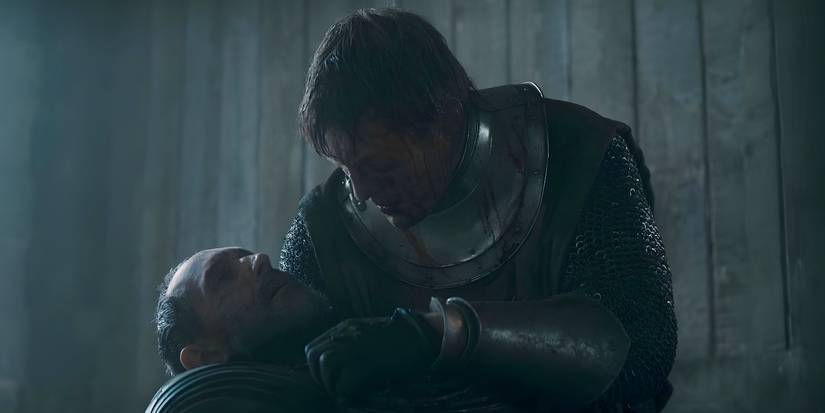
HBO’s choice to cut their battle may have preserved the emphasis on Dunk, but it deprives the audience of an epic fight between two experienced warriors. Baelor and Maekar are not just brothers but heroes of the Blackfyre Rebellion, praised for their military accomplishments. Therefore, their fight could have included both skill and emotion if only fans had actually gotten to see it. Perhaps A Knight of the Seven Kingdoms left this confrontation out to emphasize the shock when Baelor falls, but his death would still be tragic if it were less sudden, especially as it has lasting ramifications on the realm.
A Knight of the Seven Kingdoms largely feels separate from the grander series where the fate of Westeros hangs in balance, but the moment when Baelor receives a lethal wound changes the course of the Seven Kingdom’s history. Many Targaryens are not fit for the throne, but Baelor was, and because he died fighting for Dunk, he never had the chance to rule. If Baelor did rule, it’s hard to say how Westeros’ history would change exactly, but considering Aerys, the Mad King isn’t from Baelor’s line, events in Game of Thrones may never have taken place. Ultimately, Baelor’s death is one of the most significant moments in A Knight of the Seven Kingdoms, and it deserves much more focus than it receives.
A Knight of the Seven Kingdoms is streaming on HBO Max with new episodes on Sundays.
- Release Date
-
January 18, 2026
- Network
-
HBO
- Showrunner
-
Ira Parker
- Directors
-
Owen Harris
- Writers
-
George R. R. Martin, Ira Parker
-
“
“Peter Claffey”
“”
““Ser Duncan ‘Dunk’ The Tall”
“”
“”
“ -
“
“

”
“
”
“
”
“
”
“
”
“
”
”
“
”
“
”
“