One might not expect to find humor in the premise of Bad Apples: a middle school teacher accidentally kidnaps one of her ten-year-old troublemakers and locks him in her basement after a particularly challenging week. You may think I am misinterpreting the film, but despite its grim concept, Jonatan Etzler’s debut feature is irresistibly funny. With Saoirse Ronan starring as Maria Spencer, a teacher grappling with a bad breakup and an unruly student, Bad Apples depicts a series of unfortunate events that escalate chaotically. Etzler skillfully balances dark themes with humor, intertwining tension and comedy for an entertaining and unpredictable debut.
‘Bad Apples’ Delivers Twist After Twist in a Black Comedy Setting

While watching Bad Apples, I often thought, “This is the worst thing you could possibly do, don’t do that,” yet Maria chooses to do just that. Although the premise seems absurd, the characters’ gradual unraveling throughout the concise 96-minute film feels surprisingly relatable. Ronan’s Maria is passionate and dedicated, striving to teach her students beyond the curriculum. The issue arises with class troublemaker Danny (Eddie Waller), who is determined to create chaos, leading to bullying and interruptions.
On paper, Maria appears to be the ideal teacher. She recognizes her students’ talents, nurtures their curiosity, and disciplines Danny without extreme measures. However, she becomes good-intentioned until pushed to her limits. With an inspection looming, events spiral out of control when she confronts Danny’s detached father, Josh (Robert Emms). One poor decision leads to another, resulting in Danny being trapped in Maria’s basement, while the town begins searching for him once he is reported missing. If it seems like I’m spoiling the film — trust me, I’m not. This decision triggers a chain reaction that reveals both the best and worst of all characters in this small town.
Saoirse Ronan Shines Across From Newcomer Eddie Waller
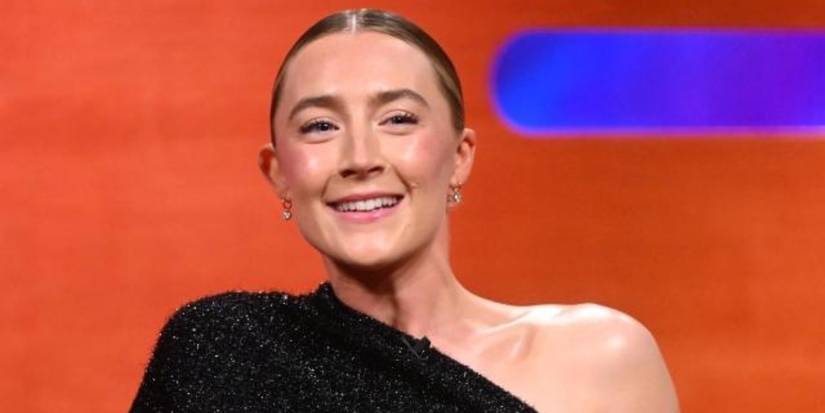
The central relationship in Bad Apples is between Saoirse Ronan’s Maria and Eddie Waller’s Danny. Initially, Danny appears as the nightmare student. While Maria’s actions are questionable, Danny is a troubled child whose behavior stems from deeper issues. As Maria and Danny adjust to their bizarre new reality, she begins to understand what motivates him, allowing the audience insight as well. Ronan and Waller shine whenever they share the screen. Whether it’s a scene of Danny yelling from the basement while Maria worries about her next steps or when they reach a moment of understanding that reveals their best selves, these interactions highlight the film’s strength.
Ronan’s talent has been consistently demonstrated, so it’s no surprise that she excels as the gentle and reserved Maria Spencer. However, Waller’s debut performance in Bad Apples marks him as a rising star. He captures both Danny’s harshness and his underlying fragility and insecurity so well that audiences shift from exhaustion to empathy for this boy dealt a tough hand in life. His captivity reveals troubling aspects of his character and fosters an unlikely bond with Maria due to his isolation. Waller’s standout performance ultimately makes Bad Apples compelling.
It’s Impossible Not to Laugh at ‘Bad Apples,’ Even With Its Dark Subject Matter
Adapted from Rasmus Andersson’s Swedish novel De oönskade, Jess O’Kane’s script infuses dark humor into the story while maintaining its emotional stakes. With Danny missing, both the school and Maria’s class thrive. Students excel academically, and test scores rise. The implication is clear: without Danny around, life improves for everyone. Yet a teacher’s effectiveness hinges on their most challenging student, and it becomes evident that Danny has slipped through the cracks as Maria realizes how entangled his situation truly is.
Moreover, Danny isn’t the only problematic student in her class. A teacher’s pet named Pauline (Nia Brown) takes her admiration for Maria to an extreme level as she becomes obsessed with her. Pauline serves as a foil to Danny. While he struggles with schoolwork and shows disinterest, Pauline derives her self-worth from seeking approval from her teacher. Jealousy arises when other students receive praise from Maria, highlighting that both children require some control over their unstable lives. Although responsibility lies with parents rather than teachers, the film subtly critiques parents who mirror their children’s selfishness.
‘Bad Apples’ Spirals Out of Control at the End but Doesn’t Completely Lose Its Focus
Image Via TIFF
The film hurtles toward its conclusion as Etzler’s story spirals into absurdity. While this shift may seem unreasonable given earlier developments, it pushes the film into a fantasy realm that lacks cohesion compared to its earlier segments. The final act reinforces themes introduced earlier but opts for an abruptly open-ended conclusion rather than a somber resolution.
This aspect highlights some weaknesses within Bad Apples. Maria’s boss Sylvia (Rakie Ayola) fades from prominence after being confrontational early on. Similarly, Maria’s co-worker and ex-boyfriend Sam (Jacob Anderson) lacks depth despite their complicated relationship. Although Bad Apples is clever and humorous like Maria’s classroom dynamics, its quality ultimately depends on its weakest elements which hinder it from being an unequivocal success. Nevertheless, there remains much to appreciate about Etzler’s darkly comedic debut and promising talent both in front of and behind the camera.
Bad Apples had its world premiere at the 2025 Toronto Film Festival.

</sub-title>
</sub-title>
</sub-title>
</sub-title>
</sub-title>
</sub-title>
</sub-title>
</sub-title>
</sub-title>
</sub-title>
</sub-title>