Key Takeaways
- Definition: A supergroup is formed by musicians from successful bands who collaborate to create music that exceeds their individual contributions.
- Criteria: Successful supergroups typically have members with significant past achievements and a history of producing enduring music.
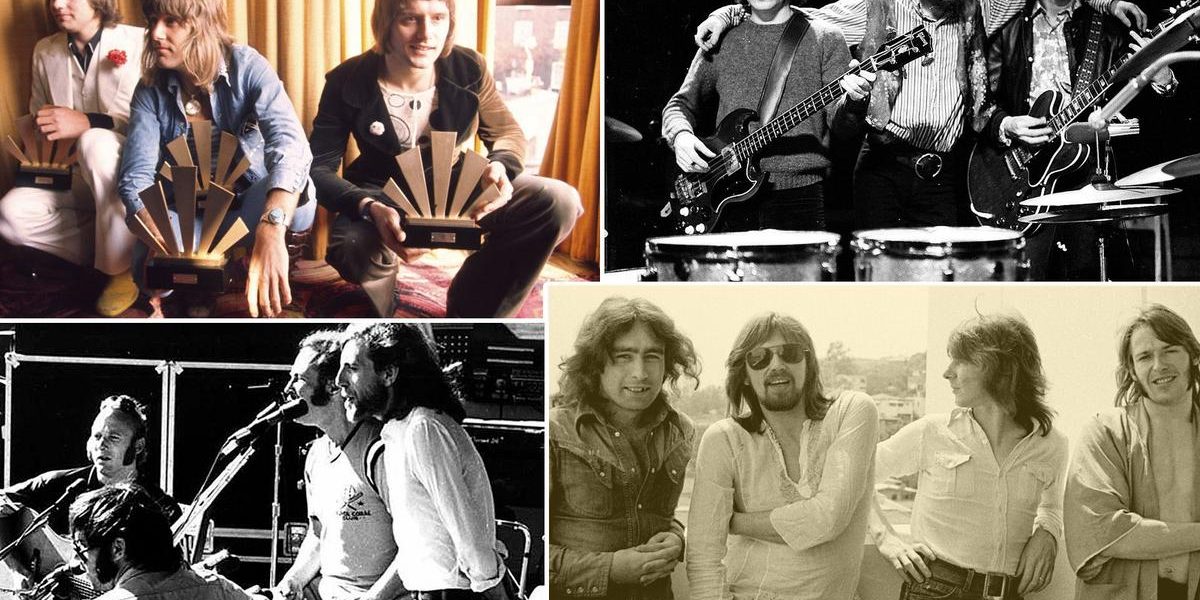
- Examples: Notable supergroups include Cream, Crosby, Stills & Nash, Emerson, Lake & Palmer, and Bad Company.
- Impact: These groups have left a lasting legacy in various music genres, including rock, country, and jazz.
Supergroup may seem like a nebulous term, but it is, in actuality, a Thing that has given us some of the greatest rock bands of all time — and more than a few duds as well.
At its most basic meaning it’s a combination of musicians who came from other bands and joined together for something that, when it truly works, creates music that’s greater than the sum of its parts.
Sometimes that genuinely happens, other times not so much. But in the 60 years since Cream was cited as the first supergroup, some rules have been established…
* The band members come not only from other groups but from acts that had genuine accomplishment, either commercially or critically.
* That it had some success, again commercially or critically, on its own.
* And that, in the best cases, the group had some semblance of longevity — not a one-and-done proposition but as a functioning act that generated a story of its own and a body of work that outlived its history, long or short.
When you apply those, it truncates the list considerably and pushes the intriguing but ultimately unsuccessful likes of, say, Detective and Rough Diamonds to the side.
But there’s still a formidable list of supergroups — not only in rock but also country, jazz, rap and opera, and at some point K-pop — that did produce at a level worth of its collective pedigree.
So it wasn’t easy narrowing it down to a Big 4, but with apologies to worthy candidates such as Blind Faith, Asia, the Traveling Wilburys and Chickenfoot, we’re confident that this quartet provides the prototype and the high bar for what truly makes a supergroup, well, super…
Susie MacDonald, Getty Images
Cream
Not-so-arguably the first of its breed, there was genuine star power when Eric Clapton, credentialed from the Yardbirds and John Mayall’s Bluesbreakers, joined forces as Cream in 1966 with Jack Bruce and Ginger Baker, fresh out of the Graham Bond Organisation.
They also had stellar help in the studio from Robert Stigwood and Mountain’s Felix Pappalardi, while 1969’s “Badge” was co-written by Clapton and the Beatles’ George Harrison, under the nom de guest L’Angelo Misterioso.
Virtuosic and volatile — especially Bruce and Baker — Cream had a lot going for it and a temperament that was challenging. “We had a lot of ambition and attitude and didn’t know how to rein it in,” Bruce, who passed away in 2015, told UCR some years ago.
“Ginger and I could be at each other’s throats a lot, and I think that frightened Eric. He had enormous talent but not a lot of confidence and didn’t know how to handle the conflict. It was frustrating for all of us.”
Cream nevertheless spent a heady three or so years together, releasing four albums, including the partly live Wheels of Fire, and delivering enduring favorites such as “White Room,” “Sunshine of Your Love,” “Strange Brew,” “Tales of Brave Ulysses” and more, and definitive electrified renditions of Robert Johnson’s “Crossroads” and Willie Dixon’s “Spoonful.”
The inner conflicts curdled Cream by 1968, with a pair of farewell concerts at London’s Royal Albert Hall. Clapton and Baker went on to form Blind Faith, and Cream would not reunite until its 1993 Rock and Roll Hall of Fame induction, and during 2005 for concerts in London and New York; the former featured on a live album and home video later that year.
Cream also received a Grammy Lifetime Achievement Award in 2006. Baker passed away in 2019, and Clapton still plays “White Room,” “Sunshine of Your Love” and “Crossroads” in concert.
Read More: Rock's Most Unexpected Supergroups
Gijsbert Hanekroot, Getty Images
Crosby, Stills & Nash (& Young)
Who wouldn’t have wanted to be a fly on the wall that night in July of 1968 when David Crosby, Stephen Stills and Graham Nash first sang together at Mama Cass Elliot’s house in Laurel Canyon?
All three had had hits with their respective bands — the Byrds (Crosby), Buffalo Springfield (Stills) and the Hollies (Nash) — but all three were currently on their own for a variety of creative reasons. “
It was instantaneous,” Nash recalled a few decades later. “The harmonies were completely natural. Thirty seconds in we had the sound, and we knew we had to do something together.” The harmony-laden self-titled Crosby, Stills and Nash debut album in 1969 was a bona fide Event; it reached Top 10 on the Billboard 200 chart and ultimately sold four-times platinum.
And things got even bigger when Atlantic Records chief Ahmet Ertegun suggested adding Stills’ Springfield mate Neil Young to the mix — a move Nash opposed until he met with Young to hash things out.
The quartet’s second concert together was at the first Woodstock festival; its Deja Vu album went No. 1 in 1970. Between the two albums they racked up rock-and-folk-combining favorites such as “Suite: Judy Blue Eyes,” “Marakesh Express,” “Our House,” “Teach Your Children” and “Carry On.”
But the group became a soap opera of egos, sensibilities, substance abuses and temperaments — “We’re brothers; brothers sometimes fight hard,” Stills explained — but they managed to produce five CSN studio albums and three as CSNY as well as the legendary live album 4 Way Street.
They also worked in duo configurations and even as a short-lived Crosby, Nash & Young. Keeping track requires a spreadsheet; however Crosby — who did jail time for drug and weapons convictions during the mid-80s — alienated himself from the others. In 2016 Nash said he would never sing with Crosby again.
They were in the process of reconciling when Crosby passed away in 2023; this scotched any reunion possibilities. Nash and Young remain busy with their respective solo careers while Stills has been largely scarce since touring to promote Everybody Knows, his 2017 album with Judy Collins.
CSN was inducted into the Rock and Roll Hall of Fame in 1997; all three were inducted with their previous groups as well. Young is also inducted with Buffalo Springfield as well as being recognized as a solo artist.
Chris Walter, Getty Images
Emerson, Lake & Palmer
The members of the prog-rock powerhouse Emerson, Lake & Palmer were well aware of each other by the time they joined forces during 1970 in London.
Greg Lake was the voice and bass of King Crimson’s landmark debut In the Court of the Crimson King, while Keith Emerson had attracted attention playing keyboards for The Nice.
They broached the idea of working together in New York towards the end of 1969; solidifying things once they were back across the pond almost hooked up with Jimi Hendrix and drummer Mitch Mitchell after The Experience imploded.
This never transpired; Carl Palmer was suggested by Emerson’s (and Genesis’) manager Tony Stratton Smith after his time with Atomic Rooster and The Crazy World of Arthur Brown.
The trio’s initial concerts — including one before 600,000 at the Isle of Wight Festival just three months before their first album release — let the world know what it was in for; their set mixed melodic originals (“Take a Pebble,” “The Sage”) with Modest Mussorgsky’s epic Pictures at an Exhibition, Tchaikovsky’s Nutcracker twist as “Nutrocker,” along with Dave Brubeck Quartet’s “Blue Rondo à la Turk.”
ELP would follow that muso blend throughout its first phase (1970-79), finding itself in Top 10 U.K. charts while scoring gold albums there as well as in U.S., occasionally achieving radio hits such as “Lucky Man,” “From The Beginning,” along with “Karn Evil 9: First Impression Part 2” (aka “Welcome back my friends to the show that never ends…”).
This was prog with capital P — to some punks especially pretentious with same designation. Attempting to tour with symphony orchestra during punk era certainly didn’t help that perception.
Emerson’s response: “When people choose to criticize a band as being pompous I view that as they can’t achieve what we were doing. It’s like ‘We can’t get that far so…they’re crap anyway,’ which is really sad.”
The band split up in 1979; during ’80s Emerson & Lake worked with another P (Cozy Powell), while Emerson & Palmer formed short-lived band called 3 with Robert Berry.
The group regrouped between ’90-99 recording two albums along with touring; they played final performance at Britain’s High Voltage Festival in 2019.
Both Emerson & Lake passed away during March of 2016–March 11 & Dec. 7 respectively. Palmer continues playing ELP’s music alongside video images featuring his late bandmates.
Bad Company
Bad Company was a case of four malcontents finding just right situation to make great music. Frontman Paul Rodgers along with drummer Simon Kirke came from Free’s ravages while guitarist Mick Ralphs fled Mott The Hoople; bassist Boz Burrell purged himself from fourth lineup King Crimson.
“We’d sort of been released from our three separate hellholes,” Kirke recalls. “We had this newfound life—this new freedom. We were all seasoned like kids in candy store.” Rodgers adds: “It felt right—there was natural flow between us.”
The band signed to Led Zeppelin’s Swan Song Records managed by Peter Grant came out strong with multi-platinum debut album released in ’74 yielding hits like “Can’t Get Enough” along with “Bad Company.”
Their first five albums reached Top Twenty mostly Top Ten making Bad Company one most popular rock acts during ‘70s early ‘80s. “(The success) didn’t take us completely by surprise,” Kirke said. “That first album was loaded with slam dunkers…We still had pay dues tour open up for other bands do little van thing around America.”
The storm petered out by ’82 however Kirke along Ralphs formed another somewhat successful version between ’86-’98 featuring late Brian Howe Robert Hart frontmen.
The original Bad Company lineup reformed ’98 though Burrell left following year (he passed away ’06) Rodgers Ralphs Kirke kept things going off-on afterwards.
Kirk attended played ceremony while Rodgers battling health issues sent video message both played last year’s Can’t Get Enough: A Tribute To Bad Company, contributing tracks Halestorm Blackberry Smoke Def Leppard’s Joe Elliott Phil Collen.
Rock’s Forgotten Supergroups
Here’s rundown would-be supergroups world at large forgotten over years.
Gallery Credit: Nick DeRiso

Here you can find original article; photos images used our article also come from this source. We are not authors; they have been used solely informational purposes proper attribution original source.