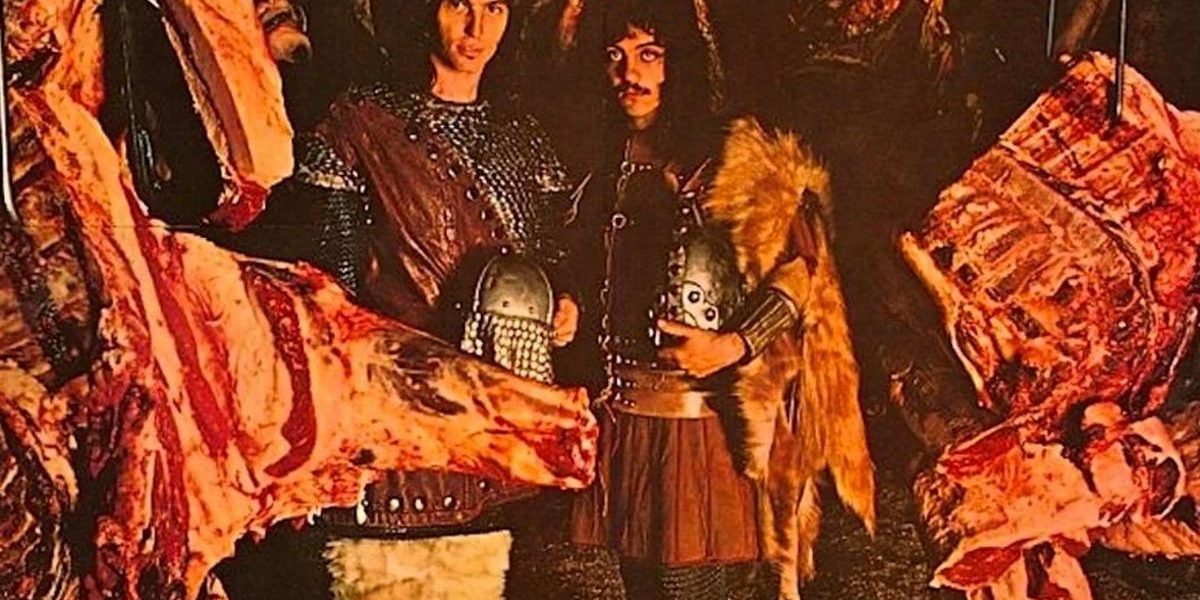

Imagine a scenario where Billy Joel had chosen to join the iconic band Deep Purple instead of crafting his timeless classic “Piano Man.” In a way, this alternate reality was realized when he co-founded his ill-fated heavy metal project, Attila, back in 1969. This endeavor marked a significant departure from his usual musical style and opened a chapter full of ambition and challenges.
Previously, Joel and his collaborator Jon Small had been part of the band The Hassles. Although the Long Island group secured a recording contract with United Artists Records, the duo faced disappointment after releasing two albums in 1967 and 1969 that failed to resonate with audiences. Feeling their passion for music was not matched by their bandmates, Joel and Small made the bold decision to leave and pursue a new musical direction that they believed was more aligned with their vision.
What Inspired the Formation of Attila?
The release of Led Zeppelin‘s groundbreaking 1969 debut album served as a pivotal influence for Joel and Small. “It just pulverized me when I heard it,” Joel recalls in the new HBO Original documentary Billy Joel: And So it Goes, released on July 18. He likened the experience to the awe of hearing Beethoven’s Ninth Symphony for the very first time. Small adds, “We liked Led Zeppelin and all the heavy metal bands.” Their shared admiration for this genre inspired them to create music that mirrored the heavy sounds they loved, even if they initially lacked the necessary skills.
Now living together, they ambitiously sought to pen songs that echoed the heavy metal vibe. “I wanted to be a heavy metal band, but I’m not a guitar player,” Joel confesses in the documentary. “I’m a keyboard player. So I had to try to figure out how to wire an organ through amplifiers.” Their attempts were ambitious, yet they faced the challenge of adapting their talents to fit the heavy metal mold.
READ MORE: Billy Joel: ‘And So it Goes’ Movie Review
Listen to Attila’s ‘Wonder Woman’
The Origins and Impact of Attila’s Name
You guessed correctly; the band’s name draws on ancient history, inspired by the infamous Attila the Hun. “We’re gonna destroy the world with amplification,” Joel reminisces. “We just want to make as much noise as possible.” However, the results were not as they envisioned. “It’s probably one of the worst bands of all time,” Small reflects today. “I didn’t know one person who liked what we were doing,” Joel adds, echoing that sentiment.
Despite their enthusiasm, they secured a record deal with Epic Records for an album, yet the group’s lifespan was short-lived following the release of Attila in 1970. Their music was met with rejection from both fans and critics alike, compounded by personal tensions between Joel and Small due to Joel’s affair with Small’s wife, Elizabeth Weber. These struggles ultimately led to the disbandment of Attila.
Assessing the Quality of Attila’s Music
This writer can already sense the skepticism from colleagues as he prepares to comment positively about Attila’s music. In the years following its release, numerous critiques have labeled the Attila album as one of the worst in rock history. Critic Stephen Thomas Erlewine noted in his AllMusic review, “Attila is undoubtedly the worst album released in the history of rock & roll — heck, in the entire history of recorded music.” Yet, when one contextualizes the album within the landscape of other contemporary bands, Attila’s sound doesn’t seem so outlandish. The organ-driven music bears resemblance to the stylings of Deep Purple’s Jon Lord and carries a psychedelic essence, suggesting that Attila could have easily shared the stage with bands like Blue Cheer and Iron Butterfly.
Billy Joel’s Journey After Attila’s Disappointment
Following the collapse of Attila, the future Piano Man chose to forge his own path and released his debut solo album, Cold Spring Harbor, in 1971. This album featured future fan favorites like “She’s Got a Way” and “Everybody Loves You Now,” but was unfortunately marred by a significant mastering error. The album was released with all tracks playing at a faster speed than intended, impacting its reception.
This unfortunate blunder cast a shadow over Joel’s debut project, something that Steve Cohen, an executive producer for Billy Joel: And So it Goes, believes is addressed more positively in the documentary. “I think that Cold Spring Harbor gets a much better light in this film,” Cohen shares with the UCR Podcast. “If there is anything I would want Billy to go in and re-record, it would be some of those songs [from the album] with his voice today. [It would be interesting to hear] The way he would express those lyrics today, reflecting on his evolution from a 20-year-old to now a 76-year-old.”
Listen to Billy Joel’s ‘She’s Got a Way’
READ MORE: Top 20 Billy Joel Songs
“I think we’d get some really amazing interpretations of ‘Tomorrow Is Today’ and ‘You Can Make Me Free’ and a couple of those [other] songs that I think I never appreciated as much because the Cold Spring Harbor album was so mishandled,” Cohen continues. “It never really was able to gain momentum after that. [Billy Joel: And So it Goes] provides insight into his very first singer-songwriter album, a significant precursor [to his subsequent success.]
How Billy Joel Eventually Achieved Stardom
Following some initial chart successes with hits like “Piano Man” and “The Entertainer,” Joel faced a challenging road leading up to the release of his 1977 album, The Stranger. Even this iconic album, which would eventually define his career, faced skepticism. “When The Stranger was played for the record company, they didn’t hear a single,” Cohen explains. “Elizabeth, his first wife and manager, had to fight for every penny of tour support [and assistance from] independent promotions [people] and radio play. The journey was not easy. Additionally, the film reveals that Elizabeth stepped in [and] to advocate for them, urging the executives to get behind the project. They had to comply, but it was clear they were not thrilled about it.”
Listen to Steve Cohen Discuss His Career Working With Billy Joel
“It was never easy. The critics often criticized every product he released. Unlike Bruce Springsteen, who received rave reviews for everything he did, Billy faced constant scrutiny,” Cohen adds. “There were always detractors. We were in a constant battle [the criticism]. It never really stopped.”
Thanks to Billy Joel: And So it Goes, viewers can witness how the songwriter ultimately triumphed, continuing to resonate with audiences throughout his lengthy career. Performance montages showcase the evolution of songs like “Piano Man” and “Scenes From an Italian Restaurant” as they transitioned from intimate venues to the grand stadiums where audiences today sing along passionately.
Cohen has been a part of nearly every chapter of this journey, having joined Joel as his lighting director back in 1974. “It was pretty tenuous. There were no hit records at first. But we played theaters, field houses, and began to cultivate a dedicated fan base. Each time we returned to a college in New Paltz, attendance grew by 500 more people. We worked incredibly hard during those early years, spending eight months on the road each year. We essentially became a traveling army, never looking back. We just kept showing up and performing. After finishing a tour, Billy would go back to write a new record, and the cycle would begin anew.”
Watch the Trailer for ‘Billy Joel: And So it Goes’
Ranking Billy Joel’s Albums
From Cold Spring Harbor to River of Dreams, we explore the evolution of the Piano Man’s LPs from worst to best.
Gallery Credit: Matt Springer