
Key Insights
- PLOT: Bruce Springsteen’s journey in creating the album Nebraska is a significant part of his artistic evolution.
- REVIEW: The biopic Springsteen: Deliver Me From Nowhere explores the emotional challenges faced by Springsteen as he navigates fame.
- AUTHENTICITY: Jeremy Allen White captures Springsteen’s essence, highlighting the artist’s genuine connection with his audience.
- CREATIVE PROCESS: The film delves into Springsteen’s creative journey, focusing on the making of Nebraska, rather than his rise to fame.
PLOT: After a whirlwind tour for his album The River, Bruce Springsteen returns to New Jersey and starts composing what will eventually become 1982’s seminal Nebraska, which was recorded in a bedroom on a 4-track recorder and has been widely hailed as one of The Boss’s defining works.
REVIEW: It’s taken a long time for us to get a Bruce Springsteen biopic, finally, but I daresay it was worth the wait. Scott Cooper’s Springsteen: Deliver Me From Nowhere is a deeply felt observation of Springsteen as a young artist, having already broken into the mainstream but not yet achieved global superstardom. This tackles the mental toll such a thing could take on someone like Springsteen, with the movie centering around his attempts to reconcile his past — where he grew up with a complicated, sometimes abusive father — and his present, where he seems bound for the greatness he’s not sure he really deserves or can handle.
While no one would say Jeremy Allen White of The Bear is a dead ringer for Springsteen, as a fan of The Boss going back to my childhood, I can say that he captures the essence of the man. Why has Springsteen resonated so much over the years? To me, the answer has always been his authenticity — and both Deliver Me From Nowhere and White’s performance have that quality.
This isn’t your traditional biopic charting the rise to fame. There are no scenes where Bruce is putting together the E Street Band or meeting Steven Van Zandt (they are only briefly featured in the movie). Rather, it chronicles a darker chapter in his life as he works on a very specific project. While not his most famous or successful album by a long shot, Nebraska is still perhaps his defining work, and the movie shows how it helped pave the way — mentally — for Springsteen to handle the next phase of his career. Indeed, his next album would catapult him into superstardom.
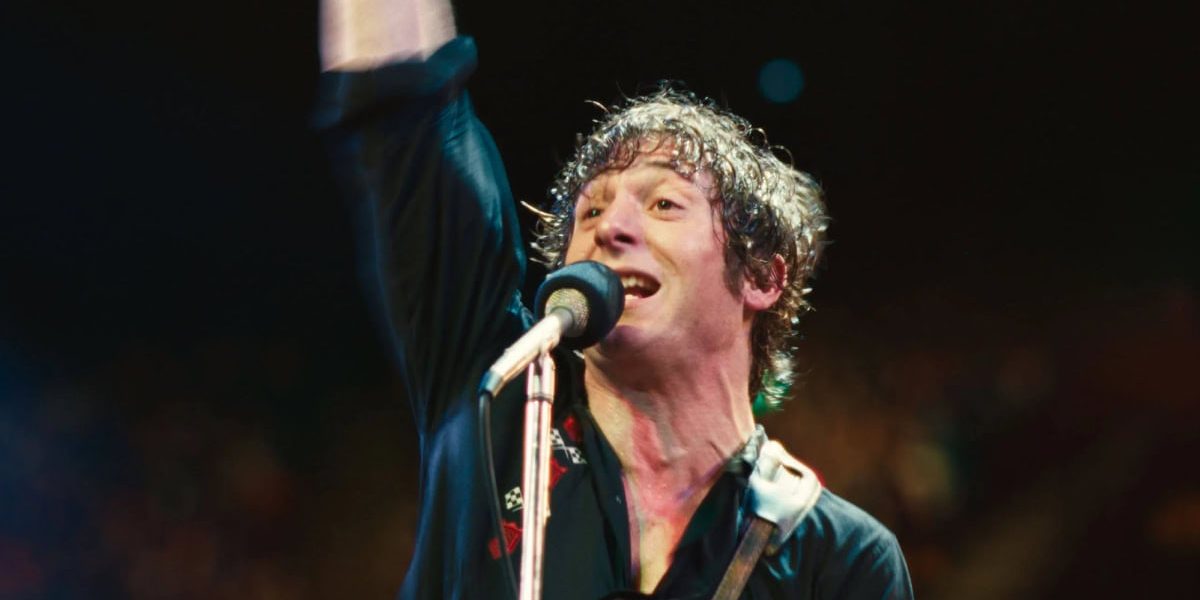
Cooper takes his time showing Bruce’s creative process, and White is also convincing as the sweat-drenched singer on stage in his full Boss persona. Perhaps the most controversial element of the film is that White does his own singing, and while he’s not able to capture the magic of Springsteen, his renditions sound good — even if, having listened to the originals so many times, it’s a bit off-putting to hear full studio versions of songs like “I’m On Fire” (from the next album) with White’s vocals. He sounds good, though, and I believed his portrayal.
He’s well supported by Jeremy Strong as Bruce’s longtime producer and manager, Jon Landau, who remains his advocate during the whole process and gives the role a quiet, nurturing aspect. Odessa Young is also quite good as Faye, a New Jersey friend of Bruce’s with whom he starts a relationship. Other actors, including Marc Maron as an engineer at the Power Station studio, have smaller parts but are quite effective. Plus, Stephen Graham mixes fearsomeness and vulnerability as Bruce’s abusive but also loving dad.
Through it all, the attention is squarely on Bruce and his creative process, which is where it needs to be. It’s a vulnerable portrait of an artist known for how real and empathetic he is, so it’s fitting that the biopic he gets has the same kind of resonance.









