Any musical group that manages to maintain its unity for several decades will inevitably face a rollercoaster of experiences, filled with both incredible highs and disheartening lows. This certainly rings true for Black Sabbath, a legendary band whose immense achievements were often countered by a series of regrettable and even bizarre blunders — and among these missteps, few stand out as egregiously memorable as the multitude of mishaps that plagued the tour for their 1983 album, Born Again.
As devoted fans of Sabbath are well aware, the Born Again era was riddled with challenges right from the outset. After the departure of Ronnie James Dio, the band found themselves in need of a new lead vocalist. They turned to former Deep Purple frontman Ian Gillan, who was eager to re-enter the music scene after taking a short break to recuperate his voice. The connection was facilitated by Sabbath’s manager, Don Arden, leading to a night of heavy drinking with guitarist Tony Iommi and bassist Geezer Butler; as Gillan later recounted, their enthusiastic indulgence left him with no recollection of agreeing to join the project.
Explore More: Black Sabbath Lineup Changes
Initially, the band considered adopting a different name for themselves instead of Black Sabbath, but this idea was ultimately quashed by their record label, which placed additional significance on the release of Born Again. Upon its debut, the album faced a rapid decline due to criticisms, some of which were unfair (the songs may not completely align with the traditional Sabbath sound, but they do have redeeming qualities) and others that were entirely justified (the album cover was indeed abysmal). While the band surely hoped for a more favorable reception, they were no strangers to negative publicity. However, things truly began to unravel once they hit the road.
Electric Light Orchestra Meets Black Sabbath
Drummer Bill Ward joined the sessions for Born Again following a rehabilitation stint aimed at overcoming his struggles with alcoholism. However, by the time he had completed his drum parts, it became evident that he was not fully committed to his treatment and opted to leave the band to focus on his health. With tour dates fast approaching, the remaining members needed to quickly find a suitable replacement, prompting Iommi to reach out to his acquaintance, Bev Bevan, the drummer for the Electric Light Orchestra. Bevan described his introduction to the band as “a crash course in rock drumming,” asserting that he had no intentions of leaving ELO behind; he simply believed that the band wouldn’t tour again anytime soon, and he was eager to keep his skills sharp. During the tour, Bevan expressed his enjoyment of playing with Sabbath, emphasizing the importance for a drummer to stay active, lest their skills diminish.
In the end, Bevan’s experience with Sabbath proved beneficial; when the lineup featuring Gillan disbanded at the conclusion of the Born Again tour, it conveniently opened up his schedule just as Jeff Lynne reassembled ELO for the recording sessions that produced the 1986 album Balance of Power.
Highway to Helsinki: A Memorable Tour Stop
The third stop of the tour brought Sabbath to Finland, landing in the amusingly appropriate HEL 666. However, Butler was less than amused when they arrived at their hotel, only to discover that the bar would be closing at 10 PM because, as he recounted in his memoir Into the Void, the bartender deemed it unnecessary to stay open for just the members of Black Sabbath. Frustrated, Butler retreated to Gillan’s room, where they cracked open a gallon of whiskey that Gillan had brought from the airport. After Gillan passed out, Butler took the remainder of the bottle back to his own room, where he continued sipping while stewing in irritation.
While gazing out his window, Butler realized that his room was situated directly above the bar. This prompted him to stuff the gallon bottle with wads of toilet paper, ignite it, and throw his makeshift Molotov cocktail at a car parked outside the bar’s entrance. According to his hazy recollection, it took Butler almost two dozen matches to get the bottle to ignite, and even then, throwing it at the car resulted in nothing more than a shattered windshield. Disappointed that he hadn’t achieved the grand explosion he envisioned, he eventually staggered off to bed, only to be startled awake by a group of furious police officers.
“When I opened my eyes, I found six policemen surrounding my bed, their machine guns pointed at me. I inquired about what had transpired, and one officer informed me, ‘You’re under arrest for terrorism!’ I began to explain that it had nothing to do with me, but he pointed to the floor, which was littered with spent matches. ‘Oh,’ I replied. With that, they slapped handcuffs on me and whisked me away to the police station.”
After some negotiation, Butler managed to convince the authorities of his identity as a member of Black Sabbath and that the entire incident was a misunderstanding — at least regarding the terrorism allegations. However, he nearly jeopardized his situation by making an inappropriate advance toward a female officer. “Just in the nick of time, Don and the tour manager arrived, apologized to the officers, and secured my release,” Butler recounted in Into the Void. “Don was furious and threatened to kick me out of the band, but I survived to see another day of chaos.”
Unruly Mayhem in Barcelona
Interestingly, it took Butler less than a month to find himself in trouble once again — and this time, the situation escalated significantly. The show promoter had extended an invitation to the band for a photo shoot at his club, which went so well that they decided to return later that evening, but it was then that things began to spiral out of control. There are varying accounts regarding what exactly triggered the chaos, but everyone agrees that the instigator was Gillan, who either poured peanuts down the back of a waiter’s pants or ignited them.
Believe it or not, at this stage, Sabbath could have exited without further incident. However, according to Butler, Gillan was intercepted by a waiter on their way out, who noticed that Gillan still had a drink in his hand and requested that he either finish it or leave it behind. Gillan, having presumably indulged in a bit too much liquid courage, did not appreciate the waiter’s request, which incited road manager Paul Clark to punch one of the bouncers. At that point, all bets were off.
“As bouncers, waiters, and kitchen staff charged at us wielding chains and metal bars, Gillan was nowhere to be found,” Butler recounted. “We later learned that he had bolted at the first sign of trouble he had instigated. Tony loved a good brawl, but even he was taken aback by this level of chaos. The last I saw of him that night, he was jumping into a cab with Bevan and Geoff Nicholls. That left just Paul and me to face the onslaught.”
Tony Iommi recalls the events differently. In his memoir Iron Man, he described “fighting for our lives” against a horde of assailants armed with “knives and martial arts nunchucks.” According to Iommi, it was Gillan who disappeared before violence erupted; although Gillan later claimed he had fallen into a ditch, Iommi suspected he simply ran for safety.
One detail everyone agrees on is that Butler — who quipped he had “seen far too many films” — injured himself by shattering a piece of glass. He intended to use it as a weapon but ended up cutting his finger so severely that by the time he and Clark managed to escape, he was “covered in blood.” Unsurprisingly, this fact did not elicit any sympathy from the police, who waited until Butler had received stitches before hauling him off to jail, where Clark was already detained.
Butler noted that the arresting officer struck Clark in the nose with his baton — and when they were finally released the following morning, they discovered that the individual Clark had initially punched was not only hospitalized but also had ties to a local gang, whose members were lurking outside the station, waiting for Butler and Clark. They managed to evade trouble and find a different hotel, but Arden wasn’t taking any risks; that night and for the remainder of the tour, he arranged for a group of bodyguards to protect the band.
“Tony, who was wise to these types of incidents, advised me to throw the vase next time instead of smashing it,” Butler reflected. “As for Don, he was probably wishing he’d never crossed paths with Black Sabbath.
Foggy Lyrics and Onstage Blunders
If Don Arden found himself wishing he had never encountered Black Sabbath, Ian Gillan openly admitted he hadn’t actually listened to Sabbath for over a decade prior to joining the band. This posed challenges when it came time to tour, as Gillan had done an admirable job of writing the lyrics for Born Again, but he hadn’t taken the opportunity to learn the lyrics to many of the other songs that comprised a significant portion of their set list.
As Iommi detailed in Iron Man, Gillan attempted to remedy this by compiling a binder filled with lyrics that he concealed behind his vocal monitors. Unfortunately, the dry ice fog on stage made it virtually impossible for him to read the words, forcing him to scramble by bending down and frantically blowing the fog away. Unsurprisingly, this was not an effective solution.
“Ian was standing there with his head bowed, hair covering his face, desperately trying to blow the dry ice away from his lyric sheets. I remarked, ‘You can’t have all those lyrics out in plain sight; it looks a bit obvious,'” Iommi recalled. “He replied, ‘I’m almost there. I’ll have them down soon!’ But he never did; he simply couldn’t commit them to memory.”
When Stage Falls Become Part of the Show
Gillan’s struggle with memorizing the lyrics to Sabbath’s extensive catalog was not his only challenge. Iommi also remembered his former frontman as being somewhat clumsy, although he did manage to think quickly when his body betrayed him.
“Ian wasn’t very coordinated either. At one point, he tripped over my pedal board,” Iommi wrote in Iron Man. “He was waving to the audience, stepped back, and suddenly went tumbling over. He quickly jumped up, attempting to make it appear as if it was part of the performance.”
Innovative Set List Decisions: Smoke on the Water and Other Hits
Ian Gillan’s legacy in rock ‘n’ roll is well-established, but he wouldn’t be the first choice for an Ozzy impersonation contest. Given this fact, it’s understandable that he would feel apprehensive about covering some of the band’s iconic tracks — and that Iommi would attempt to rectify the situation by suggesting they include the Deep Purple classic “Smoke on the Water” in their set list. Unfortunately, many others did not see the merit in this idea.
“I proposed we play ‘Smoke on the Water,’ since Ian was renowned for it, and it seemed unfair for him to not showcase any of his own hits while performing ours,” Iommi explained. “I can’t say we played it perfectly, but the audience loved it. The critics, however, were less than impressed; they viewed it as a gimmick and dismissed it.”
According to keyboardist Geoff Nicholls, Iommi also contemplated extending a similar gesture to Bevan by incorporating the ELO hit “Evil Woman” into their set list. However, this idea didn’t gain much traction; Nicholls is quoted in Mick Wall‘s Black Sabbath: Symptom of the Universe as saying that whenever the band attempted to rehearse the song, the opening chord progression would send them all into fits of laughter.
Listen to Black Sabbath Perform ‘Smoke on the Water’
Born Again: The Misadventures of a Rock Band
Gillan wasn’t the only member of Black Sabbath to endure embarrassing onstage blunders. Butler confessed to a particularly agonizing experience in his memoir Into the Void, recounting a performance where he strapped on his eight-string bass for “Born Again,” only to realize with dawning horror that his bass technician — who happened to be his nephew — had made a catastrophic error.
“It quickly became apparent that [he] had tuned all the strings to A. I found myself making an awful racket on this eight-string bass, wishing the ground would swallow me whole,” Butler wrote. “Then, just as I was hastily switching to my four-string bass, the backdrop suddenly erupted into flames. It was the ultimate joke gig, and the audience must have thought we were completely out of our minds.”
Air Travel Trouble: The Comedy of Errors Continues
We’ve established that venues, hotels, and stages were not immune to the comedic chaos that marked the Born Again tour; airplanes were equally affected. In his memoir Into the Void, Butler recounted a flight that commenced with the members of Sabbath already well-lubricated with alcohol and ended with them being pursued, albeit clumsily, by customs agents.
The trouble began on their way to the airport when the band decided to make a pit stop for a few pints of Guinness. By the time they boarded the plane, they were in desperate need of a bathroom; unfortunately, the aircraft lacked one, forcing them to resort to desperate measures.
“We pulled out the sick bags and used them to relieve ourselves,” Butler recounted. “We then stuffed all the bags into one large bag and left it in the aisle. As we were disembarking, a flight attendant called out, ‘Hey, aren’t you forgetting something?’ So, I was stuck taking the large bag of urine with me.”
In a frantic attempt to dispose of the bag at the first opportunity, Butler tried to “declare” it at the customs desk by leaving it there. Unsurprisingly, the customs agents were not interested in accepting it.
“As we hurried away, I could hear the officer shouting for us to come back. When a policeman attempted to stop Tony, he accidentally knocked his helmet off, causing the badge to fall off as well,” Butler recalled. “Fortunately, the officer was more focused on retrieving his badge than stopping us, allowing us to escape into our waiting limousines.”
Stage Set Catastrophes: The Stonehenge Fiasco
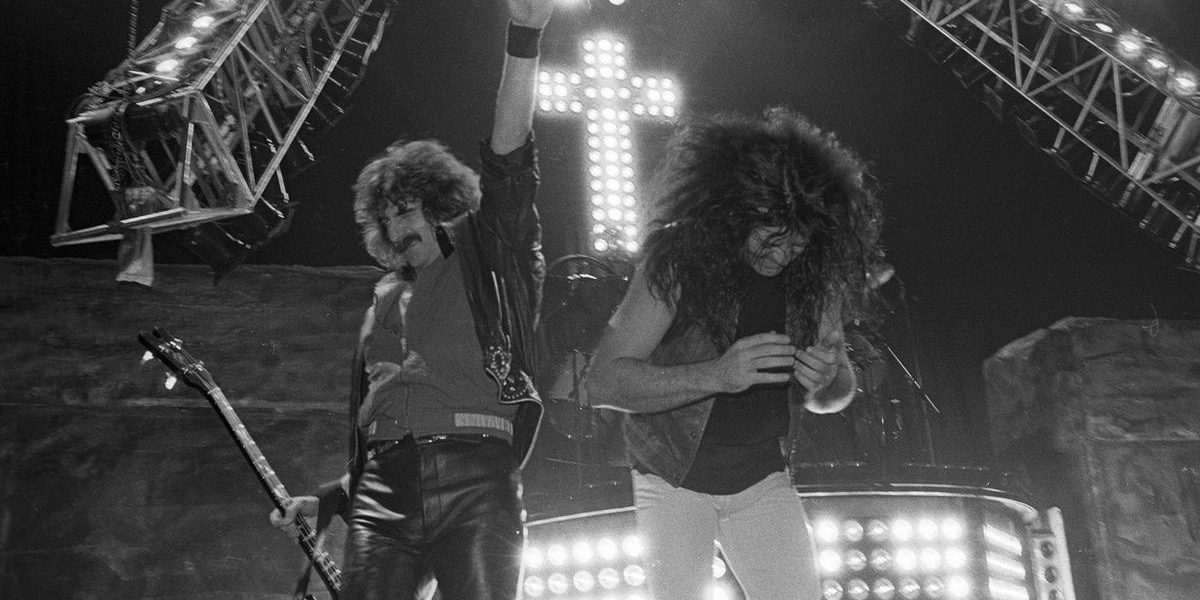
No discussion of the Born Again tour would be complete without addressing the most infamous blunder of all — the stage set, which was intended to be a scaled-down version of Stonehenge but ended up towering at 45 feet high due to a misunderstanding.
“Geezer sketched out what it should look like and handed it to the designers. A few months later, we finally saw it. We rehearsed for the tour at the Birmingham NEC and eagerly anticipated the arrival of the stage set,” Iommi reminisced in Iron Man. “When it arrived, we were astounded. It was the size of the actual Stonehenge. They had misinterpreted Geezer’s measurements and thought we wanted it to be life-size. I exclaimed, ‘How on earth did that happen?’ They explained, ‘Well, I provided the height in centimeters, but they must have assumed it was in inches.’”
The situation deteriorated further after the tour’s opening show. In a bid to add a theatrical element, Arden hired a small-statured individual to dress as the demonic baby featured on the Born Again album cover. The concept, as Butler described, was for the actor to crawl atop the stones, fall off, cry, and then become silent. To prevent any injuries, stagehands placed mattresses beneath the spot where he was meant to land, but during one unfortunate gig in Canada, the mattresses were absent. “That,” Butler lamented, “marked the end of the devil baby.”
The Stonehenge set was not only challenging to transport and store, but it often failed to fit within the venues the band had booked. Numerous attempts to donate or sell it failed, leaving Sabbath with a tough decision as their tour dates dwindled. (You can get a good look at the stage here.)
“By the end of the tour, we attempted to give it away to the individuals who had purchased London Bridge and reconstructed it in Arizona, but they declined,” Iommi recounted in Iron Man. “We couldn’t return it to England, so the crew ultimately discarded it at the docks somewhere. It was utterly ridiculous. We abandoned Stonehenge right there in America.”
While they may have left Stonehenge behind, its legacy has persisted, largely due to This Is Spın̈al Tap, the mockumentary directed by Rob Reiner that has left audiences in stitches with its exaggerated portrayal of the music industry’s follies and excesses. In one particularly memorable scene, the members of Spın̈al Tap are dismayed to discover that their commissioned Stonehenge stage set has been constructed in miniature — a case of art imitating life to such a degree that it has long been speculated that the Tap creative team borrowed from Sabbath’s own tour misfortunes.
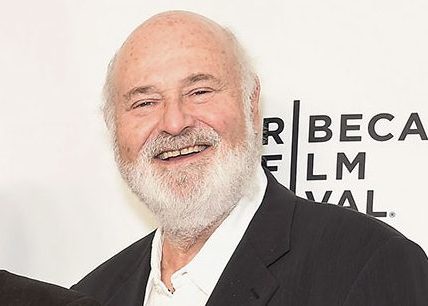
The issue with this assumption, as Reiner pointed out in 2025, is that Sabbath toured with their Stonehenge set in 1983 and 1984, while This Is Spın̈al Tap was released in March of ’84, just days before the Born Again tour concluded in Springfield, Massachusetts. “What morons,” he scoffed. “Did they really think we shot the film, edited it, and got it into theaters in just two weeks? I mean, it’s ludicrous. But to me, that was the perfect heavy metal moment: that they were so out of touch that they believed we took the idea from them.”
Reiner’s commentary makes perfect sense, and it’s not a novel observation; when he penned Into the Void, Butler acknowledged that the Tap crew had consistently denied any actual connection. Nevertheless, he remained skeptical. “I find that hard to believe,” he wrote. “Not only did they have that Stonehenge sequence, but they also featured combustible drummers, and we’d been setting Bill on fire for years.”
Ranking Black Sabbath Albums: A Comprehensive Overview
From Ozzy Osbourne to Dio and beyond, we delve into all of the band’s studio LPs.
Gallery Credit: Eduardo Rivadavia