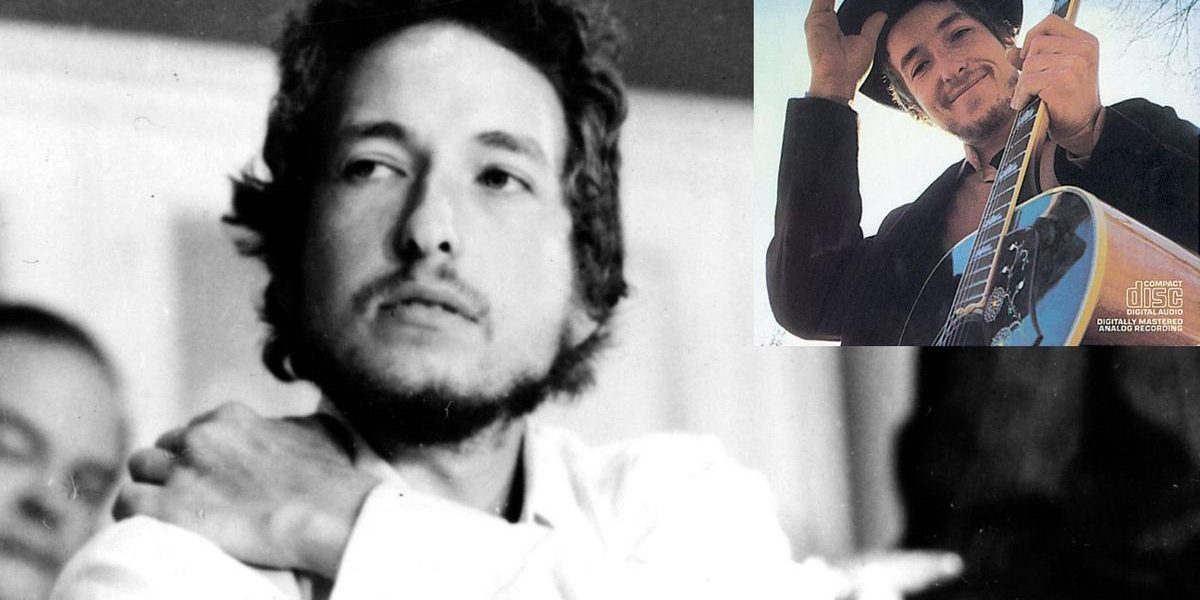
When listening to Bob Dylan’s albums sequentially, one will undoubtedly notice a transformation in his singing voice starting with his ninth release, 1969’s Nashville Skyline.
In contrast to his earlier recordings, where Dylan’s voice was often perceived as nasally and somewhat sneering, his performance on Nashville Skyline shifted to a much softer and crooning style. For many listeners at the time, it felt like they were hearing a completely different artist.
Was this truly Dylan’s “real” voice? What prompted this sudden change?
The Drastic Change, According to Dylan
Unsurprisingly, Dylan was questioned about this transformation.
“I’m sure you read the reviews of Nashville Skyline,” Jann Wenner, cofounder of Rolling Stone, remarked to Dylan in November 1969, about seven months post-release. “Everyone comments on the change in your singing style…”
Dylan’s response was straightforward: “Well Jann, I’ll tell you something. There’s not too much of a change in my singing style, but I’ll tell you something which is true…I stopped smoking. When I stopped smoking, my voice changed…so drastically, I couldn’t believe it myself. That’s true. I tell you, you stop smoking those cigarettes [Laughter]…and you’ll be able to sing like [Italian opera singer Enrico] Caruso.”
Dylan did not approach the creation of Nashville Skyline with any pretentiousness.
“We just take a song; I play it and everyone else just sort of fills in behind it,” he explained. “No sooner you got that done, and at the same time you’re doing that, there’s someone in the control booth who’s turning all those dials to where the proper sound is coming in…and then it’s done. Just like that.”
Dylan’s Recent Accident
Moreover, Dylan’s openness regarding his health was somewhat unexpected considering what had occurred a few years prior. Reportedly, Dylan was involved in a motorcycle accident in July 1966, although the specifics of what happened remain unclear even today. Despite sustaining severe injuries, no ambulance was called and Dylan was never hospitalized. Over the years, he has rarely discussed the incident or its causes — what is certain is that the crash removed Dylan from the public eye for several years.
When Wenner inquired about “what change” the accident had brought about, Dylan’s response was evasive.
“What change?” he replied. “Well, it…it limited me. It’s hard to speak about the change, you know? It’s not the type of change that one can put into words…besides the physical change. I had a busted vertebrae; neck vertebrae. And there’s really not much to talk about. I don’t want to talk about it.”
READ MORE: Bob Dylan Album Opening Songs Ranked
However, not only had Dylan’s voice physically altered since quitting smoking, he also made some modifications in the studio — incorporating a significant amount of echo and limiting (a technique that caps vocal volume at a certain level). Wenner asked Dylan why he opted for this approach instead of keeping it more or less flat.
Dylan countered with a question: “Well, how would you have liked it better? Would you have liked it flat?”
“I dig the echo myself,” he continued. “That’s why…we did it that way. The old records do sound flat. I mean there’s just a flatness to them; they’re like two-dimensional. Isn’t that right? Well in this day and age, there’s no reason to make records like that.”
It’s noteworthy that Dylan’s subsequent two albums, Self Portrait and New Morning, saw a return to his “normal” voice. As Rolling Stone stated in their 1970 review of the latter: “Well, friends, Bob Dylan is back with us again.”
Listen to Bob Dylan’s ‘Tonight I’ll Be Staying Here With You’ From ‘Nashville Skyline’
The Stories Behind 20 Bob Dylan Album Covers
Looking back at the artwork chosen by the famously enigmatic songwriter.
Gallery Credit: Allison Rapp