Bob Weir collaborated with various musicians and projects in his later years, including reunions with some of his former Grateful Dead bandmates for multiple tours.
His final live performances before his recent passing occurred in August of 2025 with Dead & Company, the ensemble he formed in 2015, which initially included fellow Dead alumni Mickey Hart and Bill Kreutzmann alongside John Mayer on guitar and vocals, former Allman Brothers Band bassist Oteil Burbridge on bass, percussion and vocals, and keyboardist Jeff Chimenti.
For most musicians with a career like Weir’s, a single project like Dead & Co. would be sufficient to enjoy their glory years. However, the guitarist maintained a continuous passion for creating and performing music, as evidenced by the numerous tributes from artists following his death.
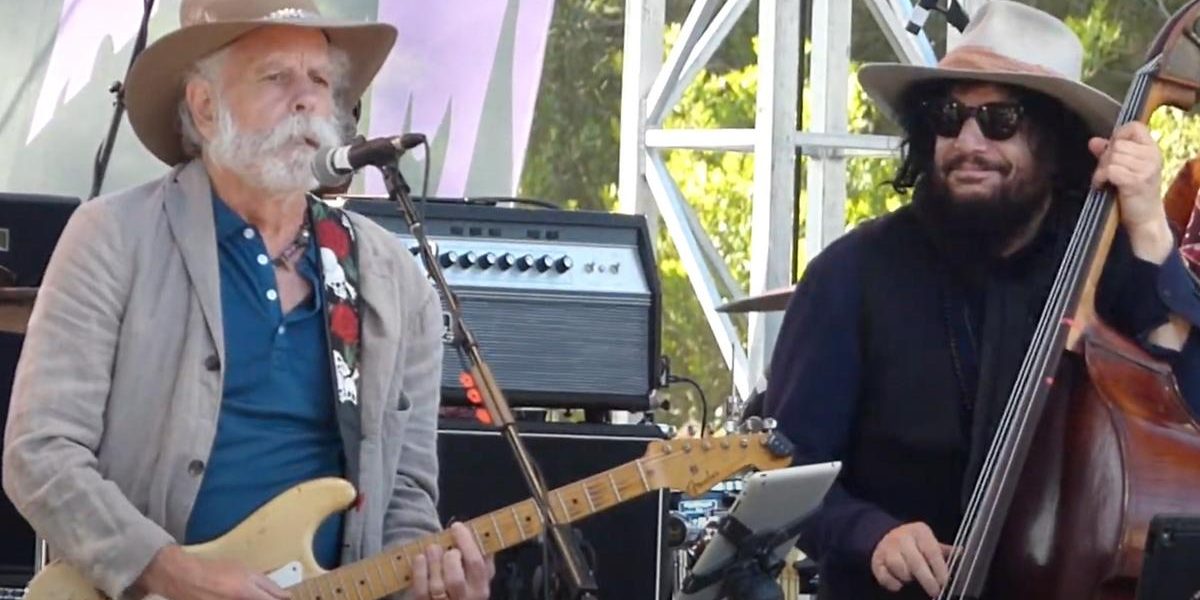
Legendary producer and bassist Don Was was instrumental in connecting Weir with Mayer, laying the groundwork for the eventual formation of Dead & Company. Unexpectedly, he also ended up playing in a band with Bob himself. In 2018, Weir, Was, and drummer Jay Lane (who later replaced Kreutzmann in Dead & Co.) joined forces for a new project.
Bobby Weir & Wolf Bros. was the name adopted by the trio, which allowed the Grateful Dead cofounder to expand his vision by including Chimenti on keys and multi-instrumentalist Greg Leisz on pedal steel guitar. Eventually, they incorporated a horn and string section (the “Wolfpack”) and performed a series of shows as part of Willie Nelson’s Outlaw Music Festival.
The lineup of musicians remained flexible as more bookings were added to the calendar. By 2022, they had further expanded to perform concerts with full symphony orchestras. As Was shared on the evening of Weir’s passing, the two had been discussing plans to collaborate more in 2026.
Was is currently touring with his outstanding Pan-Detroit Ensemble, paying tribute to the Dead’s Blues for Allah, which celebrated its 50th anniversary last year. The concerts began this past October and will take on a different tone as the tour progresses.
The group commenced the next leg of the Blues for Allah tour last weekend with four shows in Ann Arbor, Michigan, and dates are currently scheduled to continue through mid-February.
During a 2022 conversation with UCR, Was recounted his collaboration with Weir and how it was evolving. He clearly enjoyed working with Weir, who was discovering new ways to reinterpret his extensive body of work from both his time with the Dead and beyond.
What you’re doing with Bob and the Wolf Bros. seems like such a special collaboration. How have you seen yourself evolve as a player while working with Bob?
Well, quite a bit. You know, I was really intimidated just following Phil [Lesh] and Rob Wasserman, who are both virtuoso melodists in their own right. They’re very lyrical and I don’t play that way. I thought, “This is going to sound like a bar band covering Dead songs.” I was concerned about it, but I quickly learned that Bob didn’t want me to play that way. He wanted it to be intimate and encouraged me to play less.
Over time, the challenge has been determining how little I can play while still supporting the song. The goal is to find the perfect note without messing it up. It’s really helped me work with singers. It has influenced everything I’ve done. Now I try not to play when he’s singing—just hold a note. If there’s a chord change that needs emphasis on the low end, I play whole notes—and then respond by giving him something he can work off without stepping on his phrasing.
That’s an ongoing process. Every night is different. We interpret the songs differently each night. One thing I do know is that if something worked the night before, don’t repeat it—because the song will definitely be different than it was previously. Each night and each song should be approached with a beginner’s mind. We don’t come charging in at 1-2-3-4, BOOM. We hold the chord until we see where we’re going to settle in. When it feels right, it starts to develop, and then he begins singing when he’s comfortable. It’s been an incredible lesson in improvisation, restraint, and taste.
Listen to Bob Weir and Wolf Bros.’ ‘A Hard Rain’s A-Gonna Fall’
Hearing songs like “A Hard Rain’s A-Gonna Fall,” there’s so much fascinating history wrapped up in the set list that extends far beyond just the catalog of the Dead’s own songs.
Yes, well it aligns well with the kind of solo shows Bob has performed outside of [the Grateful Dead]. If you look back at Ratdog’s set lists, there’s usually a [Bob] Dylan song or two included. We experiment all the time. One day we started playing [Donovan’s] “Sunshine Superman.” During soundcheck, I was just playing the lick on bass when Bob began singing. He said, “Yeah, let’s do that thing!” It completely baffled people. I wouldn’t say it went over well; it was met with confusion but was fun!
What Dead songs have you come to appreciate?
The ones that initially drove me crazy. I remember being frustrated learning “Lost Sailor” and “Saint of Circumstance.” They seemed unnecessarily complicated at first. I was writing out charts thinking, “Why does there have to be a bar of nine right there?” [Laughs] They were challenging to learn but once I did, oh man—it flows beautifully! Everything is there for a good reason; that medley takes you on an incredible journey every night.
Listen to Bob Weir and Wolf Bros.’ ‘Lost Sailor / Saint of Circumstance’
I recall during our first tour when we hadn’t played “Lost Sailor” and “Saint of Circumstance” for a couple of weeks. When we returned to it again, I [realized that I] missed those songs; they felt like friends coming back together again! It was like saying, “Oh man! It’s great to see you! What do you want to do today? Where should we go?” [Laughs] That feeling keeps resurfacing—they start living inside you. Grateful Dead songs are masterpieces; you don’t always realize it until you dive in—it’s not immediately evident from an outsider’s perspective. The Deadheads understand this; that’s why people attend the shows—they come for those songs.
You mentioned you’re about to rehearse with your bandmates. Given your long history performing together on stage, what does rehearsal look like at this stage?
Rehearsals involve remembering how to play together again because when he plays with Dead & Company it’s the same songs but creates an entirely different chemistry—I’m not referring to drugs! [Laughs] Recently we played as a trio during a benefit gig in Bend, Oregon last Saturday—just Jay Lane, Bob, and myself—and we hadn’t done that in years…really three or four years.
About halfway through that show I thought: “Alright now I remember how we do this and how our [musical] conversation works as a trio.” So that’s what rehearsal entails—yesterday we practiced by jamming on various pieces; it’s more about getting used to listening to each other again and reacting accordingly—we know the songs; it’s just about getting reacquainted musically.
READ MORE: Bob Weir’s Last Concert Was a Joyous Celebration of Grateful Dead
Grateful Dead Albums Ranked
Even the band’s most devoted fans admit that creating LPs wasn’t one of their strengths.
Gallery Credit: Michael Gallucci