Mel Gibson Was Once the Biggest Movie Star in the World
Modern audiences often forget just how massive a star Mel Gibson was for roughly a twenty-year stretch spanning the mid-to-late 1980s, the 1990s, and the early 2000s. For a time, there was virtually no one in his league. He was arguably the biggest box-office draw of the era, even eclipsing contemporaries like Sylvester Stallone, Bruce Willis, and Arnold Schwarzenegger—with perhaps only Harrison Ford offering real competition, and even then, Gibson may have been bigger.
What truly set Gibson apart was his cross-gender appeal. He could dominate action franchises like Lethal Weapon, then pivot effortlessly to romantic comedies such as What Women Want, which became a massive hit. Action, romance, prestige drama, historical epics—any genre, any audience, Mel Gibson was your man.
That’s what makes his fall from grace as a leading man one of the steepest in modern Hollywood history. Today, he’s largely relegated to co-starring roles in low-rent “geezer-teasers,” a fate similar to what marred Bruce Willis’s late career before his health forced retirement. Watching Gibson turn up in films like Panama or Force of Nature is painful when you remember he once ruled the box office.
Why Mel Gibson Still Matters as a Director
Despite the downturn in his acting career, Gibson remains highly respected as a filmmaker. He is currently directing Lionsgate’s two-part The Resurrection of the Christ, a project that has become a surprising lifeline for his legacy.
With the exception of the misfire Flight Risk, Gibson’s directorial filmography is remarkably strong. And more than anything else, it was Braveheart that permanently established him as a great director.
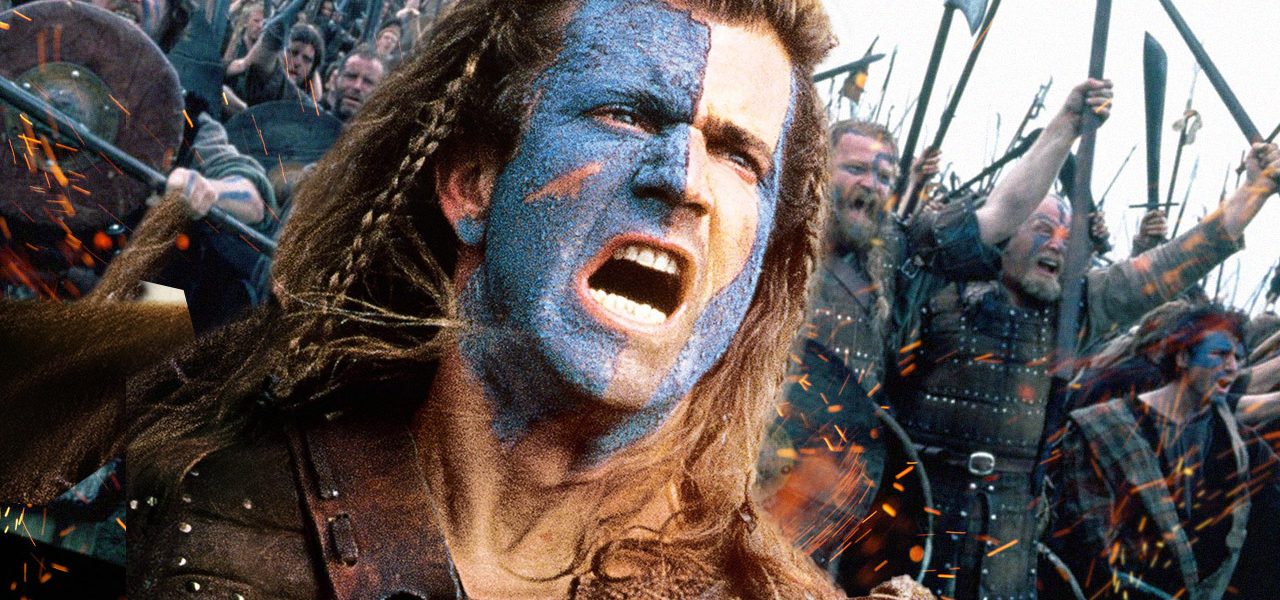
So how did Mel Gibson turn a brutal story about a Scottish freedom fighter into a blockbuster epic?
The Origins of Braveheart

Gibson made his directorial debut with The Man Without a Face, a modestly successful drama in which he played a disfigured schoolteacher. The film earned respectful reviews and turned a profit, giving Gibson the confidence to tackle a long-held passion project: the story of William Wallace.
Wallace was a Scottish knight and one of the leaders of the First War of Scottish Independence against King Edward I of England. He was ultimately executed for high treason but became a cultural icon in Scotland, symbolizing resistance and freedom.
The script, written by Randall Wallace, was initially greenlit at MGM under legendary executive Alan Ladd Jr. When the project moved studios, Gibson was offered the lead role—but at 38, he felt he was too old to play Wallace. Still, he couldn’t shake the story.
Why Mel Gibson Had to Star in Braveheart
Gibson initially wanted Brad Pitt or Jason Patric in the lead. Paramount, however, refused to greenlight the film unless Gibson also starred. At the time, he was the biggest movie star in the world, and his presence guaranteed at least a shot at profitability.
Historical epics were risky in the mid-1990s, though Scottish rebellion films were oddly in vogue—Rob Roy beat Braveheart to theaters by a few months. (Both films featured Brian Cox, no less.)
The film was financed through Gibson’s Icon Productions, with Paramount covering one-third of the budget for domestic rights and 20th Century Fox handling international distribution. Even so, the budget—estimated between $55–70 million—was modest for such a massive production.
A Cast of Future Legends
Gibson was the only true superstar in the cast, but this proved to be one of Braveheart‘s secret weapons. He filled the film with exceptional character actors:
- Brendan Gleeson as Hamish
- Brian Cox as Wallace’s uncle, Argyle
- Angus Macfadyen as Robert the Bruce
- Sophie Marceau as Isabelle of France
Many of these actors would go on to become major figures in film and television. The casting gave Braveheart texture, authenticity, and emotional weight.
Patrick McGoohan and the Film’s Villain
For King Edward I (Longshanks), Gibson pulled off a coup by casting Patrick McGoohan, legendary creator and star of The Prisoner. Though semi-retired at the time, McGoohan’s performance revitalized his career and remains one of the film’s most chilling elements.

Controversies Surrounding Braveheart
Braveheart has never been without controversy:
- The portrayal of Edward II was accused of homophobic stereotyping.
- The English are depicted with no sympathetic figures.
- The film takes massive liberties with historical accuracy.
Gibson always maintained he was making an epic, not a documentary, and audiences largely agreed.
Awards, Box Office, and Cultural Impact
Despite only modest domestic earnings ($75 million), Braveheart was a huge international success, grossing over $200 million worldwide. It went on to win Best Picture and Best Director at the 1996 Academy Awards.
Its legacy truly exploded on home video, where it became endlessly quoted, imitated, and revered. The film boosted Scottish tourism and cemented William Wallace as a global folk hero.
Braveheart’s Place in Mel Gibson’s Legacy
Gibson’s career continued strong for another decade**, with hits like The Patriot, Signs, and Chicken Run. In 2004, he shocked Hollywood with The Passion of the Christ, one of the highest-grossing R-rated films ever.
<bThough his public image would later implode**, Gibson continued to direct acclaimed films like Apocalypto and <em<Hacksaw Ridge.
<strongStill**, Braveheart remains the crown jewel.
<strongWith cinematography by John Toll and a sweeping score by James Horner**, it stands shoulder-to-shoulder with the greatest historical epics including <emLawrence of Arabia. It’s brutal romantic operatic and timeless.
<strongMel Gibson could have never made another movie after Braveheart—and he’d still be considered a legend.

Subscribe to our weekly newsletter