
Key Takeaways
- Film Overview: Chloé Zhao’s Hamnet is a poignant exploration of grief and loss through the lens of William Shakespeare’s family.
- Performances: Jessie Buckley’s portrayal of Agnes is a standout, earning her significant acclaim for her depth and empathy.
- Cinematography: The film’s use of natural light creates an authentic 16th-century England atmosphere, enhancing the storytelling.
- Emotional Impact: Hamnet resonates with anyone who has experienced the loss of a loved one, making it universally relatable.
PLOT: The relationship between Agnes (Jessie Buckley) and William Shakespeare (Paul Mescal) is forever changed when their beloved son, Hamnet (Jacobi Jupe), dies, inspiring the creation of the Bard’s defining work.
REVIEW: Chloé Zhao’s Hamnet is easily the most acclaimed movie of the year. While others, such as Sinners and One Battle After Another, could make a similar claim, both of those movies have small pockets of viewers who, for one reason or another, took issue with them. Some didn’t like how Sinners seemingly became a riff on From Dusk Till Dawn, while others disliked the politics of One Battle After Another. Yet, everyone seems to like Hamnet, although I must admit that I walked into it more out of a sense of professional obligation than interest, as I had little to no desire to see another Shakespeare movie.
Of course, I was wrong, as Zhao’s Hamnet really is the movie everyone says it is—a deeply empathetic, heartbreaking look at loss. Yes, it’s about William Shakespeare, but there are points in the movie where it truly could be about any parent who suffers the devastating loss of a child.
Yet, the magic of Hamnet is that it’s even more than that. What it does—better than any other film on the subject I’ve seen—is make you appreciate what it must have been like for audiences of Shakespeare’s time to experience his work, and how deeply his words and themes must have resonated with them. It brilliantly stages a performance of Hamlet in a period-specific way that almost makes you feel like you’ve travelled back in time to see one of its original performances. It’s presented in a way that drives home the fact that Shakespeare composed his plays for the common man, offering tremendous catharsis to people who led difficult lives, where death and sickness were seemingly always just around the corner.
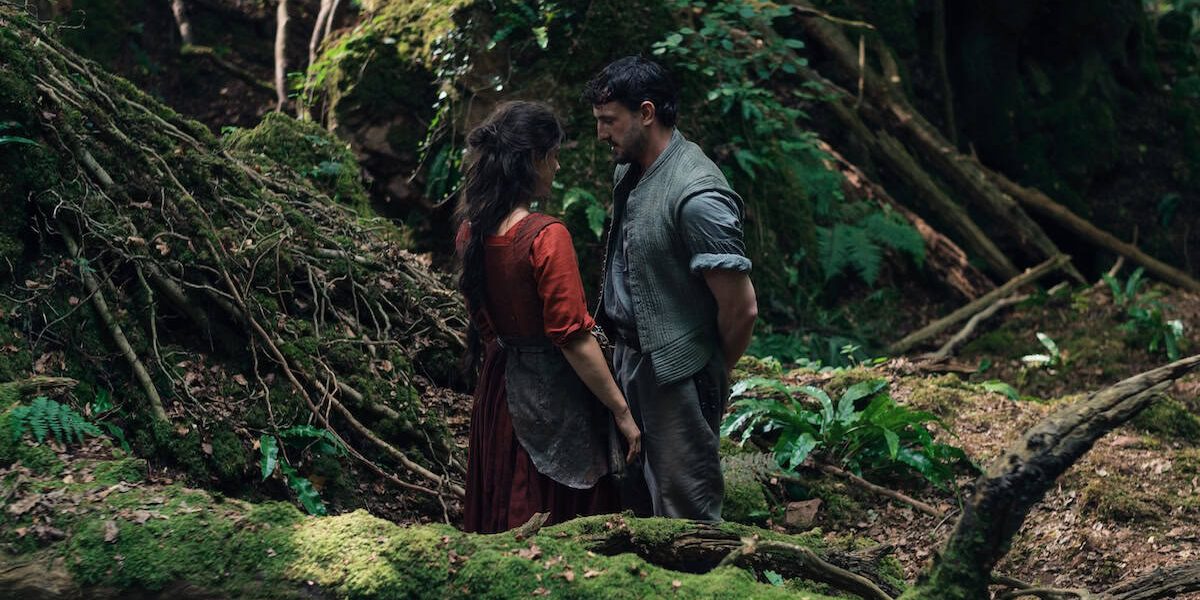
Jessie Buckley’s performance as Agnes has deservedly established her as a lock for Best Actress. Agnes Shakespeare is one of the more mysterious historical figures, as not much is known about her, and the film—based on the novel by Maggie O’Farrell—imagines her initially as a woman deeply tied to the natural world around her, to the extent that when she has her first child, she opts to walk out into the woods and give birth alone, surrounded by nature. She beguiles William, and their romance is touching, with Mescal and Buckley having great chemistry that evokes how deeply they are drawn to each other.

The fact that they are shown to be so in love, even as William struggles to juggle the responsibility he has to his family with his career as a playwright, makes the second half so tragic. You see how the death of Hamnet—who is portrayed as angelic and selfless, almost too good for this world—destroys the bond they once shared as each retreats into themselves. Zhao’s film has tremendous empathy for both of them, with Mescal’s tortured bard putting his soul on the stage for all to see in his staging of Hamlet, whose lead shares the same name as his son.
While Buckley and Mescal will earn most of the kudos, the film also features some terrific supporting roles. Young Jacobi Jupe breaks your heart as the young Hamnet, whose sudden illness comes as a result of his selflessness when his sister is similarly afflicted. Joe Alwyn continues to impress as Agnes’s kindly brother, who takes her to the climactic staging of Hamlet, while Emily Watson plays William’s initially haughty mother, who eventually becomes much more sympathetic as the movie goes on.
Zhao’s directing is outstanding, and she never gets too caught up in the pageantry of making a period film. It’s interesting to compare this to the more polished Shakespeare in Love, with Zhao emphasizing realism at all times. You watch Hamnet and you truly feel like you’re back in 16th-century England, with Łukasz Żal’s cinematography relying heavily on natural light. The score by Max Richter is subtle and moving, climaxing with his signature piece, “On the Nature of Daylight.” One could argue this piece has been overused—especially with its strong association (in my mind) with Denis Villeneuve’s Arrival—but once you hear it here, it’s hard not to feel like its inclusion is essential.
Again, I realize Hamnet might be a tough sell to some of our readers who may be wary of another “Shakespeare movie.” But even if you don’t think this is going to be for you, give it a shot. It’s tremendously moving and should hit close to home for anyone who’s ever experienced the loss of a loved one.


Subscribe to our weekly newsletter








