
Key Takeaways
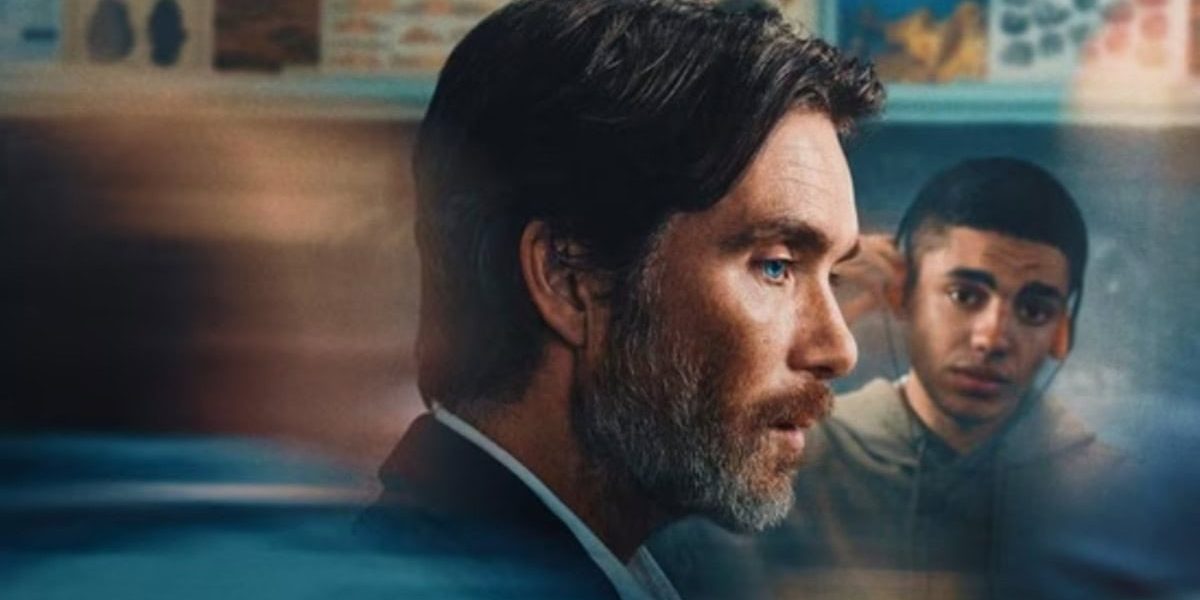
- Plot Overview: The film explores a critical day in the life of headteacher Steve at a reform school in the mid-90s.
- Cillian Murphy’s Role: Murphy plays a pivotal character who navigates personal and professional challenges while supporting troubled students.
- Filming Style: The movie employs a handheld, verité style to enhance its emotional impact and authenticity.
- Emotional Themes: The narrative highlights the struggles of educators and students within a flawed system, making it relevant today.
Plot: Set in the mid-90s, the film follows a pivotal day in the life of headteacher Steve and his students at a last-chance reform school amidst a world that has forsaken them. As Steve fights to protect the school’s integrity and impending closure, we witness him grappling with his own mental health. In parallel to Steve’s struggles, we meet Shy, a troubled teen caught between his past and what lies ahead as he tries to reconcile his inner fragility with his impulse for self-destruction and violence.
Review: Cillian Murphy has entered the phase of his career where he can make whatever movie he wants. Murphy has always been relatively selective with his projects, deviating from dramas sparingly, as seen in the 2016 action movie Free Fire and the 2007 romantic comedy Watching the Detectives. Serving as producer and star, Steve is a poignant melodrama about reform students and the struggles of teachers in England during the 1990s, which remains relevant today. Based on the novella Shy by Max Porter, Steve is the typical independent project that hinges on the financial and creative influence of someone with the clout that Murphy now commands, thanks to Oppenheimer. Earning a spot alongside films like Stand and Deliver and Lean on Me, Steve is an emotionally impactful look at a moment in time for a school, its staff, and students that will stick with you after you finish it.
Filmed in a handheld, verité style, Steve opens with the titular head of a reform school (Cillian Murphy) recording an interview with a news crew that has arrived to conduct an exposé on the institution. The school is full of students who have been expelled from public schools and forced to attend a location better equipped to handle their emotional and behavioral challenges. The students fight each other and threaten the staff of the underfunded facility, which includes social workers and psychiatrists like Jenny (Emily Watson). The news crew captures interviews with various students, including Nabz (Ahmed Ismail), Jamie (Luke Ayres), Ash (Joshua Barry), and Cal (Archie Fisher), who seize every opportunity to swear or try to shock the reporters. Meanwhile, the staff struggles to keep order. Amanda (Tracey Ullman) and new teacher Shola (Little Simz) share their complaints with Steve, who is caught between the bureaucratic elements of his role and his responsibilities as an educator and mediator for the staff and students.
What upends the already hectic day for Steve and his students is the arrival of local politician Sir Hugh Montague Powell (Roger Allam), accompanied by the news that the school is set to close at the end of the year. From Steve’s perspective, his world is collapsing as he wants nothing more than to help these kids. Steve is still dealing with trauma from an accident several years prior, which gives him a deeper motivation to want to help at-risk youth. Steve has a close bond with Shy (Jay Lycurgo), one of the smartest kids at the school, who is dealing with family issues stemming from his violent temper and outbursts aimed at his parents. The connection between Steve and Shy is central to the film, as each serves as a gateway into the staff and students, respectively. Nothing seems to go right for anyone during the first two-thirds of Steve, which is presented as a series of chronological snapshots from the morning through the late evening.

While films that focus on educators often portray them as idealistic heroes who can teach the unteachable (see Dangerous Minds), Steve takes a more nuanced approach to showing us these teachers as flawed human beings themselves who fight for the troubled kids rather than writing them off as lost causes. Tracey Ullman excels here as one such teacher who lays out everything wrong with the kids while still expressing her deep love for them. Both Little Simz and Emily Watson show us the psychological cracks that can develop when teachers and professionals are unable to separate their work from the emotional toll it takes, which is particularly evident in Cillian Murphy’s portrayal of Steve. Steve is an idealistic teacher but one who is fueled by alcohol. The similarities between what Steve suppresses and what causes Shy to act out are eerily similar, and the film shows us that sometimes what distinguishes one side from another may be experience and age.
Max Porter adapted his own novella, Shy, changing focus from the teenage character to the teacher. The shift alters how the story unfolds but also allows Cillian Murphy to attract more viewers based on his name on posters and trailers. Both Steve and Shy are central to the plot; however, Porter’s screenplay skews heavily towards Steve in this adaptation. Director Tim Mielants, who directed Murphy in the 2024 film Small Things Like These, adeptly directs him in projects based on novels. Steve uses its 1990s setting effectively by incorporating fashion trends and music from that period, helping keep modern technological innovations out of its narrative. This allows for greater focus on interactions between kids and staff. Camcorder footage and a personal tape recorder that Steve uses to chronicle his thoughts factor into the plot; these elements would not work as well if everything were on an iPhone. Despite its period setting, Steve often feels like it is navigating familiar challenges for its characters to face—especially in its hectic middle act—before settling into a final act meant to be shocking and emotional but ends up less impactful than it could have been.
Steve hits all necessary notes to be a stirring emotional story about those often failed by systems designed to help them. Still, it gets in its own way with challenges stacking upon each other rather than building towards something more significant. The first two-thirds of Steve feel like a different movie compared to its final act; intense traumatic elements do not pay off as well as they could have. Despite this wrinkle, Steve works well due to Cillian Murphy’s consistently excellent performance as an emotionally drained protagonist. The time will come soon enough for Murphy to return to lighter genres than we have seen over recent decades; however, even if he continues playing roles like Steve, he will do so brilliantly.
Steve is now streaming on Netflix.

Source:
JoBlo.com