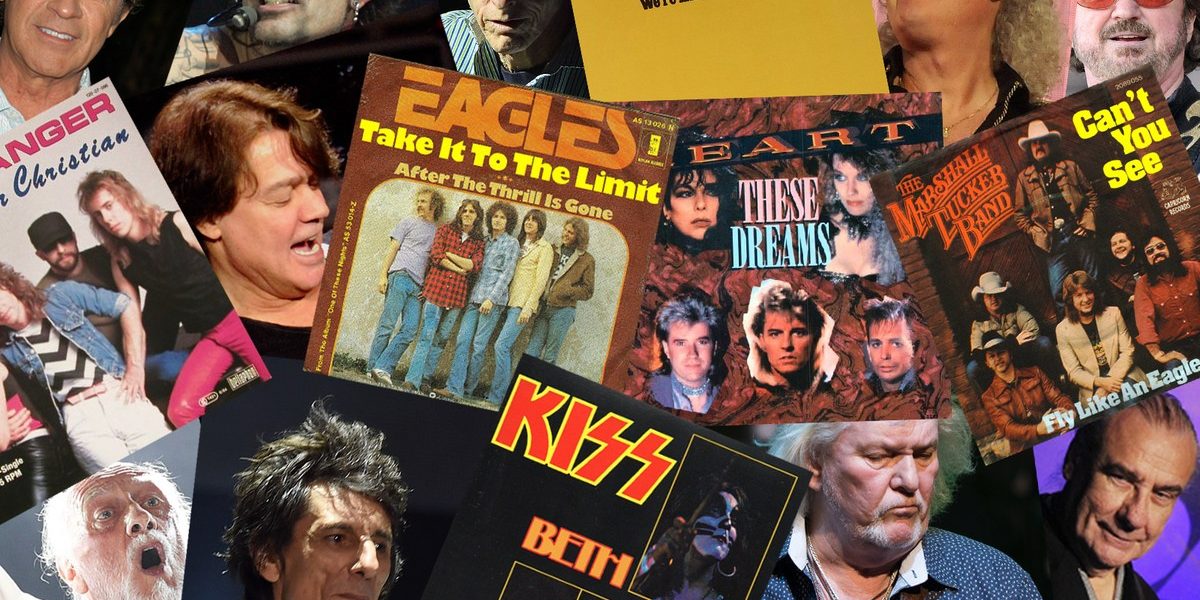

Fair or not, rock groups are often closely associated with their singers. However, that doesn’t mean other bandmates don’t occasionally get their due at the mic. In fact, as you’ll see in the following countdown of Classic Rock Songs Not Sung by the Lead Singer, there are multiple examples where a band’s biggest hit featured vocals from someone else. Check out those times when the frontman took a back seat.
Key Takeaways
- Vocal Contributions: Many classic rock songs feature vocals from members other than the lead singer.
- Notable Examples: Songs like “How Many Say I” and “Beth” highlight this trend in rock history.
- Band Dynamics: The dynamics within bands often lead to unexpected vocal performances.
- Legacy: These songs have become iconic despite not being sung by the frontman.
No. 35. Van Halen, “How Many Say I”
From: Van Halen III (1997)
Eddie Van Halen said he ended up taking the lead on this unusual acoustic piano ballad in a very offhanded way. “As long as that song is, is as long as it took,” Van Halen told Doug Fox. “It just came right through me. Not to get bizarre or spiritual on you, but it was almost like an out-of-body experience.”
No. 34. Motley Crue, “Brandon”
From: Generation Swine (1997)
Touched by the birth of his son, drummer Tommy Lee wrote and sang the strings-laden “Brandon.” “Your mother gave birth to you with love inside,” Lee sings, referencing his wife at the time, Pamela Anderson. Lee subsequently quit Motley Crue; he didn’t return until 2005’s Red White and Crue.
No. 33. Fleetwood Mac, “These Strange Times”
From: Time (1995)
The first Fleetwood Mac album without Stevie Nicks or Lindsey Buckingham since 1974’s Heroes Are Hard to Find ended on a strange note, as drummer Mick Fleetwood offered an extended spoken-word piece set to jungle rhythms. Time failed to chart in the U.S., something that hadn’t happened in almost three decades, and Buckingham and Nicks subsequently returned.
No. 32. The Doors, “Runnin’ Blue”
From: The Soft Parade (1969)
The remaining Doors continued forward after frontman Jim Morrison’s death, releasing a pair of albums in 1971-72 featuring vocals by Ray Manzarek and Robby Krieger. But that wasn’t the only time somebody else besides Morrison sang on a Doors song. “Runnin’ Blue,” the fourth and final single from The Soft Parade, also featured Krieger on vocals.
No. 31. Black Sabbath, “Swinging the Chain”
From: Never Say Die! (1978)
During a tumultuous period before Ozzy Osbourne’s initial exit, Black Sabbath briefly collaborated with Dave Walker, who’d also worked with Savoy Brown and Fleetwood Mac. Osbourne ended up returning but old tensions unfortunately remained. He refused to sing songs they’d completed with Walker, leading to a rare turn at the mic on “Swinging the Chain” by drummer Bill Ward.
No. 30. Jimi Hendrix Experience, “She’s So Fine”
From: Axis: Bold as Love (1967)
Noel Redding’s very Who-influenced “She’s So Fine” was the first thing the Jimi Hendrix Experience worked on as sessions began for Axis: Bold as Love, their second studio project together. This was Redding’s lone songwriting contribution to the album; he also wrote and sang “Little Miss Strange” on the follow-up, 1968’s Electric Ladyland.
No. 29. Rolling Stones, “In Another Land”
From: Their Satanic Majesties Request (1967)
Bassist Bill Wyman apparently showed up for work one day only to find that the sessions had been called off. He decided to lay down a track anyway, enlisting a smart one-off group of sidemen on “In Another Land” that included regular Stones contributors Brian Jones, Nicky Hopkins and Charlie Watts, along with Steve Marriott and Ronnie Lane of the Small Faces.
No. 28. Velvet Underground, “After Hours”
From: The Velvet Underground (1969)
Drummer Maureen Tucker’s first lead vocal for the Velvet Underground happened when frontman Lou Reed wrote a song that he said was “so innocent and pure” he simply couldn’t sing it. Soon, hearing someone besides Reed singing would become far more commonplace. In fact, by the time the band called it quits with 1973’s Squeeze, none of its original members was still around.
No. 27. U2, "Numb"
From: Zooropa (1993)
This isn’t the first U2 vocal by the Edge, but “Numb” is the most famous. Released as the lead single from Zooropa, it followed “Van Diemen’s Land” from 1988’s Rattle and Hum and “Seconds” from 1983’s War, among others.
No. 26. Motorhead, “Step Down”
From: Bomber (1979)
His fame was such that many thought of Motorhead as Lemmy Kilmister’s band. That’s how Eddie Clarke ended up singing “Step Down.” “He had been bitching that I was getting all the limelight,” Kilmister wrote in his memoir, “but he wouldn’t do anything about it. I got sick of him complaining, so I said, ‘Right, you’re gonna fucking sing one on this album.’
No. 25. Jethro Tull, “Move On Alone”
From: This Was (1968)
The 2012 departure of guitarist Martin Barre meant Jethro Tull essentially became an Ian Anderson solo band. But early on, the group was very much a collaborative endeavor, as evidenced here. The only Tull studio track not sung by Anderson features songwriter Mick Abrahams – who did, in fact, move on alone following This Was.
No. 24. Cheap Trick, “I Know What I Want”
From: Dream Police (1979)
Tom Petersson is out front here rather than Robin Zander on a song that can exude such a coolly detached, almost Velvet Underground-type self-possession through the verses that Cheap Trick has been known to toss in a bit of “I’m Waiting For the Man” from Lou Reed and company during concert performances. One of those live takes ended up as the b-side to Cheap Trick’s 1988 cover of “Don’t Be Cruel.”
No. 23. Foreigner, "Starrider"
From: Foreigner (1977)
“Starrider” was written by co-founders Al Greenwood and Mick Jones for Foreigner’s self-titled debut and features lead vocals by Jones, who would more typically cede that role to later-departed Lou Gramm. Greenwood was with Foreigner through 1979’s Head Games, and also worked with Joe Lynn Turner.
No. 22. Guns N’ Roses, “14 Years”
From: Use Your Illusion II (1991)
A key early songwriting contributor, Izzy Stradlin moved up front just before moving out. “14 Years,” the second track on Use Your Illusion II, was one of his four lead vocals from this era (along with “Dust N’ Bones,” “You Ain’t the First” and “Double Talkin’ Jive”). Stradlin announced his departure not long after; though he memorably sang “14 Years” during a brief 2012 reunion.
No. 21. Kiss, "Beth"
From: Destroyer (1976)
This power ballad is atypical for Kiss; it features drummer Peter Criss rather than Gene Simmons or Paul Stanley who eventually became the group’s only remaining original members. This remains Kiss’ highest-ever charting single at No. 7 followed by 1990’s “Forever” – a No. 8 hit sung by Stanley.
No. 20. The Allman Brothers Band, “Hoochie Coochie Man”
From: Idlewild South (1970)
Best known for melodic bass lines on standout cuts like “Whipping Post,” Berry Oakley serves as lead singer for this rumbling Muddy Waters update; fitting since Oakley had been performing it since his early days with Dickey Betts in their earlier band Second Coming.
Classic Rock’s 20 Worst Mistakes
A countdown of classic rock’s worst mistakes.
Gallery Credit: Nick DeRiso