
There are very few experiences akin to watching a Yorgos Lanthimos movie. They’re crafted with nuanced and meticulous care for the story, designed to challenge you or even make you feel uncomfortable, to the point where the journey’s destination might feel obvious. And yet, you still have to see it with your own eyes to be sure — or, rather, to know it’s all been worth it.
Writing a movie for Lanthimos to direct might feel impossible, but Oscar-nominated screenwriter Will Tracy accomplished this masterfully in their first collaboration (and with a script intended for a different director). Tracy’s partnership with Lanthimos was shepherded by the filmmaker’s producing partners Ed Guiney and Andrew Lowe, who skillfully crafted the believably relatable (while still extraterrestrial) world that is Bugonia.
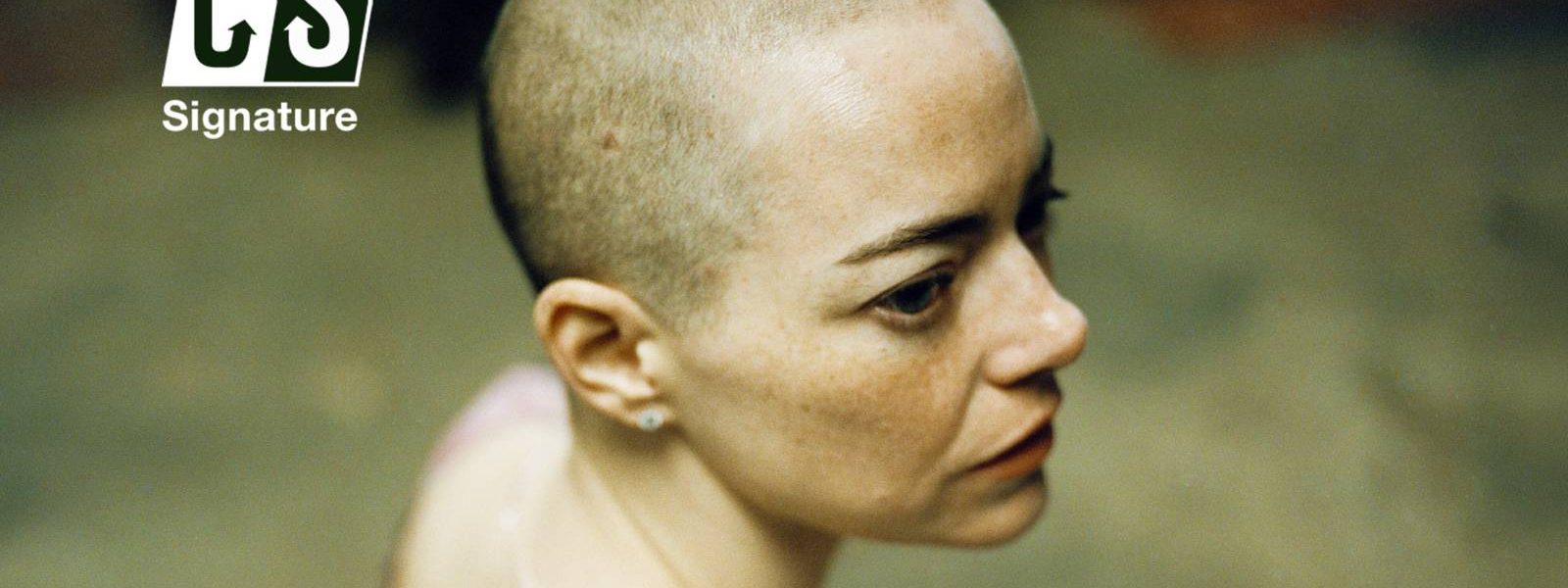
It’s the kind of storytelling achievement that reaches rarified air and certainly cements this team of artists among the top of their craft — Tracy’s increasingly prescient examination into out-of-touch elitism guided by Lanthimos’ deft direction, made possible by Guiney and Lowe and the production team’s wizardry. There’s a reason Bugonia is being recognized at the Academy Awards, including Tracy’s script, Emma Stone‘s acting, and the film’s nomination for Best Picture.
There’s a lot to unpack when it comes to Bugonia, which might be surprising considering the film is as straightforward as a bullet to the chest. Before the movie even came out, everyone wanted to know if she was really an alien? The real question is, does that even matter when we are so alien to each other’s experiences? We had the chance to speak with Tracy, Lowe, and Guiney ahead of the Oscars to find out just why the film’s message was so compelling on a human level.
Will Tracy’s ‘Bugonia’ Journey, From Ari Aster to Yorgos Lanthimos
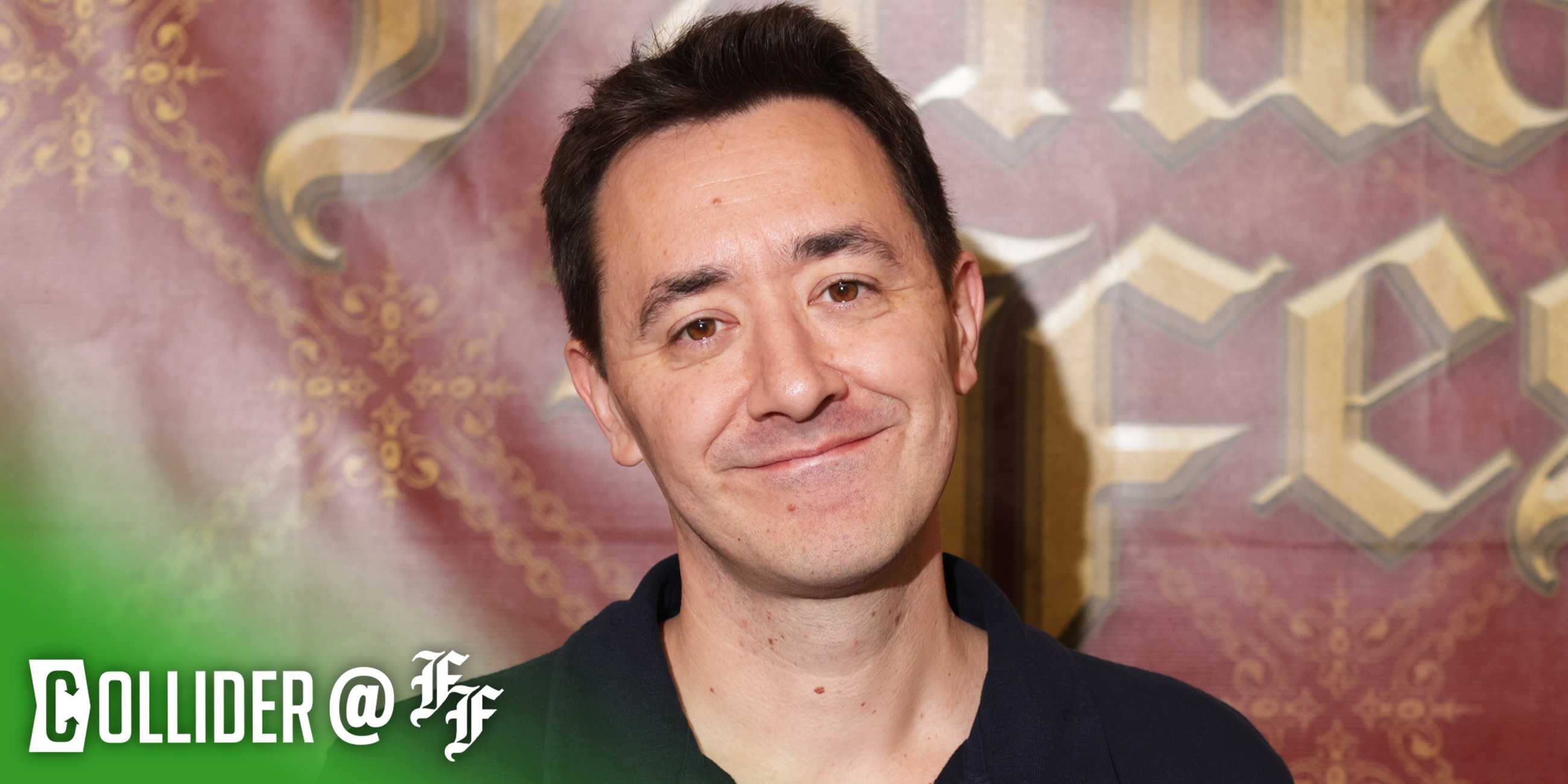
COLLIDER: I made my dad watch [Bugonia], and he said, “What the hell was that? It was wonderful.”
WILL TRACY: That’s how we like it. [laughs] That’s what we like to hear. My parents, I think, were similarly — they phrased it a little more kindly, but I can tell that it wasn’t necessarily… It’s a strong-
ED GUINEY: A bit of head scratching, was there? [laughs]
TRACY: I could tell it was a little bit destabilizing, yeah.
Yorgos makes a very peculiar kind of film and, Will, this is your first time writing a script for him. What separates this one from the type of film that Yorgos is known for?
GUINEY: It was originally developed — Will can speak to this, obviously — with Ari Aster and Lars [Knudsen, producer] and CJ Entertainment. At a certain point, they sent the script to Yorgos, and it was a really terrific script and very evolved, really. Will, you could fill in some of the blanks there before it came to Yorgos.
And he, for the first and only time, read it, loved it, decided he wanted to do it. I can’t exactly remember the timeline, there were other things going on, but I’d never known him to come across a script like that and just see the possibilities in it immediately. Although it’s different from Yorgos’ films in some ways, it’s also actually consistent with what he’s done in lots of other ways too. Probably even more so in the making of it.
It became for him about finding the right moment in his schedule to make the film, that was after we put Poor Things and <em>Kinds of Kindness</em> to bed and then turned to this. But it was a very complete prospect from the beginning and one that he was really compelled by.
A Hitchcock Film That Never Was — The Collider Movie Quiz!
To celebrate the one-week-iversary of this quiz, Collider is scoping out the long-lost Hitchcock project that never materialized: Kaleidoscope.
TRACY: I had written this film about a year, year and a half before– I can’t remember the timing, but … it was not developed for him. I think what I discovered in talking to him — because he was very busy, he was working on Poor Things. And then he had told me right off the bat that he was going to make another film, Kinds of Kindness, right after that. So I knew that he had a pretty full dance card.
But even given that, there wasn’t a tremendous amount of development because I think he sensed that — and I sense that — I had written unintentionally a sort of Yorgos-ian script in a way. Also we seemed really simpatico when we spoke with each other. We had a similar sensibility not only in terms of storytelling but a similar sense of humor which I think was really important.
I think it’s the kind of film that is possible because it has comedic elements to it but it’s also written in a way where it’s trying to seriously grapple with some issues. My intention was that it would be played straight by the actors and made properly tragic where it needs to be. Yorgos has a really good sense of how that’s done. I would have been worried with a different director because I would worry that comedically they would over egg the custard and go too big with the humor or go too glib and he just has a really fine sense of that. I felt very much in safe hands as soon as I started speaking with him.
I want to ask you about the balance of tension and comedy on the page and how difficult it is to thread that needle. What is your personal philosophy when it comes to combining those two things and when to let one breathe when to let one take the driver’s seat?
TRACY: It depends on the piece of material … Look, I’ve only written two films. The other film I wrote, The Menu, there are different things going on in that movie. But I think some of the comedy is slightly more straightforward in its joke-centric preoccupations. This film is probably more of a sense that the situations are inherently extreme and therefore funny and absurd and seem to be speaking to something in our world.
Within that though I’m not necessarily interested in characters attempting to be funny in a conscious way. They’re not telling jokes right? You can laugh at what they’re saying but laughter comes from tension and extremity of situation, and also how convinced they both are of their positions. And their positions again are quite extreme. If you give them a really good argument and put them at opposite sides there’s going to be laughter that comes from tension conviction of characters.
The laugh is going to come from there but … she’s scared and she’s aware of how serious situation is. So yes I would hope that would be played very straight by actors. And luckily because it’s Yorgos and especially because it’s Emma and Jesse[Plemons] they know it’s actually going to be funnier if you play it with serious main I suppose.
Why ‘Bugonia’ Is So Much More Than a Remake
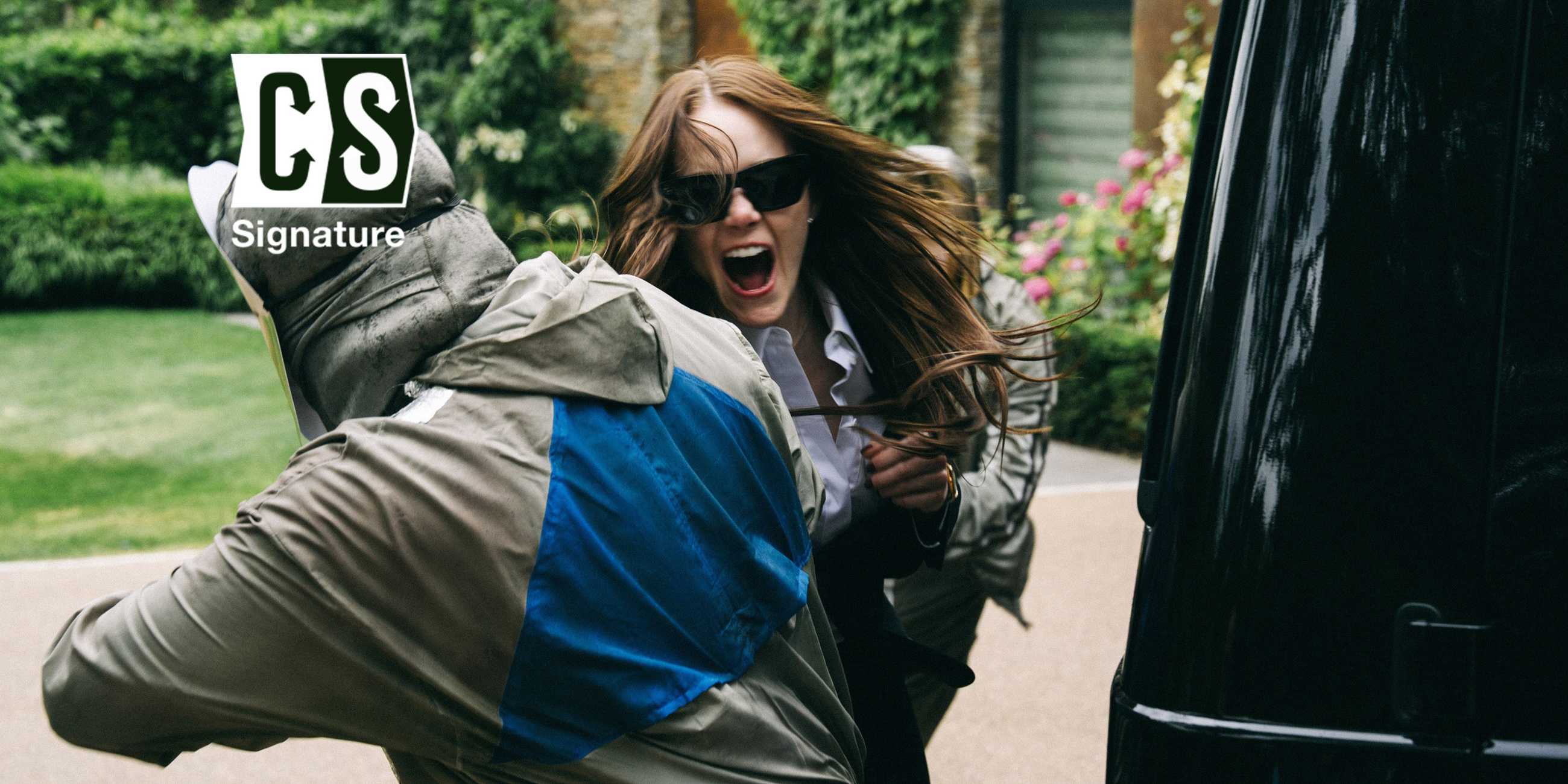
Image via Focus Pictures
When did you want to tackle a remake of Save the Green Planet!, putting your own spin on it? And for audiences in United States updated for your sensibilities?
TRACY: I didn’t really want to tackle any remake at all. To be honest I had never heard of or seen this film so I met with Andrew [Lowe]and Yorgos came on as Ed mentioned I met with Ari Aster who’s another producer on film friend mine essentially took meeting Ari heard him out on Save Green Planet idea mainly because wanted friends Ari thought maybe if we talked about this movie then you know might go down road him for bit do outline or two then he’d realize not great idea but we’d find something else work on so that’s kind what thought happen.
Became clear once sent me copy original film as writer sometimes can see immediately if there’s premise feels writeable you just premise which announces itself beginning original film immediately felt“Oh know what this movie is get what this movie’s about does feel very relatable me.”
This original film it’s bit bifurcated where you’re house male CEO this man his girlfriend kidnap him then you’re cutting between police investigation detective who’s hunt kidnapper captive did away with torture story house police investigation really just focused making almost like chamber piece very chatty movie about argument debate basement escalating debate from “You’re alien.” “No I’m not,” other issues more general political cultural issues felt very writeable me.
This what thought could bring make different sometimes if something feels very writeable becomes difficult not try give go because not always find idea feel “Not only good idea but can already feel scenes developing my head.”
If movie like this mentioned chamber piece where much takes place basement house itself — which me character its own Ed Andrew what biggest challenge production like this? What were biggest challenges set making movie?