

Baldur’s Gate 3 has an undeniably vast scope, but two years after its full release, it’s been thoroughly established that it could have been even vaster. Even outside of early access changes, fans have unearthed clues for all kinds of cut content, leading to countless “what if” scenarios. These can be tempting to imagine, but in many cases, there was probably a good reason for the cuts.
Perhaps the most infamous piece of cut content was the planned inclusion of the Upper City, which would have fleshed Baldur’s Gate out into a much larger metropolis. While Larian seems to have backed off from this idea fairly early, there are certainly threads in the game that might feel more fulfilled with the Upper City’s inclusion, and it could have made for a jaw-droppingly complex finale. It could have much more easily been a disaster, however, and I’m convinced that cutting the Upper City was the only choice that would have ever made sense.
Challenges of BG3’s Cut Upper City
A Difficult Decision
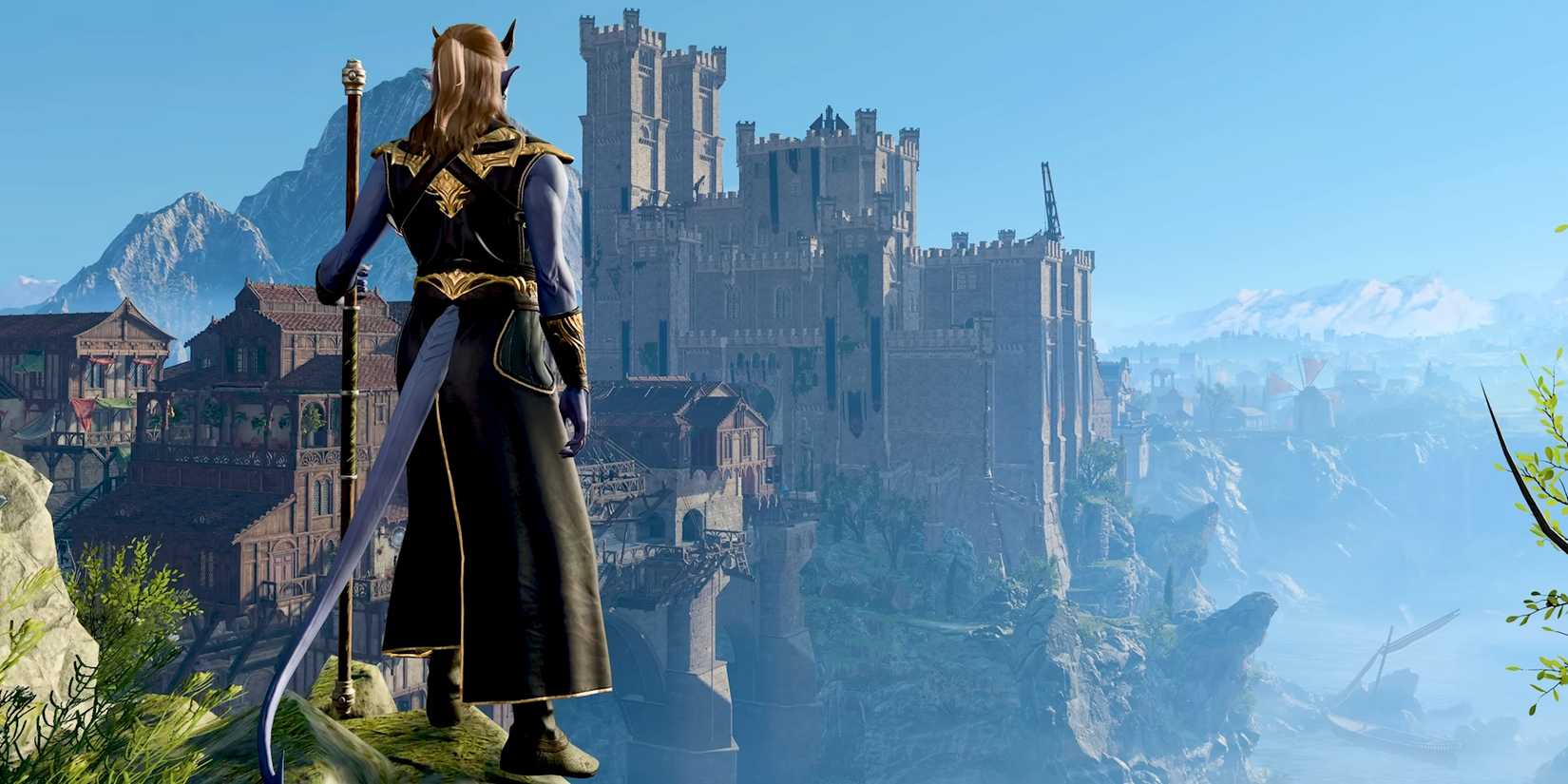
It’s worth noting that the Upper City may have never been conceived in the grand capacity that fans like to imagine it, and Larian’s statements on the subject in Community Update 24 point in the opposite direction. At the same time, some Act 3 locales and ideas feel like they would have made more sense in the Upper City, like the climactic showdown with Cazador in Astarion’s storyline.
Either way, the Upper City doesn’t feel like something that could fit into Baldur’s Gate 3 as we know it. The game is famously huge, and virtually every location is packed with NPCs, challenges, and bespoke reactivity that makes the game world feel alive. Even if it isn’t as sprawling as modern open-world titles, the scope of the affair feels grander thanks to its detail and complexity.
Assuming the best conditions, adding the Upper City to this would pose fundamental challenges for the third act. As the game builds to a climax, balancing the rich possibilities of the city with the maintenance of narrative momentum is a tricky tightrope. Throw in the conclusions to personal companion stories, and it’s dangerously close to sagging under its own weight.
A great Upper City would have to meet and exceed the standard set by the Lower City, which could easily double the size of Act 3 or more. There are ways to rebalance things, and the Lower City could always be deprioritized to make way, but both could never satisfyingly fit into an act of the same size. That grand ambition might still be appealing, but it only gets more difficult from there.
Act 3 Was Challenging Even Without The Upper City
Increase The Scale, Decrease The Stability
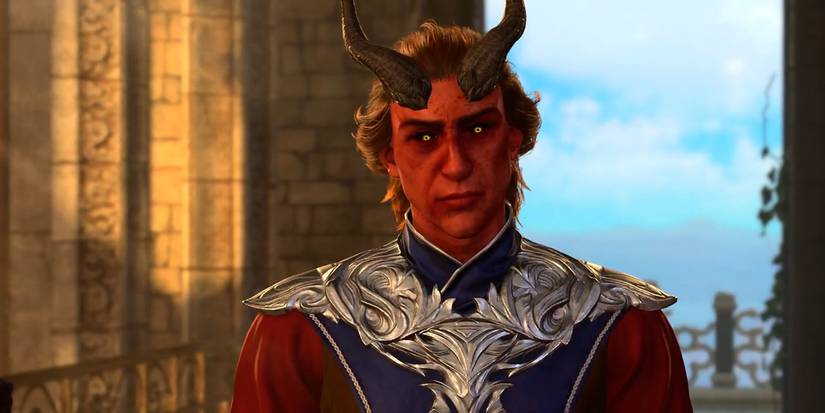
At launch, the version of Act 3 that we ultimately received was in a rough state, and it wasn’t because of cut content. With a larger scope than the other acts and less time in development, Act 3 debuted in a buggy, uneven form that proved disappointing for many players.
The obvious answer is more development time, but if you add in the Upper City, it doesn’t really solve the problem. Baldur’s Gate 3 already had a lengthy development cycle, and Larian established that the staff was more than ready to move on when it came time to consider DLC. Further years of development would likely lower morale, and at some point, endless additions would just prevent the game from ever getting out.
I like to daydream about the Upper City as much as everyone else does, and had Larian chosen to embark on DLC, a huge Upper City expansion certainly sounds appealing. In the context of the game’s primary development, however, it just doesn’t seem like it would have ever been feasible.
While Baldur’s Gate 3 feels like a miracle of delivering both quantity and quality, that’s only because it’s capable of drawing the right line for balance. Adding the Upper City wouldn’t extend this miracle; it would stretch it to its breaking point.
The Upper City Could Have Slowed Down Baldur’s Gate 3
Cut Content For Valid Reasons
If the Upper City had been included, it would have been unplayable at worst and an overlong, uneven addition at best. With a well-crafted narrative, one of Baldur’s Gate 3‘s main goals is to get players to reach an ending, and the Upper City would be an accelerant for burnout. While hardcore fans might just end up playing through four campaigns instead of six, more casual players who were won over by RPG excellence might never see an end.
Should Hasbro ever find a new home for the Baldur’s Gate series, it’s always possible we could still see the Upper City in future installments, and I’ll be looking forward to it if that happens. For now though, I think we got what we could ask for. The Upper City would have been an undeniably fascinating addition to Baldur’s Gate 3, but it could also have turned out to be detrimental.
Source: Baldur’s Gate 3
Baldur’s Gate 3
- Released
- August 03, 2023
- ESRB
- M for Mature: Blood and Gore, Partial Nudity, Sexual Content, Strong Language, Violence
- Developer(s)
- Larian Studios
- Publisher(s)
- Larian Studios
- Engine
- Divinity 4.0
- Multiplayer
- Online Co-op, Local Co-op
- Cross-platform Play
- Full cross-platform play.