
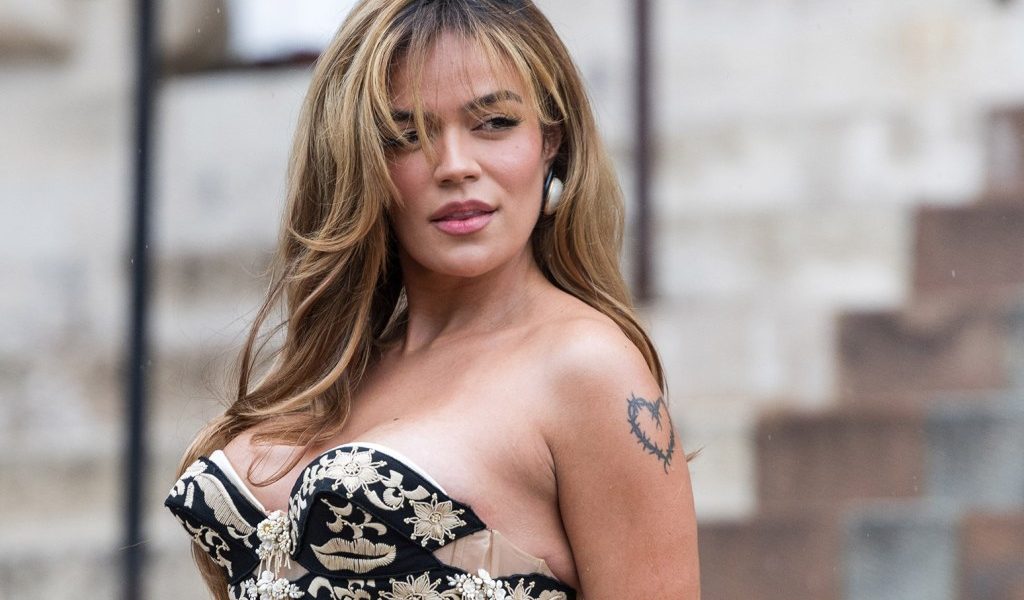

A significant ruling from a federal judge in Miami has dismissed a lawsuit that claimed Karol G and Tiësto infringed upon a Cuban-American composer’s original work with their popular 2021 dance-pop track “Don’t Be Shy.”
On Wednesday, July 9, Judge Cecilia M. Altonaga issued a summary judgment favoring both Karol G (real name Carolina Giraldo-Navarro) and Tiësto (real name Tijs Michiel Verwest), while simultaneously dismissing claims against major music industry players such as Atlantic Records, Kobalt, Sony Music Publishing, and Warner Records.
The lawsuit was initiated by Rene Lorente-Garcia in 2023, who alleged that “Don’t Be Shy,” which marked Karol G’s debut in the English-language music scene and reached an impressive No. 4 on Billboard’s Hot Dance/Electronic Songs chart, directly copied the melody, rhythm, and harmony of his 1998 track “Algo Diferente.”
All defendants firmly denied any allegations of infringement, asserting they had never even heard of Lorente-Garcia or his song “Algo Diferente” prior to the lawsuit. Their expert witness, renowned copyright litigation expert Dr. Lawrence Ferrara, testified that the 1998 composition is distinctly different from “Don’t Be Shy” and that any similarities shared between the two tracks are merely common musical elements found in many songs.
In response, Lorente-Garcia’s legal team presented their own expert analysis from Richie Viera, a respected Latin music producer and former A&R executive at Capitol Records. However, Judge Altonaga ruled that Viera lacked the qualifications to serve as a credible musicology expert in this case.
Judge Altonaga emphasized that while Viera’s CV shows significant experience in the business side of the Latin music industry, none of his past roles demonstrate the essential skills required for forensic musicology, such as transcribing musical compositions, analyzing protectable expressions, or employing comparative methods to assess similarities between songs.
The judge pointed out that Viera’s expert report lacked substantive musicological analysis and failed to adequately consider the critical factor of prior art. During his deposition, when asked about his methodology, Viera allegedly stated, “I use my ears. I am able to detect when a word is copied, when there is any sort of copy. I operate at that high level… I hold an instinct, something that was granted to me by God.”
Judge Altonaga remarked, “That is not a recognized methodology. At best, it represents Viera’s personal intuition presented as professional expertise.”
With the exclusion of Viera’s expert report, Lorente-Garcia’s attorneys would have been required to demonstrate that the writers of “Don’t Be Shy” had prior access to “Algo Diferente” to successfully challenge the summary judgment ruling.
According to Judge Altonaga, Lorente-Garcia’s case falters on this point as well, with the evidence merely indicating “Algo Diferente’s” existence in the vast digital landscape, one song among millions. The judge concluded that “no reasonable jury” could determine that Tiësto and Karol G had ever encountered the track.
Attorney Donald Zakarin from Pryor Cashman, representing both Tiësto and Karol G, along with the involved record label and publishing defendants, stated to Billboard, “This was a misguided case that should never have been pursued.”
Zakarin elaborated, “There was no potential for access, and as Dr. Ferrara demonstrated, the alleged ‘similarities’ were simply common musical elements found in numerous existing works. It’s frustrating that accomplished songwriters and artists frequently face unfounded claims that are costly to contest. However, defending against these claims is essential, and we appreciate our clients and their representatives for standing firm in the protection of all songwriters.”
As of now, Lorente-Garcia’s legal team and Viera have not responded to requests for comments.