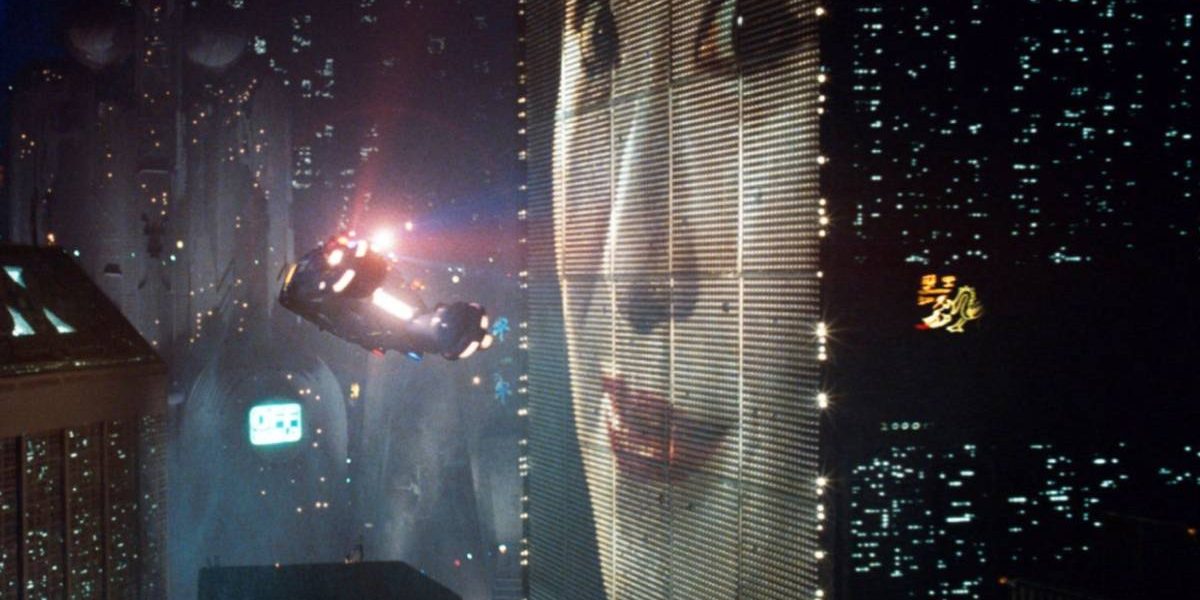

Until things improve substantially (if that ever happens at all), dystopian movies will continue to feel relevant, upsetting, and important. Such films tend to imagine societies that have fallen apart to a greater extent than they may have already fallen apart in real life at the time of their creation. If something falls apart further, to the point where there’s nothing by way of order at all anymore, and society has 100% broken down, you’re probably looking at a post-apocalyptic setting.
The difference between a dystopian film and a post-apocalyptic one is important to note. Mad Max (1979) might be dystopian, while its sequels are post-apocalyptic. The Road is realistic, and dystopian movies tend to be a bit more realistic than post-apocalyptic ones, but that film is also post-apocalyptic. Threads… okay, that one is a bit dystopian at the start, but it shows the progression into something apocalyptic. Anyway, those are some noteworthy titles that aren’t here, since they’re more post-apocalyptic than dystopian. The following movies, though, can be counted as dystopian ones, and are all among the greatest ever made within that particular kind of science fiction sub-genre.
10
‘Escape from New York’ (1981)

This one comes close to feeling post-apocalyptic, but that’s largely because it’s set in a particularly rough part of what seems to be a dystopian world. The movie is Escape from New York, and the premise involves the U.S. President being stranded in Manhattan, which is now basically just one giant prison that lets all sorts of dangerous criminals roam free, and a reluctant antihero is tasked with rescuing said President.
Escape from New York is technically dystopian, and it’s also technically pretty awesome for a down-and-dirty sci-fi/thriller/action movie.
At least there is a President, so maybe that’s a sign there are still traces of law and order in the world outside. Anyway, Escape from New York is technically dystopian, and it’s also technically pretty awesome for a down-and-dirty sci-fi/thriller/action movie, with it getting a pretty lackluster (but sometimes amusing) sequel, and hopefully there won’t be any more, nor any kind of remake. Some may want such things, but they’re not needed. Just let this entertaining hellhole of a movie setting be.
9
‘Logan’ (2017)

Logan is a comic book movie, but it’s also one of the gnarlier and darker ones out there, not to mention one of the few films that did the whole “gritty and somber” thing post-The Dark Knight in a way that actually worked. The dystopian setting helps here, with things taking place seemingly much later in time than most of the other X-Men movies, since things have really fallen apart and the world seems to be on its way to ending.
Just how much it lines up with the other films, and now the MCU ones… eh, it’s a bit confusing to think about. But as a standalone movie that works as a sometimes action-packed superhero movie and a dystopian film all at once, Logan is effective and rather striking. The balance here feels right, and it does remain one of the stronger comic book movies of its decade, without a doubt.
8
‘Brazil’ (1985)
For a movie that’s oftentimes quite comedic, it’s pretty wild how dark Brazil also gets in its exploration of a surreal and nightmarish kind of dystopian society. It’s one that seems most defined by senseless rules and bureaucracy over anything else, though maybe such things are one and the same. Nothing makes much sense, though everyone’s fearful because of the consequences that come about from breaking all sorts of nonsensical rules.
There’s a protagonist here, in Brazil, who seems unluckier than most people, and he gets pulled into a whole series of events that feel like the most Kafkaesque thing not actually written by Franz Kafka. So, all in all, it’s a good time and a bad time all at once, proving entertaining and quite dazzling on a visual/stylistic front while also being very much anxiety-inducing and, ultimately, unapologetically downbeat, too.
7
‘Akira’ (1988)
Akira is the go-to dystopian anime film about Neo-Tokyo in 2019 with all sorts of wild things going on there. Young people are shown rampaging around on bikes while various criminals and gangs interact with powerful groups conducting experiments with psychic powers—likely leading to disastrous outcomes for everyone involved.
By the time Akira starts to wrap up, it feels closer to post-apocalyptic than dystopian yet remains an interesting story with progression into something darker and more chaotic. Additionally, the manga series goes even further with apocalyptic imagery if you have time to explore beyond just the film adaptation.
6
‘RoboCop’ (1987)
A defining narrative about fighting crime through extreme measures,RoboCop critiques police violence while depicting an utterly dismal society gone awry—highlighting why desperate measures were taken during desperate times. The main character—a police officer—is killed but resurrected as a cyborg retaining only fragments of his humanity.
This character operates similarly to an ultra-aggressive version of Dirty Harry but navigates through an even more corrupt world than Clint Eastwood’s character faced. Despite its dark humor,RoboCop serves as both an entertaining action flick and sharp satire—encouraging reflection on significant societal issues amidst its violent chaos.
5
‘WALL·E’ (2008)
This optimistic yet heartwarming family film,WALL·E, still qualifies as dystopian due to its premise involving an abandoned Earth—post-apocalyptic in nature—while revealing remnants of civilization aboard an enormous spacecraft housing survivors functioning like their own mini-dystopia under external control.
The narrative emphasizes reclaiming what has been lost—making it an uplifting tale about resisting oppression within both dystopia and post-apocalyptic settings—solidifying its status as one of animation’s finest films while remaining timelessly relevant.
4
‘Children of Men’ (2006)
A cinematic achievement,Children of Men, showcases impeccable direction alongside intense storytelling—immersing viewers into its world teetering between dystopia and catastrophe due to global infertility threatening humanity’s survival.
The plot unfolds when hope emerges through an unexpected pregnancy triggering chaos during attempts to protect this miraculous child—a gripping exploration highlighting societal collapse while remaining intensely engaging throughout its runtime.
3
‘A Clockwork Orange’ (1971)
The film,A Clockwork Orange, portrays criminals exhibiting extreme ruthlessness alongside corrupt authorities employing aggressive tactics against civilians—defining its status as dystopian while showcasing grounded realism lacking overt science fiction elements.
This approach enhances its confrontational nature—leaving lasting impressions on viewers long after viewing due to its unsettling themes reflecting societal issues still relevant today—demonstrating how powerful storytelling transcends time itself.
2
‘Metropolis’ (1927)
A pioneering classic,Metropolis, stands out not only for being one of cinema’s earliest examples but also for exploring themes relevant even today—depicting stark contrasts between classes where those at top benefit from laborers below leading towards inevitable conflict culminating into revolution.
This film remains timeless due to its forward-thinking narrative reflecting societal struggles still felt today—making it arguably one of cinema’s most impactful works across generations.