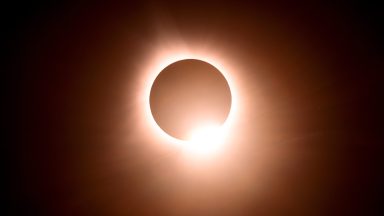
A solar eclipse has become one of the world’s most captivating and eagerly awaited astronomical events. Enthusiastic skywatchers prepare for this spectacle by donning special eclipse-viewing glasses and dedicating an entire day to the experience. Thanks to the diligent work of researchers and scientists, we now have precise timelines detailing when each upcoming eclipse will occur in the near future. However, a recent surge in social media activity has sparked rumors about the much-touted “eclipse of the century” supposedly visible on August 2, 2025. So, what’s the truth behind these claims, and how can everyone witness the total solar eclipse?
Keep reading to discover the exact timing of the upcoming 6-minute-long eclipse and learn how you can experience this celestial event.
Is There a Solar Eclipse Today August 2, 2025?
No, despite the rampant speculation, there is no solar eclipse occurring on August 2, 2025. This confusion primarily arose from reports concerning a solar eclipse scheduled for 2027. It’s essential to clarify the details to avoid misinformation, especially when it comes to such significant astronomical events.
Ever seen a total solar #eclipse from space?
Here is our astronauts’ view from the @Space_Station pic.twitter.com/2VrZ3Y1Fqz
— NASA (@NASA) April 8, 2024
When Is the Solar Eclipse?
The highly anticipated solar eclipse is scheduled to occur on August 2, 2027. This extraordinary event, often referred to as the total solar “eclipse of the century,” is expected to last more than 6 minutes at its peak, according to NASA. This makes it a rare opportunity for enthusiasts and casual viewers alike to witness the beauty and majesty of a total solar eclipse.
Where Will the ‘Eclipse of the Century’ Be Visible?
The total solar eclipse will be visible in numerous locations, but unfortunately, North America will not be one of them. This means that the majority of American skywatchers will miss out on viewing the total solar eclipse in 2027. Instead, individuals in parts of Europe, Africa, and the Middle East will have the privilege of experiencing several minutes of darkness as the moon completely obscures the sun.
The countries that will be situated in the path of totality are:
- Spain
- Morocco
- Algeria
- Tunisia
- Gibraltar
- Libya
- Sudan
- Egypt
- Saudi Arabia
- Yemen
- Somalia
For other countries located outside the path of totality across the three continents, viewers will still be able to catch a partial glimpse of the solar eclipse.
Some Americans will be fortunate enough to observe a partial view of the solar eclipse on August 2, 2027. Specifically, residents in portions of Maine will have the opportunity to see this celestial phenomenon between 5:14 a.m. and 5:19 a.m. ET, as reported by Time and Date.
Is August 2 the Only Total Solar Eclipse Coming Up?
No, there is indeed another total solar eclipse scheduled for August 12, 2026. However, American skywatchers may also face challenges in witnessing its totality. Viewers in Greenland, Iceland, Spain, Russia, and Portugal will be in a prime position to experience this remarkable event, making it a significant opportunity for those in those regions.