
[Editor’s note: The following contains spoilers for IT: Welcome to Derry.]
Key Insights
- The HBO series ‘IT: Welcome to Derry’ explores the consequences of weaponizing fear and exploiting the townspeople’s anxieties.
- Set in 1962, the series taps into Cold War fears, including nuclear anxiety, lost innocence, and generational trauma.
- Each season will progress through different time periods in the entity’s cycle, ensuring that no character is safe.
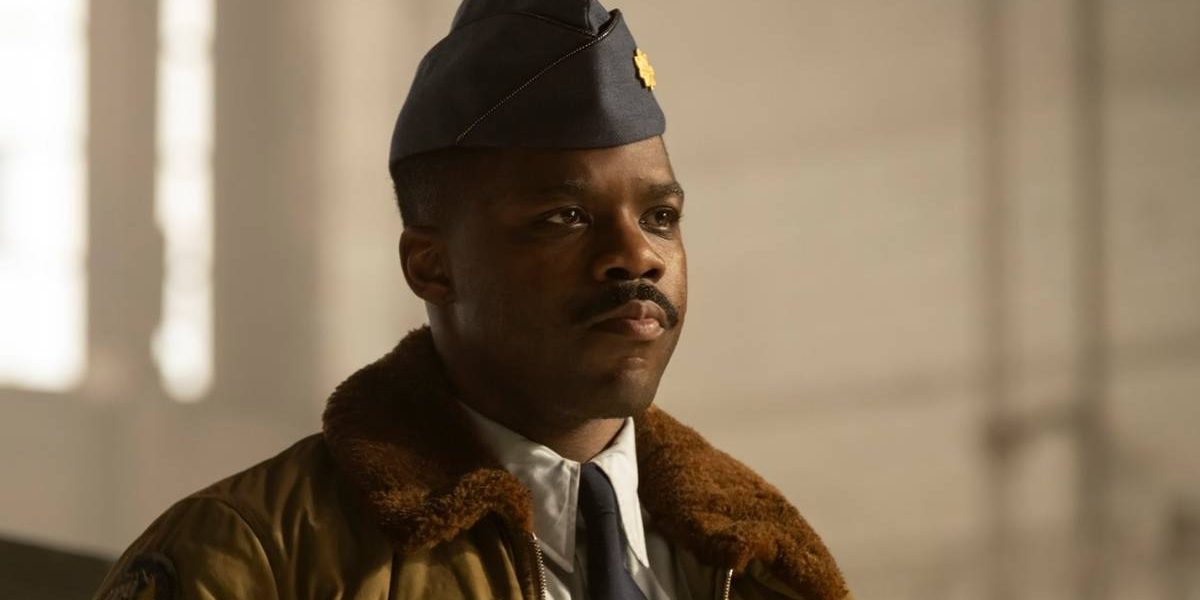
The HBO series IT: Welcome to Derry delves deeper into the universe created by Stephen King, examining the origins of the entity that haunts the seemingly peaceful town. Set against the backdrop of 1962 during the Cold War, when fears of nuclear attacks and radiation loomed large, it features enough scares, unexpected deaths, shocking twists, and Easter eggs to remind viewers that no one is truly safe. While Rose (Kimberly Guerrero) is aware of the dark happenings in Derry and that a new cycle of evil has begun, General Shaw (James Remar) keeps his soldiers unaware of his intentions regarding the entity.
In this interview with Collider, showrunners Jason Fuchs and Brad Caleb Kane discussed the challenges of adapting King’s work, crafting a story that resonates today as much as it did at its inception, their anthological approach for each season, decisions on revealing aspects of the entity, developing the car sequence in the first episode, and determining the role of Dick Hallorann (Chris Chalk).
‘IT: Welcome to Derry’ Is an Exploration of the Weaponization of Fear
“This is a story about how IT uses fear against the people of Derry.”
Collider: What is the biggest intimidation factor when it comes to taking on a Stephen King story and world? Specifically with this story, was there anything you wanted to make sure you really delivered on, in order to be true to the story, the characters, and the world?
JASON FUCHS: There are risks abound when you’re doing something like that. We’re both mega Stephen King fans. We’re huge fans of the book. Both of us read the book at an inappropriately young age. You want to do right by the fan base, of which we count ourselves among it. You want to do right by Stephen King. You want him to feel like this is an organic and authentic extrapolation of his work. Obviously, we love the IT films. I was lucky enough to work on the second one, and you want to live up to the extraordinary cinematic high watermark that the Muschiettis set with those. So, there are risks abound, but also tremendous opportunity and reward if you nail it, and that’s what we tried to do.
We were committed from very early on to telling a story that felt true to the core themes we cared about in the book and that resonated with us as readers and viewers—most specifically, the weaponization of fear.This is a story about how IT uses fear against the people of Derry. IT uses fear as a tool to turn people against one another and make characters feel isolated in their struggles. Watching characters grapple with that felt like an authentic extension of a book and a story we loved, which remains relevant today just as when Stephen King first wrote it.
BRAD CALEB KANE: Another intimidating aspect was knowing that IT’s cycles occur every 27 years. The movie takes place in 1989, making 1962 its earlier cycle. The fears of 1962 were very different from those in 1989 when the Red Scare was winding down; in 1962, those fears were very much alive. There was widespread anxiety about nuclear war. Many view 1962 as America’s last Age of Innocence; however, this perception is misleading. It was not an innocent time for many people—especially for a significant segment of society in America during that year. Thus, we knew we had to address those genuine fears from that era as well. As you can imagine, this was daunting given what those fears entailed.
Since you are telling this story in cycles, will this season fully conclude the narrative for 1962? Do you need to finish this story before moving on to another era?
FUCHS: Yes and no. There is an anthological component to this show where we are telling a complete story for each cycle during IT’s reign of terror in Derry. However, your question was one we discussed early on: “If we are doing a show that moves backward in time each season, what are its continuous elements? How can you tell a show in reverse while maintaining some sense of forward momentum?” You may not receive a full answer within this season’s context. But if we are fortunate enough to continue this story into future seasons, there is a specific mythology and logic behind why it is being told this way that will create continuity.
KANE: The advantage of long-form storytelling is that it allows for deeper character exploration. You can uncover what drives them and their genuine fears. We know what happens in 1989; we know how things unfold 27 years later with the original Losers confronting IT and ultimately defeating him. However, we don’t know what will happen to these new characters in 1962 at our story’s beginning. If we can engage audiences emotionally with these characters and make them wonder whether they will survive this cycle—that creates a rooting interest for viewers. With our first episode, we immediately unsettle audiences by stating “Don’t get too comfortable with anyone because nobody is safe.” How will these new characters make it out alive?
FUCHS: Early on, we established that there are no rules—no one is safe; anything can happen. This show is a thrill ride filled with twists and turns alongside important thematic elements we’re addressing as well as emotional and character-driven components. I believe audiences will be surprised by where this show leads them. Just when viewers think they understand where the story is headed or who they can trust—whether allies or enemies—we aim to keep them consistently guessing.
With So Much Fear in the World, Why Does IT Stay in Derry?
“We delved into the mysteries of Pennywise.”
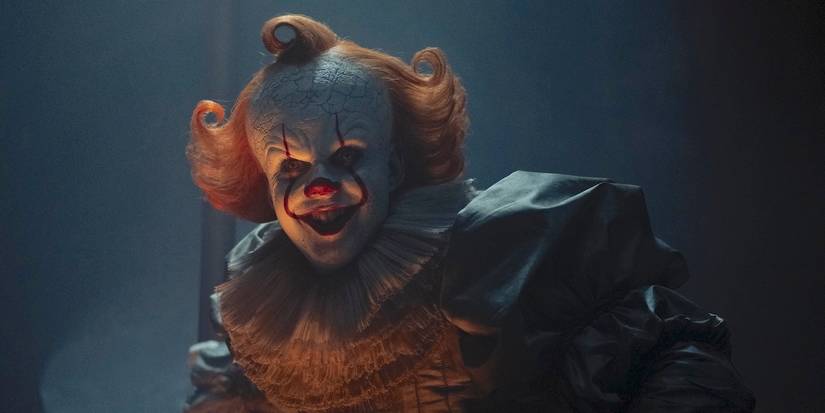
Some horror villains are more interesting when shrouded in mystery. Did you ever worry about revealing too much about Pennywise? How did you decide what information to share and when?
KANE: Yes, some villains are scarier when they remain enigmatic. What’s intriguing about IT is that he’s a biological entity whose nature is explored more thoroughly in King’s book than depicted onscreen. While much interdimensional lore was omitted from previous films, Stephen King clearly described this creature’s origins from another realm—existing for eons while dominating those it encounters.This background gives us substantial insight into IT’s character.
The question arises: why does IT remain in Derry? Despite being omniscient and seemingly all-powerful over its residents—consuming their fear—there are denser hunting grounds available elsewhere. Why does this creature choose Derry? Who were its original inhabitants? Did they have knowledge of this ancient being? We also aimed to comment on evil’s nature—it’s perennial rather than something easily vanquished. While films often depict evil as conquerable, reality suggests confronting it directly may be more effective than attempting destruction.
FUCHS:The other key mystery from King’s work revolves around why IT—a shapeshifting being—continually returns as Pennywise the Dancing Clown. What draws IT back to this particular form? How did it first adopt this persona? We explored these questions deeply within our narrative framework.
The opening sequence involving Pennywise showcases Bill Skarsgard’s performance evolution—he brings new dimensions to Pennywise that audiences haven’t seen before.
The sequence in episode one escalates creepiness until culminating with a grotesque creature’s birth—how did you conceptualize this moment? Was it crucial for such an impactful introduction?
FUCHS: The opening sequence was among my initial concepts while developing this show alongside Andy and Barbara. Our goals included creating an immediate impact—a visceral experience combining familiarity with freshness—while remaining true to what makes an IT narrative compelling. It felt natural for such a tale to begin with a child’s abduction or murder—the inciting incident triggering violence within our storyline.
KANE: This sequence also serves as commentary on appearances versus reality—while entering 1962 may seem idyllic like Norman Rockwell’s art suggests—a darker reality lurks beneath.
KANE: This opening scene hints at deeper themes regarding innocence lost—a fitting metaphor for new beginnings within Derry storytelling.
Your approach towards depicting violence involving children often raises challenges—how did you navigate these sensitive scenes?
FUCHS: Our goal at episode one’s conclusion was upending audience expectations regarding character attachment—they cannot rely on any character surviving unscathed. We aimed for disorientation—not merely for shock value but also immersing viewers into our protagonists’ experiences who remain oblivious about their fate within IT’s universe.
KANE: Stephen King frequently places children at risk throughout his works—from original IT through The Long Walk up until Salem’s Lot—this motif resonates strongly within his narratives.
BOTH FUCHS AND KANE emphasize thematic significance surrounding innocence lost—a central theme woven throughout their adaptation efforts.
The Dick Hallorann in ‘Welcome to Derry’ Is in Service of No One but Himself
“He’s a very different Dick Hallorann than the one we meet in ‘The Shining.'”
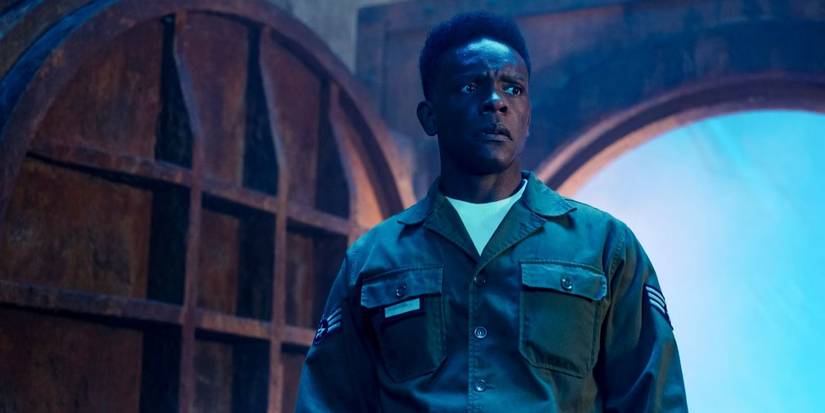
What was it like approaching a character like Dick Hallorann? How did you balance making him familiar while revealing new aspects?
FUCHS: Dick Hallorann was included from my initial outline due to hints found within Mike Hanlon’s interludes throughout King’s book regarding past cycles involving IT—and one intriguing suggestion indicated Dick Hallorann had been present during The Black Spot fire incident. I expressed my excitement about exploring Dick Hallorann at a pivotal moment where he differs significantly from his portrayal seen previously within The Shining. This version showcases Hallorann before fully mastering his abilities—a more cynical individual who operates solely for himself rather than serving others like Danny Torrance does within King’s original narrative.
- Release Date
-
October 26, 2025
- Network
-
HBO
- Franchise(s)
-
IT
IT: Welcome to Derry airs on HBO and streams on HBO Max. Check out the trailer: