
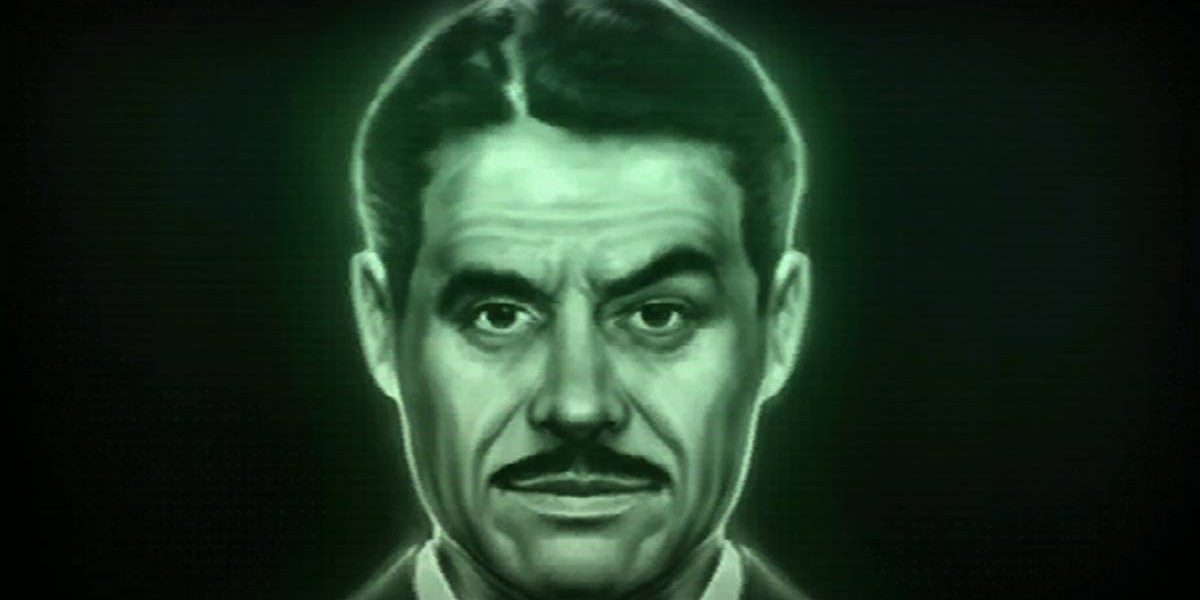
The Season 2 premiere of Prime Video’s <em>Fallout</em> has reframed one of the franchise’s most important figures: Robert House. What initially appeared to be a simple casting change instead functions as a major twist. The version of House audiences previously saw may not have been the real man at all, but a public-facing stand-in designed to absorb scrutiny, allowing the real House to remain hidden. This matters because House is difficult to reconcile with a linear television timeline. In Fallout: New Vegas, his fate is entirely dependent on player choice. He can retain control of the Strip, lose power, or be killed outright, and each outcome is equally valid within the game’s design. Any adaptation that declared one version “correct” would immediately undermine the rest. Rather than picking an ending, Fallout Season 2 appears to sidestep the question entirely.
Robert House Has Always Ruled Through Systems, Not Presence
Even in New Vegas, House’s power was never rooted in visibility. His real body was hidden, decaying, and sustained through artificial means, while he found authority through machines, economic control, and infrastructure. New Vegas did not need House to be present in order to function: it needed his systems to keep running. Season 2 reinforces that philosophy almost immediately. House is portrayed as a ruthless optimizer. People are variables, institutions are experiments, and proximity to him is dangerous because he does not view individuals as ends in themselves, they are components within a larger equation. That worldview becomes even clearer with the introduction of the brain-computer interface device. Unlike the Platinum Chip from New Vegas, which focused on automated defenses and long-term stability, this new technology targets human autonomy directly. It is not about protecting New Vegas, it is about eliminating unpredictability. When the experiment ends catastrophically, House’s reaction is telling. He does not panic or express remorse.
What makes this especially significant is that House’s reliance on abstraction predates the Great War entirely. Long before the bombs fell, he treated governments, corporations, and rival industrialists as inefficient systems in need of correction. The wasteland did not radicalize him, it simply removed the remaining obstacles to executing his ideas at scale. Seen in that light, the brain-computer interface is a culmination. If House believes progress requires control, and control requires predictability, then the next logical step is removing human choice from the equation altogether.
What You Need To Know About ‘Fallout: New Vegas’ Ahead of the Series’ Second Season
To understand Season 2, you need to understand New Vegas.
Why a Decoy Robert House Makes Perfect Sense
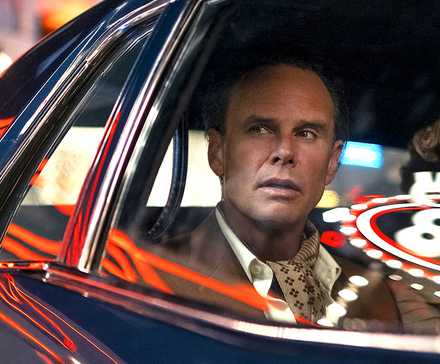
The implication that the Robert House seen publicly in Season 1 was a stand-in reframes everything about his role in the series. What appears to be the real House, now portrayed by Justin Theroux, studies the people around him. For House, a decoy is not merely a defensive measure, it is an extension of his philosophy. Public outrage, political pressure, assassination attempts — all of these risks can be eliminated by a version of Robert House designed to be expendable. If the world turns against him, it turns against the wrong man. Meanwhile, the real decision-maker remains insulated, free to move, adapt, or disappear entirely.
What This Means for House’s Fate After New Vegas
Late in the Season 2 premiere, Hank MacLean (Kyle Maclachlan) remarks that House spent his life calculating how to survive every possible outcome. That line reframes House less as a ruler clinging to power and more as a contingency engine. If House anticipated betrayal, defeat, and even his own symbolic death, then separating himself from the version of Robert House tied to New Vegas becomes his most elegant solution. This structure allows Fallout to preserve every New Vegas ending without contradiction. The House connected to life-support systems beneath the Strip could have been destroyed, disconnected, or rendered obsolete — while the real House continued elsewhere, either influencing events remotely or abandoning New Vegas once it no longer aligned with his projections. Hank’s implication that House may not even be in Vegas anymore significantly widens the scope of what his survival could mean.
By turning Robert House into an open question, Fallout avoids canonizing a single New Vegas ending while staying true to the franchise’s roots. House becomes less a character and more a lingering presence — one that adapts, persists, and refuses to be neatly resolved. As Season 2 continues, it seems increasingly likely that the series will peel back more layers of what House truly became, and how much of the wasteland is still moving according to his design. For a world shaped by unreliable histories, that kind of slow revelation may be the most Fallout answer possible.

- Release Date
-
April 10, 2024
- Showrunner
-
Lisa Joy, Jonathan Nolan
- Writers
-
Lisa Joy, Jonathan Nolan
- Franchise(s)
-
Fallout