 Source: Harry M. Daniels LLC / Wukela Communications
The decision by prosecutors in Jacksonville, Florida, to not file charges against the police officer involved in the brutal beating of 22-year-old William McNeil Jr. has sparked significant outrage. On February 19, a police officer was captured on camera breaking the window of McNeil’s vehicle and forcibly dragging him out, an act that many view as excessive and unwarranted. The lack of accountability for the officer, as well as for others involved in the incident, raises critical questions about police conduct and the systemic issues surrounding law enforcement in the region.
According to a report by The Washington Post, police are asserting that prior to breaking McNeil’s window and extracting him from his car, he allegedly reached toward his floorboard, where they later discovered an unsheathed knife. This claim, however, is met with skepticism due to the lack of supporting evidence and the contradictions presented by the available footage. The narrative presented by the police does not align with what was recorded during the encounter, leaving many to wonder about the integrity of the officers’ accounts.
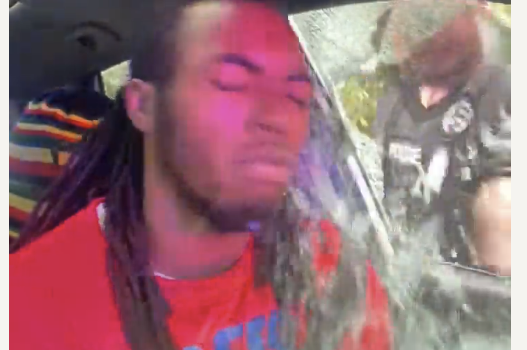
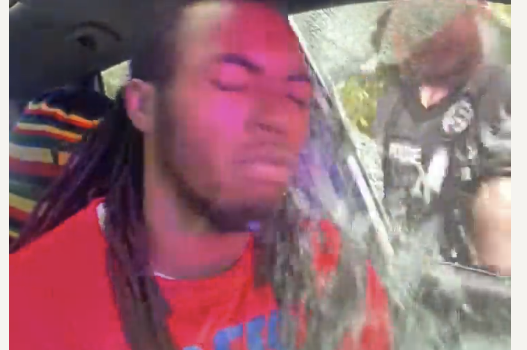
One glaring issue arises from the contradiction in the police report: the video evidence does not corroborate their statement. The footage, captured by McNeil’s cell phone and recently going viral, shows him calmly questioning the officer about the reason for his traffic stop. The video details the moment the officer smashed his window and forcibly removed him from the vehicle, yet there is no indication that McNeil reached for anything prior to the officer’s aggressive actions. This discrepancy highlights a troubling pattern of police behavior and raises concerns about their justifications for the use of excessive force.
The video footage from McNeil’s cellphone, along with recordings from police body cameras, paints a stark picture of the incident leading to his arrest. As the officer approached McNeil’s vehicle, McNeil opened his door and inquired about the reason for being pulled over. The officer claimed McNeil was stopped for not having his headlights on during poor visibility and for not wearing a seatbelt. McNeil responded by pointing out that it was daytime and there were no adverse weather conditions, questioning the validity of the stop.
When the officer requested McNeil’s license, registration, and proof of insurance, McNeil asked for the officer’s supervisor and again sought clarification about the traffic stop. In response, the officer called for backup and commanded McNeil to exit the vehicle. Instead of complying, McNeil closed his door, a decision that escalated tensions between him and the officers on the scene.
As the situation intensified, the officer declared McNeil was under arrest for resisting, warning him that delaying compliance would lead to harsher consequences. The officer’s repeated commands to exit the car were accompanied by threats of breaking the window, demonstrating a clear disregard for McNeil’s rights and safety. This type of aggressive posture from law enforcement not only undermines public trust but also exacerbates fear and anxiety within the community.
Upon the arrival of another officer, attempts were made to persuade McNeil to exit through the passenger-side window, but he continued to refuse. In a shocking turn of events, the initial officer broke the driver-side window and struck McNeil in the face, an act that many are calling an unjustified use of force. Throughout the ordeal, McNeil complied by presenting his hands when asked, only to be violently pulled from the vehicle as officers escalated their aggressive tactics.
The video reveals a harrowing scene where multiple officers surrounded McNeil, with one officer delivering a second punch to his face while they pinned him to the ground. As they handcuffed him, the officers accused McNeil of “fighting back,” despite clear evidence to the contrary. This incident exemplifies the troubling trend of police brutality, particularly against Black individuals who are often subjected to excessive force in situations that could be resolved peacefully.
The footage makes it abundantly clear that the officer’s frustration stemmed from McNeil’s unwillingness to comply without a valid explanation for the traffic stop. This raises important questions about law enforcement’s approach to Black civilians and the underlying issues of racial bias that persist in policing practices. Florida law states that drivers must use their headlights during specific conditions, but the absence of adverse weather during McNeil’s stop casts significant doubt on the legitimacy of the officer’s actions.
Legal representatives for McNeil, attorneys Ben Crump and Harry Daniels, issued a joint statement emphasizing that McNeil was calm and compliant throughout the encounter. Instead of receiving clear answers to his inquiries, he was met with violence and aggression over a questionable claim about his headlights. They condemned the actions of the police as blatant brutality that starkly contrasts with the principles of law enforcement.
This leads to a critical inquiry: if the officers believed McNeil was reaching for something in his vehicle, why did they opt to break the window and use physical force rather than drawing their weapons and demanding he show his hands? The absence of any footage indicating McNeil reaching for a weapon raises further doubts about the officers’ narrative and highlights the need for accountability in their actions.
Despite the video evidence contradicting the police report, Sheriff T.K. Waters announced that local prosecutors concluded there was no criminal wrongdoing by the officers involved. Sheriff Waters suggested that the footage does not provide the complete context of the incident, arguing that cameras cannot capture the full depth of the situation. This assertion is met with skepticism, as many believe that the video clearly shows the unnecessary use of force.
While Sheriff Waters, who is Black, defends his officers, he appears to dismiss the role of racism in their actions. During a town hall meeting, he addressed community concerns about the incident while acknowledging the existence of racism but downplaying its impact on law enforcement practices. This response reflects a broader struggle in addressing systemic issues within policing and the complex dynamics of race and power in America.
The ongoing dialogue around systemic racism and police brutality is complicated by misconceptions about the experiences of Black individuals in the United States. Many advocates argue that success is often achieved despite systemic barriers, not because they are absent. The focus should remain on the violence and aggression displayed by law enforcement during interactions with Black citizens, which continues to raise alarms about the need for reform and accountability.
As the community grapples with this incident, Sheriff Waters’ comments suggest a disconnect between the realities faced by many Black individuals and the perceptions held by some within law enforcement. Despite the availability of video evidence, the narrative surrounding the incident continues to be shaped by those in positions of power, leading to ongoing frustration and calls for justice.
In light of the recent events, Ben Crump shared a poignant message on social media regarding McNeil’s experience, referring to the traffic stop as dehumanizing. He stated, “What happened to William McNeil Jr. should never happen during a traffic stop. He was punched, dragged, and dehumanized — not for committing a violent crime, but for asking questions. America, this treatment is far from acceptable!” Crump’s comments echo the sentiments of many who demand accountability and reform in the way law enforcement interacts with the communities they serve.
SEE ALSO:
GoFundMe Started For Black Man Killed After Being Sucked Into MRI Machine
Video Shows Florida Cops Beat Black Man After He Questioned Why He Was Stopped Over Headlights During Daytime