

SPOILERS for Netflix’s Boots are ahead!
Netflix’s gay Marines dramedy, <em>Boots</em>, is rooted in one man’s real experiences and a tragic history of LGBTQ+ exclusion in the United States Military. Based on the bestselling memoir The Pink Marine by Greg Cope White, Boots tells the story of a gay teen named Cam Cope who enlists in the Marines in 1990 not knowing what to expect.
Actor Miles Heizer leads the cast of Boots, playing the fictionalized version of Cope White. His performance shows all the emotional nuances of a very complex environment which seeks to tear him down and out him.
Boots takes many creative liberties with some characters to further the core messages. However, at the heart of the story is emotional truth and real-life inspiration. From the start to the end of Boots, the dramedy incorporates the real history of the Marines and the experiences of Greg Cope White.
Boots Is Based On Greg Cope White’s Experience Joining The Marines As A Closeted Gay Man

In 1979, Greg Cope White decided to enlist in the United States Marine Corps alongside his best friend, Dale, using the Buddy Program. Dale had previously gone to the Air Force Academy. However, his eyesight wasn’t good enough to be a fighter pilot, so he switched gears, completing his military contract in the Marines. In Boots, this is a lie to hide his anxiety disorder, but the TV show lie is the truth in real life.
While he had zero idea what he would experience at boot camp, Cope White knew he would have to lie about his sexuality. It was a crime to be gay in the military. In an interview with the Classic Conversations podcast, he explained that he was more scared of getting beaten up than getting court-martialed.
Once he arrived at Parris Island, he found himself experiencing sleep deprivation, verbal degradation, and intensive physical training. In his book, Cope White explains that by the midway point, he was more determined to finish than he was scared to get outed.
Netflix’s Boots Is Set Four Years Before “Don’t Ask, Don’t Tell” Went Into Effect
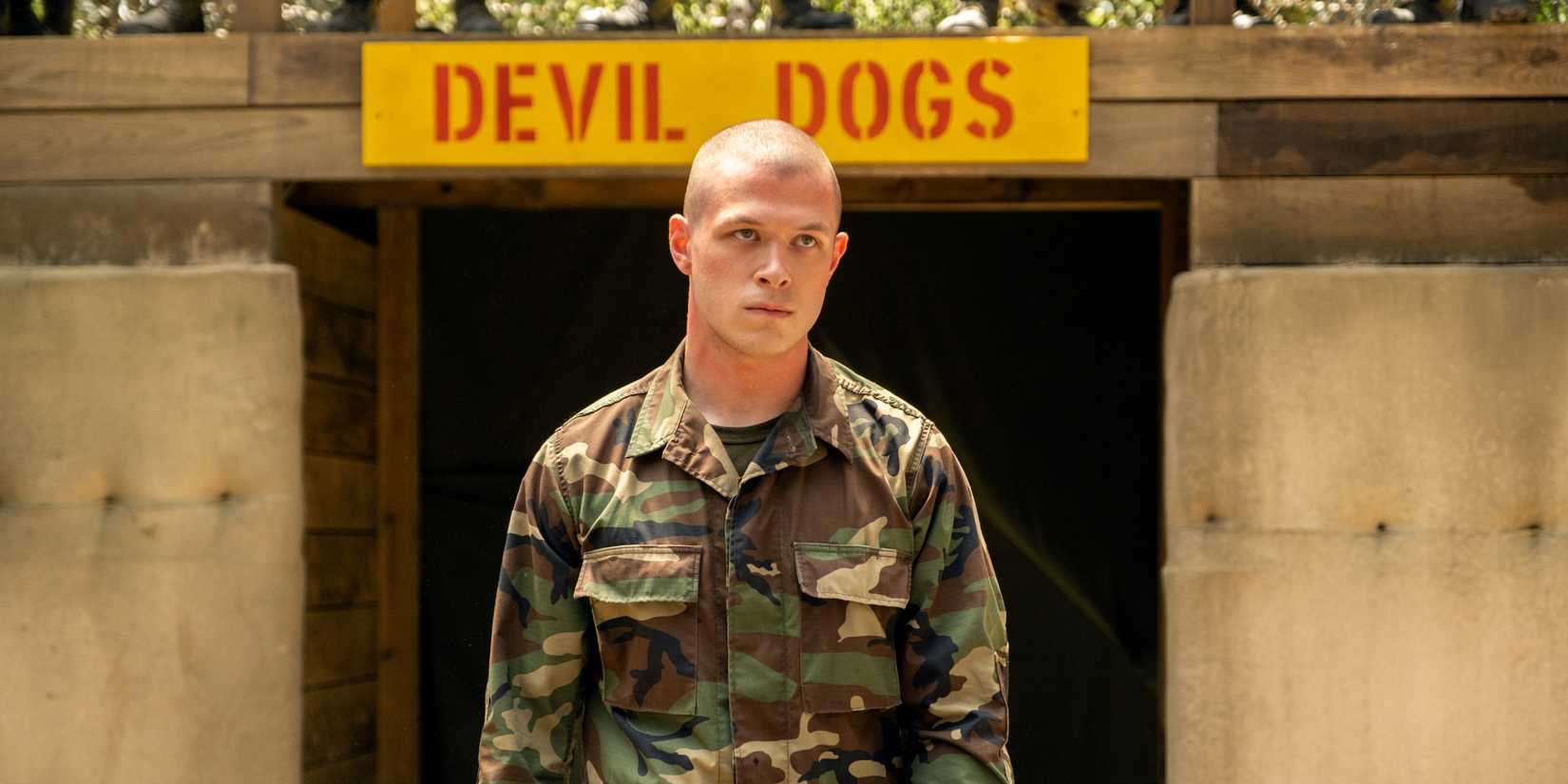
While Cope White’s real experiences took place fifteen years before “Don’t Ask, Don’t Tell” went into effect, Boots moves the date to 1990. This is a significant change that’s done for narrative impact. The attitudes were changing at that point, meaning Cope and Sgt. Sullivan had people who might be on their side if they were discovered.
Additionally, while it was definitely illegal for him to enlist, Cope White joined the Marines before the infamous 1981 Department of Defense Directive 1332.14, which stated in no uncertain terms that “Homosexuality is incompatible with military service.” This ramped up the Naval witch hunts for lesbian, gay, and bisexual service members.
“Don’t Ask, Don’t Tell” wouldn’t go into effect until 1994, but even that wasn’t much of a step up for service members. Military members could no longer ask about another member’s sexuality, and they couldn’t discriminate on the basis of suspected sexuality. However, lesbian, gay, and bisexual people also couldn’t disclose their sexuality.
If their sexuality were discovered or they were determined to have engaged in sex with another person of the same sex, they would be discharged. It wasn’t until 2011 that it became legal for military personnel to come out of the closet regarding their sexuality. Trans members were still banned.
Ultimately, approximately 100,000 service members were discharged based on their sexuality between WWII and the end of DADT (via the Restore Honor to Service Members Act). If Cam, Jones, or Sgt. Sullivan was to be outed in Boots, they would have been part of that statistic.
Sgt. Sullivan’s Investigation Subplot Speaks To The Real NCIS Investigation Into Gay Service Members
As previously mentioned, the NCIS (called NIS at the time) investigation into gay, lesbian, and bisexual service members was very real. According to the 1992 Defense Force Management report to Congress, between 1980 and 1990, approximately 1,500 service members were discharged each year on the basis of sexuality.
This disqualified them from getting any veterans’ benefits. It also meant shame and stigma from fellow veterans. On top of that, the discharge isn’t processed immediately, so the service member would have to handle increased scrutiny while waiting.
Taking increased watchfulness into consideration, Sgt. Sullivan’s fear of getting discovered would make perfect sense. What’s more, because he lied about it, he could have been court-martialed rather than just dishonorably discharged or an “other than honorable” discharge.
The Physical Drills In Boots Are Based On Real-Life Marine Boot Camp