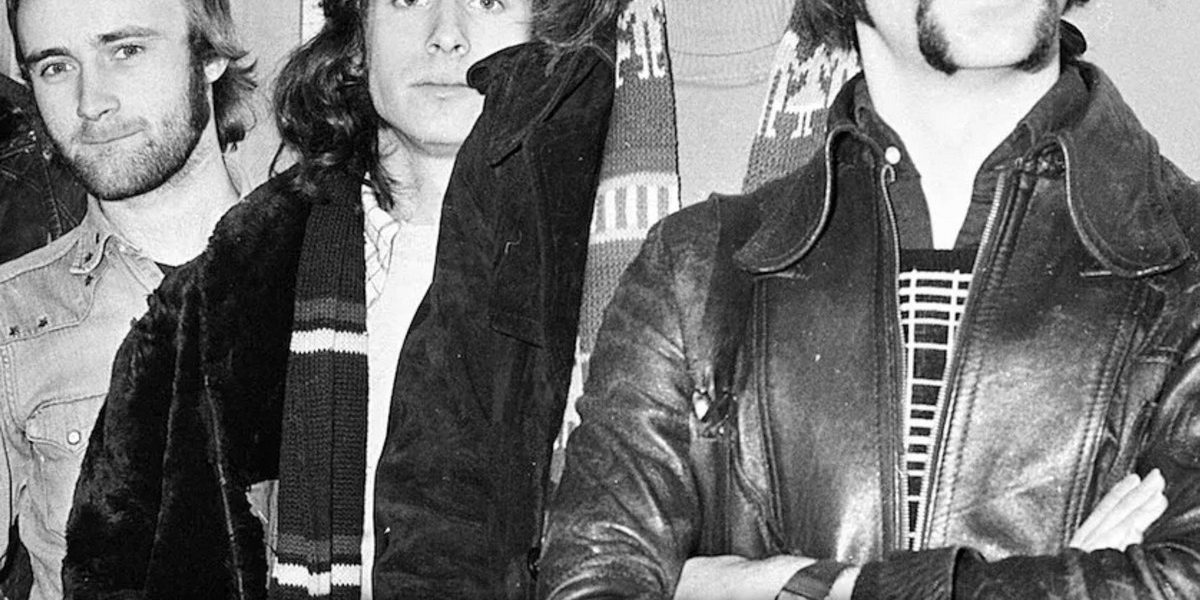
Not all Genesis solo careers were created equal. That’s no surprise to anyone who watched as ex-frontman Peter Gabriel battled both Mike Rutherford and the now-Phil Collins-led main band for chart supremacy in mid-1986. The more intriguing wrinkle is how quickly – and how slowly – the individual members found success away from Genesis.
Tony Banks, Steve Hackett and Anthony Phillips each posted career-best LPs early in their respective solo careers, even if they were eventually outsold (on a scale of millions and millions) by Collins, Gabriel and Rutherford. In fact, the top albums from Banks, Hackett and Phillips – and in some cases, their best-selling albums – arrived before the dawn of the ’80s.
Banks’ best LP, in fact, just missed the U.K. Top 20. Phillips both had help from Genesis bandmates. Mike Rutherford contributed some songs to Phillips’ top solo project, and Collins guested as a vocalist. Conversely, Hackett’s most complete solo release featured the debut of his then-new late-’70s solo touring band. Together, they almost helped Hackett sneak into the U.K. Top 25.
How Did Genesis’ Biggest Stars Struggle at First?
At the same time, however, Genesis’ blockbuster solo acts got off to relatively slow starts.
Collins’ ubiquitous 1985 album No Jacket Required sold nearly twice as many copies as his first two solo projects combined. None of Gabriel’s first four releases cracked the U.S. Top 20 before he started reeling off multi-platinum hit solo LPs. Rutherford had released two largely forgotten records before leading Mike and the Mechanics to U.S. success with a pair of gold-selling albums and the No. 1 hit “Living Years.”
READ MORE: Top 10 Phil Collins-Era Genesis Songs
Genesis benefited from the outsized solo successes enjoyed by Collins, who’d taken over as the band’s singer after Gabriel’s departure in 1975. The main band scored a first-ever No. 1 single with “Invisible Touch” during the week of July 19, 1986, before their former frontman replaced them at the top the very next week with “Sledgehammer.” Remarkably, Rutherford had just peaked at No. 5 with Mike and the Mechanics’ “All I Need Is a Miracle” in June.
Core members of Genesis have released more than 50 solo albums. (UCR)
Who Had the Most Consistent Genesis Solo Career?
As time went on, most Genesis solo careers tended to wane. Collins didn’t issue an album between 1996 and 2002, and never put out another collection of original songs. Two decades passed between Gabriel’s Up and i/o releases. Banks hasn’t issued a non-classical album since 1995. Phillips has mostly focused on his Private Parts and Pieces series, excavating musical ideas from the past.
Then there’s Hackett. He tirelessly toured ’70s-era Genesis material, long after Collins and the main band abandoned those songs. (Gabriel has ignored it all from the beginning of his solo career.) But Hackett has also remained deeply engaged with new music making. Wolflight, released in 2015, became the first in a run of U.K. Top 40 albums. He peaked at No. 28 with both 2017’s The Night Siren and 2019’s At the Edge of Light.
Which ones ended up standing out – and which ones stumbled? Here’s a look back at the best (and worst) Genesis solo albums.
The Best (and Worst) Genesis Solo Albums
An intriguing wrinkle is how quickly – and how slowly – the individual members found success.
Gallery Credit: Nick DeRiso