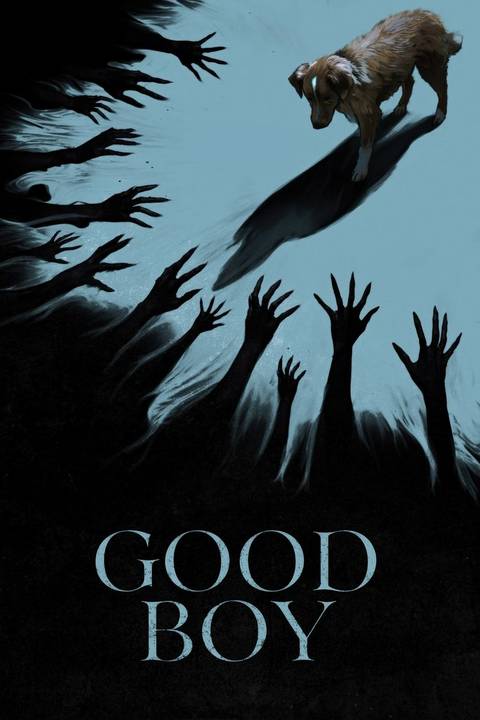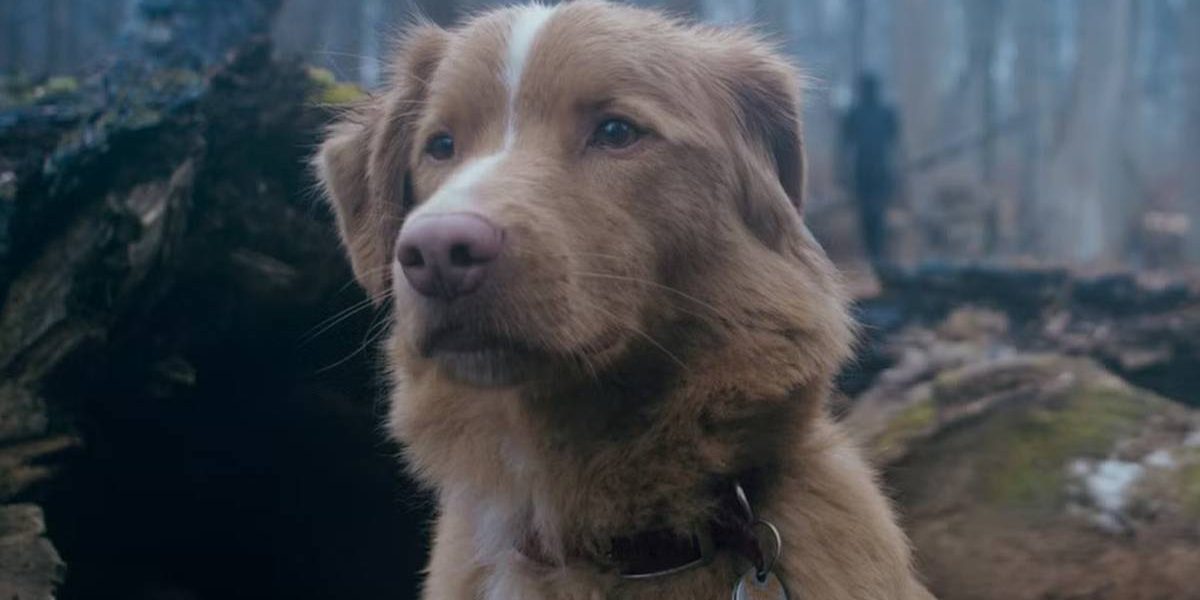
Editor’s note: The following contains spoilers for ‘Good Boy’It has been another great year for horror, with stellar films like Sinners, <em>Weapons</em>, and <em>Bring Her Back</em> released, but one of the best surprises of 2025 is Ben Leonberg‘s Good Boy. Nothing much was expected from the small indie flick when its trailer dropped online, but the intriguing premise of a supernatural movie told through the eyes of a dog was so fascinating that it went viral, leading to a theatrical release and is now streaming on Shudder. Good Boy was a hit with audiences as it proved to be more than just a gimmick. Leonberg’s film was filled with scares, including a terrifying ending. If you thought the final scenes were ambiguous, fear not, because it was on purpose. The director was replicating what had so often worked in the past, most notably with Stanley Kubrick‘s adaptation of Stephen King‘s The Shining.
How Does ‘Good Boy’ End?
Every scene in Good Boy follows the POV of an adorable dog named Indy, with humans only being seen from behind or the neck down. Still, it’s easy to see how much this doggo loves his owner, Todd (Shane Jensen), even as the man’s dealing with a horrible lung condition that’s physically destroying him. Needing some time away, Todd takes Indy to live at his late grandfather’s house in the woods, the same house where his grandpa died, and his own dog disappeared.
The horror comes from what Indy sees as supernatural forces encroach, forcing man’s best friend to not only stay by his master’s side no matter what happens, but to attempt to save him. In the end, Indy not only finds the skeletal remains of the past dog, but he lies by Todd’s bed as the man dies and sees his own body. When a figure drags Todd into the basement toward a dark cave, Indy pulls at him, desperate to save his human, only letting go when Todd calls him a good boy but tells him he can’t be saved.
Ben Leonberg Compared His Ending to Stephen King’s Most Popular Adaptation
Thankfully, although Todd doesn’t survive, Indy makes it out alive, and the last we see of him, he’s riding in a car with Todd’s sister, Vera (Arielle Friedman), who has saved the good boy and given him a home with her. It’s a heartbreaking finale because Indy’s without the master he loved so much, but did it go down exactly like we saw it?
In an October interview with Today, Ben Leonberg, who not only directed Good Boy but also co-wrote it with Alex Cannon, spoke about his movie’s ending. “We don’t see that the film is necessarily like a sad ending, especially for Indy.” For Leonberg and Cannon, it was meant to be another way to look at the end of life. For so many of us, our first experience with death comes with the loss of a beloved pet. The filmmakers wanted to do the exact opposite. We are seeing the death of a human through a dog’s eyes, or as Leonberg puts it, “What is that experience like if it’s on the other shoe or paw, so to speak.”
7 Stephen King Books That Are 10/10, No Notes
King, King, why don’t you give me a call?
The director also commented on Good Boy‘s ambiguous ending and how that can work in horror. He did this by comparing his creation to one of the most famous horror movies ever made, Stanley Kubrick’s The Shining. “You could make an argument there’s nothing supernatural. (The Shining’s) just a story of an alcoholic father trying to murder his family or there’s a haunted house and he’s becoming possessed.”
‘Good Boy’ and ‘The Shining’ Have Similar Final Scenes
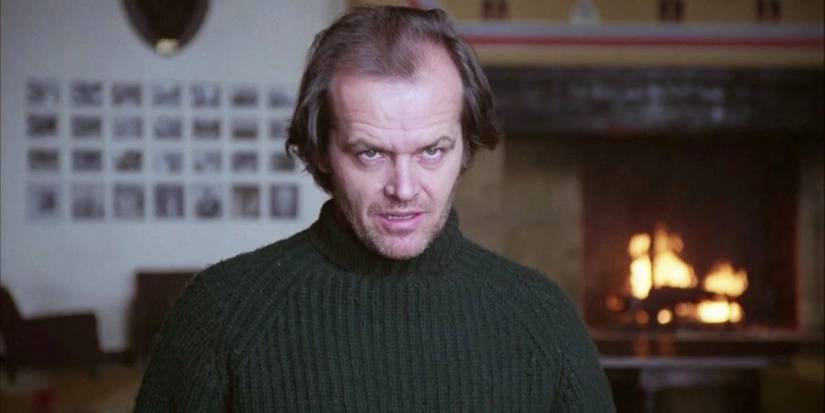
So many great horror movies have succeeded with the use of an ambiguous ending, an approach that digs into our imagination and forces us to think rather than offering everything to us with all questions answered. John Carpenter‘s The Thing did this brilliantly. Do they live, and is one of them the alien? At the end of The Blair Witch Project, were the survivors killed by a witch or maybe their possessed friend? In the final seconds of It Follows, is that the entity walking behind our heroes or is everything okay?
The Shining goes even deeper. On the surface, it’s a story about an alcoholic father who moves into the Overlook Hotel with his family to be the winter caretaker only for ghosts to creep into his mind and send him on a violent rampage. Is that what it’s really about or are the ghosts symbolic of alcoholism, with Jack Torrance (Jack Nicholson) going over the edge not because of the supernatural but his own personal demons?
You might think that’s far-fetched, but as the documentary Room 237 showed,The Shining can be viewed any number of ways with symbols at every turn. For Good Boy, the ambiguity is easier to see. It’s portrayed as a dog trying to save his sick owner from supernatural forces. Is it really that easy or is this how a trusted pet sees death, which he may not be able to comprehend? The dark shadows closing in could be how Indy, who can sense things people cannot, is feeling death. Maybe there is no impossible force at work but Todd is simply dying from his illness and Indy is terrified of being without him.
Both The Shining and Good Boy are open to interpretation and all options can be correct. That ambiguity is what makes horror so special where things are possible that other genres can’t get away with. No matter what the ending was meant to convey what can’t be debated is that Indy is indeed a very good boy.
Good Boy is now available to stream on Shudder in the U.S.