
Nobody truly wins in war, and sci-fi television understands that better than most. The concept of war has long existed since the dawn of time. These days, sci-fi series have used distant planets, futuristic empires, and alien civilizations to explore the same war conflicts that feel deeply human. Stripping away national borders and traditional bureaucracy, pushing war beyond the conventions of Earth gives a new perspective and complexity on how war is conducted.
Whether it’s fighting against the Empire or leveraging on the innocent, these sci-fi stories show that peace is rarely pursued without bloodshed. Characters are often forced to justify horrific choices as “necessary violence,” constantly pushing ethical limits. Reflecting on these moral gray areas of warfare, sci-fi offers some of television’s most powerful commentary on conflict. With that in mind, here are the greatest TV sci-fi quotes about war.
1
“There’s a reason you separate military and the police. One fights the enemies of the state, the other serves and protects the people. When the military becomes both, then the enemies of the state tend to become the people.”
‘Battlestar Galactica’ (2004–2009)
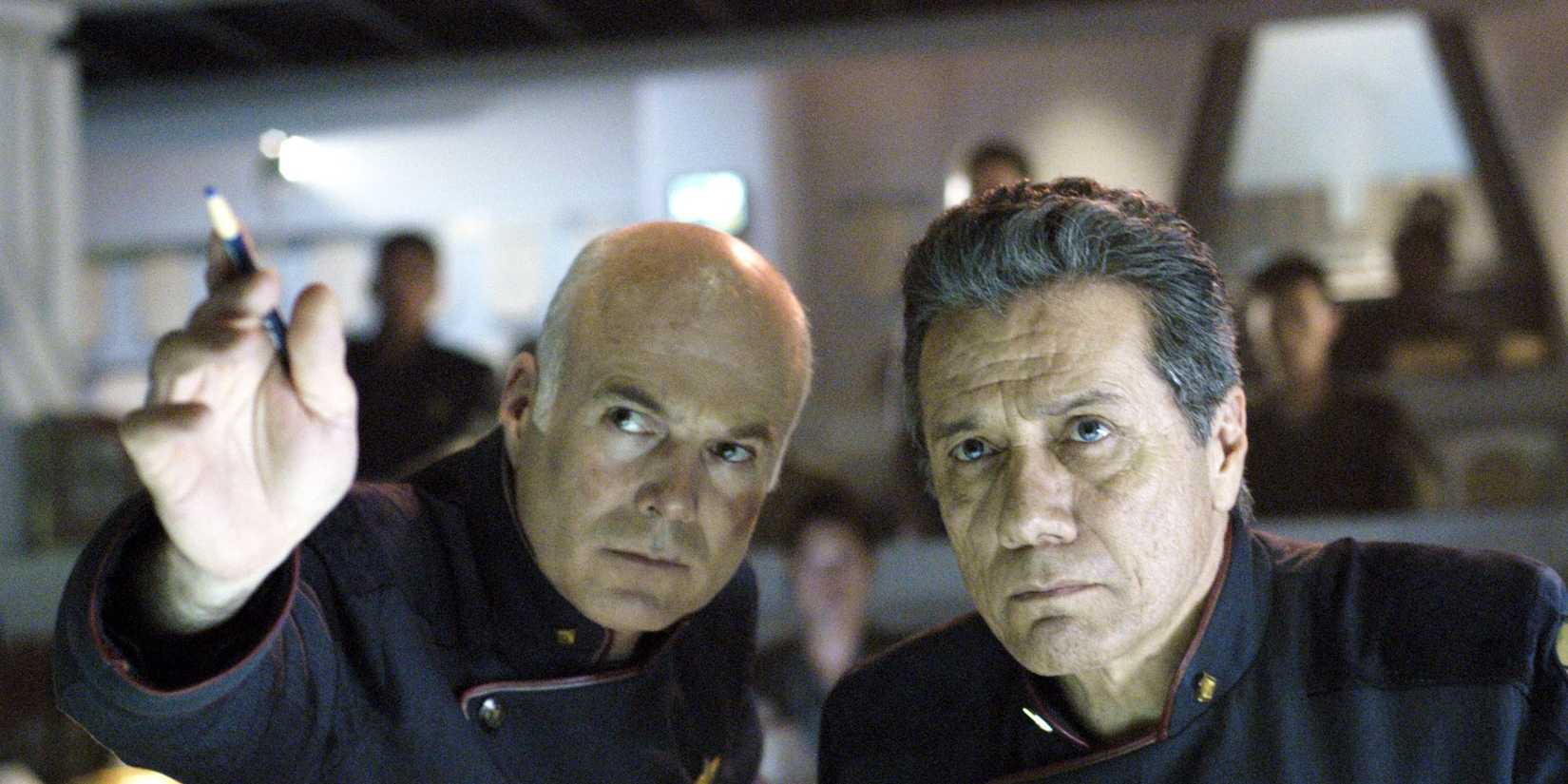
During an intense debate about security and authority in Battlestar Galactica, Admiral William Adama (Edward James Olmos) delivers one of the most chilling takes on war. With New Caprica under Cylon occupation, human survivors are trapped between violent resistance and brutal retaliation. Leaders are desperate to keep people alive, but no one agrees on how much force is acceptable.
Adama’s warning is relevant to real-life tragedies that have been making the news. He argues that once the military starts policing civilians, it stops serving them. Ordinary people are seen as threats despite having no history of endangering the nation. If not careful, it can be a slippery slope into complete authoritarianism.
2
“No longer certain that one ever does win a war, I am.”
‘Star Wars: The Clone Wars’ (2008–2020)
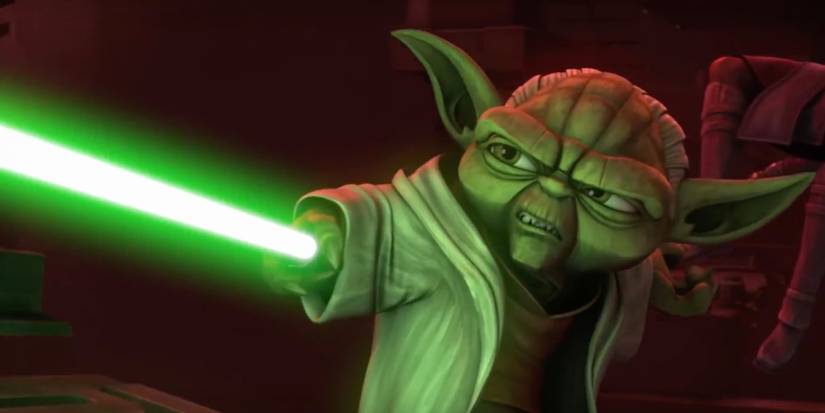
Yoda’s (Tom Kane) spiritual trials on Moraband in Star Wars: The Clone Wars push him to question his role in the conflicts. After forming Sith illusions, temptation, and disturbing visions of the future, Yoda comes back shaken. The truth becomes clear to him. The Jedi have drifted far from their original role as keepers of balance.
By leading armies in the Clone Wars, they’ve slowly turned into soldiers instead of guardians. When Yoda admits that wars can’t truly be “won,” he acknowledges that the Jedi have already lost something essential by taking part in endless bloodshed. Victory comes at the cost of moral integrity. Fortunately for Yoda, he’s got plenty of the latter.
3
“War never changes. You look out at this Wasteland, looks like chaos. But there’s always somebody behind the wheel.”
‘Fallout’ (2024–Present)
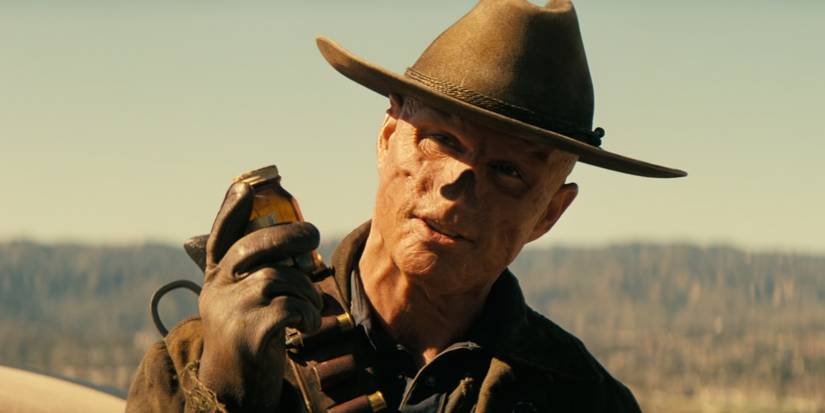
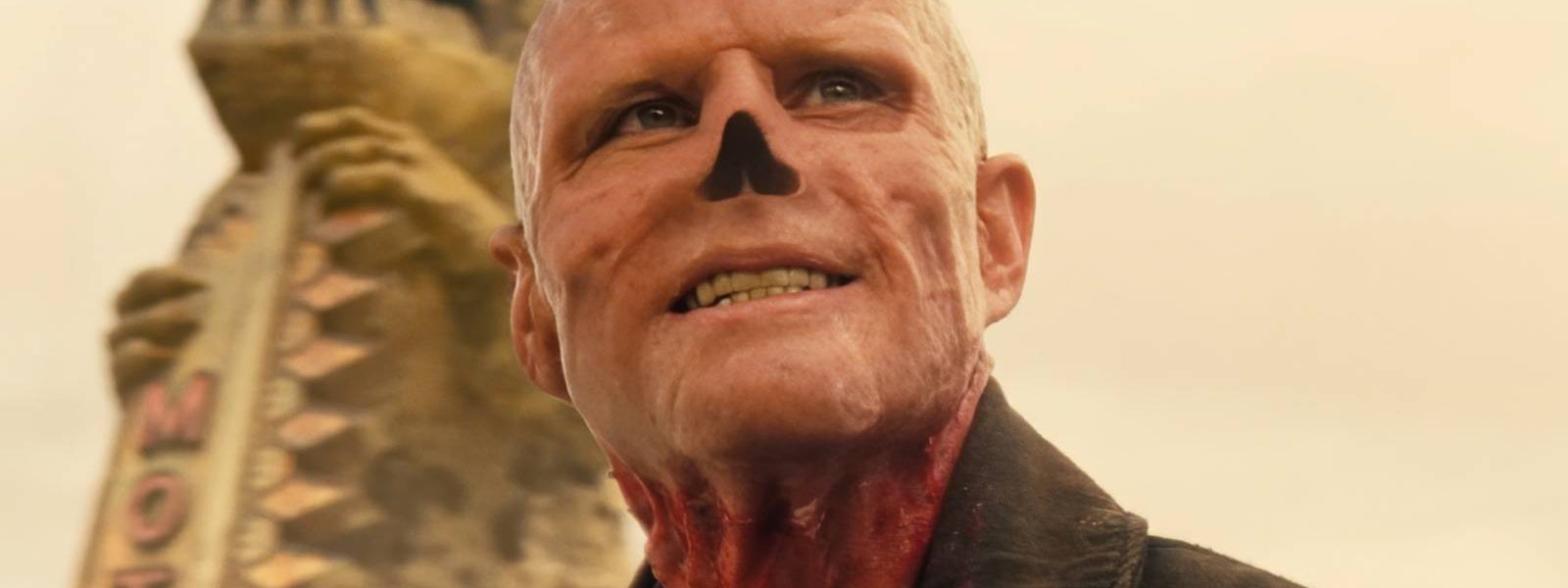
The root of war isn’t in rival factions but in the hands of greedy corporate power. According to Cooper Howard (Walton Goggins), the Wasteland in Fallout isn’t the result of random catastrophes mashed together. The Ghoul points out a hard truth he’s learned over time: every destroyed city, every faction fought, and every “survival of the fittest” mindset exists because someone planned it.
It becomes even more calculated when someone actually profits from war. Vault-Tec executives literally outlived the apocalypse in cryopods, proving it was never the end for everyone. For ordinary people, war means the end of their lives. But for businesses that make weapons for a living, war is just another day in the office.
4
“Death, destruction, disease, horror… that’s what war is all about, Anan.”
‘Star Trek: The Original Series’ (1966–1969)
In an unlikely turn of events in Star Trek: The Original Series, Eminiar VII and Vendikar fight a war without firing a single real weapon. It’s a massive risk considering that it’s a war that has lasted 500 years. Instead of drawing their guns, the entire conflict is run by computers. Anan (David Opatoshu) justifies this system by saying that this method is the most “civilized.”
However, Captain Kirk (William Shatner) sees it differently. Just because it’s run by computers doesn’t eliminate responsibility. The war might not “feel real” without the explosions and destruction, which means it never has to end. Kirk argues that the horror of war is exactly what pushes people to stop fighting.
5
“How much blood will spill before everybody does what they were always going to have to do from the very beginning: Sit down and talk!”
‘Doctor Who’ (2005–Present)
The climax of the Zygon crisis inDoctor Who reaches its peak when humans and Zygons are seconds away from wiping each other out. Out of frustration, the Doctor (Peter Capaldi) delivers the quote facing Bonnie (Ingrid Oliver) and Kate Stewart (Jemma Redgrave) calling out how pointless the situation has become. Everybody is ready to press buttons even though talking was always an option.
After surviving the Time War, he knows firsthand that violence never equals progress. He argues that war only delays the inevitable: dialogue. The more they fight, the more losses they’ll end up with. By forcing both sides to face the truth, he stops the countdown and opens up a chance for peace.
6
“The war we fight is not against powers and principalities, it is against chaos and despair.”
‘Babylon 5’ (1993–1998)
Whoever said winning a war guarantees satisfaction is lying. Reflecting on G’Kar’s (Andreas Katsulas) transformation during the Shadow War inBabylon 5, victory is no longer about defeating enemies.
After witnessing betrayal, genocide, and the apparent death of Sheridan (Bruce Boxleitner), G’Kar recognizes something more dangerous than war itself: the loss of hope.
The cast of Babylon 5 reflects on how civilizations are manipulated by Shadows and forced into moral compromise on all sides as G’Kar argues that survival depends on resisting despair.
7
“Power doesn’t panic.”
‘Andor’ (2022–2025)
The root cause behind Cassian Andor’s argument during Narkina 5 inAnor, lies within his belief that once prisoners realize they will never be released,Kino Loy( ) immediately shuts down this idea.
The Empire does not operate on fear or emotion but rather functions based on rigid structure routine repetition.

[nospin]Here you can find the original article with proper attribution.[nospin]







