

Science fiction stories come in various forms. The genre encompasses a wide range of settings, characters, and situations, allowing for hyper-specific subcategories. One such distinction is the differentiation between hard and soft sci-fi. While the definitions of these two subgenres can be fluid and subject to interpretation, their fundamental principles remain consistent. Hard sci-fi focuses on real science and its applications, while soft sci-fi emphasizes emotion and character, often disregarding the scientific plausibility of its narrative.
In cinephile terms, it’s the spectrum between 2001: A Space Odyssey and Her. Most sci-fi movies occupy a position along this spectrum, as even the most scientifically plausible films are not entirely factually accurate, and some of the most imaginative films contain elements of real science. Nevertheless, certain films effectively blend both approaches to science fiction. These are the greatest movies that exemplify both soft and hard sci-fi, successfully integrating aspects of both genres.
‘Jurassic Park’ (1993)
Michael Crichton was renowned for incorporating extensive scientific research into his writing, even when some of it was fabricated. His novel <em>Jurassic Park </em>features annotated references and a bibliography to support the “science” that makes dinosaurs possible. This effort to enhance an old-fashioned island adventure story with scientific plausibility carries over into Steven Spielberg‘s film, which dedicates an entire animated sequence to explaining how dinosaurs are resurrected through preserved DNA and genetic engineering.
The science is ultimately fictional, and the movie prioritizes spectacle and human connections more than the novel’s broader implications regarding chaos theory. In typical Spielberg fashion, it emphasizes the humane aspects of the story and how the characters evolve through their experiences. Nonetheless, that kernel of science remains in the final film, distinguishing it from earlier adventure movies like King Kong, with which it shares many similarities. The dinosaurs result from unethical science colliding with unchecked capitalism, rather than a forgotten island.
‘Minority Report’ (2002)
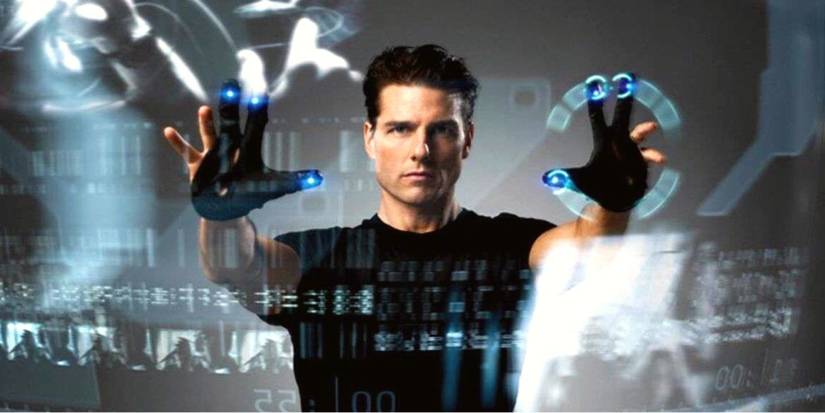
Jurassic Park is far from Spielberg’s only venture into science fiction. While most of his work in this genre leans towards the soft variety, his 2002 neo-noir Minority Report takes a slightly harder approach due to its prescient technology. Based on a novella by Philip K. Dick, the film revolves around a fictional technology where three psychics, known as precogs, can predict violent crimes before they occur. This fictional technology explores deeper philosophical issues, including free will and the risks associated with predictive policing. It serves as a thought-provoking techno-thriller infused with elements of suspense and mystery.
The harder aspects of its sci-fi narrative emerge through various technologies surrounding the main storyline. Spielberg collaborated with several scientific experts to ground the film’s vision of the future in plausible reality. Consequently, a number of technologies depicted in the movie have since become reality, including targeted advertising, autonomous vehicles, and touchless interfaces. While the science behind these technologies is not deeply explored within the plot of Minority Report, their plausibility stems from research rather than mere wishful thinking.
‘Gattaca’ (1997)
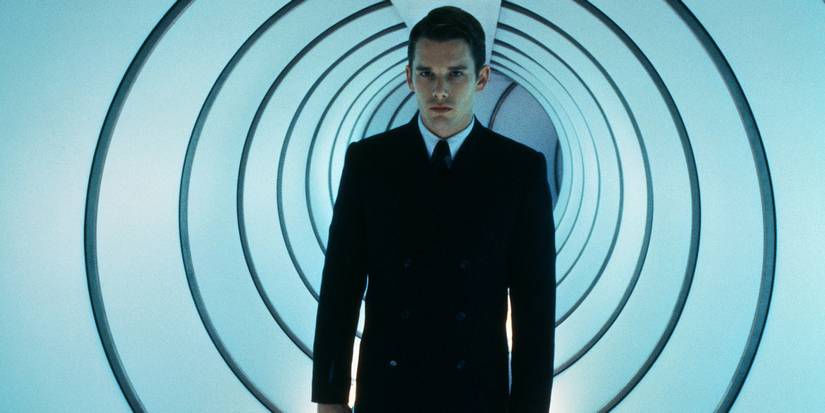
One of the most underrated science fiction films of the ’90s, Andrew Niccol‘s Gattaca takes a grounded approach to a dystopian future where eugenics has divided society into two distinct groups: “valids” and “in-valids,” reducing discrimination to its genetic roots. Ethan Hawke portrays an in-valid individual born naturally without genetic selection who utilizes genetic material from a valid person to pursue his dream of space travel. While it leans soft in its thematic focus on genetic determinism and classism, the technology driving the narrative is decidedly hard.
The film has become integral to discussions surrounding genetic discrimination and eugenics, often cited by opponents of advancing technology as a central argument anda cautionary tale regarding humanity’s unchecked ambitions. Although bioethicists have criticized it for oversimplifying ethical issues related to exclusionary genetic screenings, there is no denying that its impact stems from how uniquely plausible its science and consequences are.
‘Interstellar’ (2014)
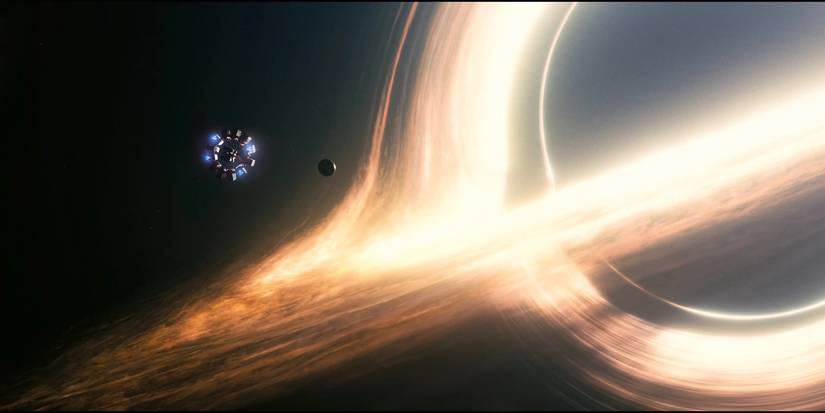
Christopher Nolan is recognized for his grounded filmmaking approach, with his Batman trilogy attempting to root superhero narratives in realistic contexts supported by sci-fi technology. Even his deliberately complex filmTenet is rich with physics concepts while remaining entirely fictional. Nolan’s film that best balances hard and soft science fiction isInterstellar, celebrated for itstheoretically plausible science while maintaining fidelity to facts over fiction, although it occasionally makes significant exceptions for storytelling purposes.
The narrative unfolds in a future where Earth faces crises due to crop failures, prompting NASA to send expeditions to assess several planets accessible via a wormhole. The premise was initially developed by theoretical physicistKip Thorne beyond Nolan’s expansion through his unique vision for epic storytelling and entertainment value. The awe-inspiring result is a film that has elicited mixed reviews from critics who argue that both science and character development detract from each other but has gained appreciation over time. Now,Interstellar frequently ranks among the best sci-fi films of the 2010s and is consideredNolan’s most emotionally resonant work to date.
‘Arrival’ (2016)
Arrival centers its narrative aroundcomplex systems of linguistics and communication with extraterrestrials, using this foundation to explore profound emotional themes such asmaternal bonds and inevitability. A career-best performance byAmy Adams witnesses her portraying a linguist tasked with communicating with an alien species following their first contact with Earth. Language plays a crucial role in this film—both scientifically and regarding humanity’s potential manipulation or weaponization.
Arrival doubles asa lesson in human communication, recognizing language’s true power while employing scientific principles to enhance its thought-provoking themes. DirectorDenis Villeneuve went on to create softer sci-fi films like bothDune andBlade Runner 2049, but his initial foray into this genre remains compellingly immediate. The film effectively uses its scientific elements to inform character development, achieving an ideal blend of soft and hard science fiction.
…
…
…
…