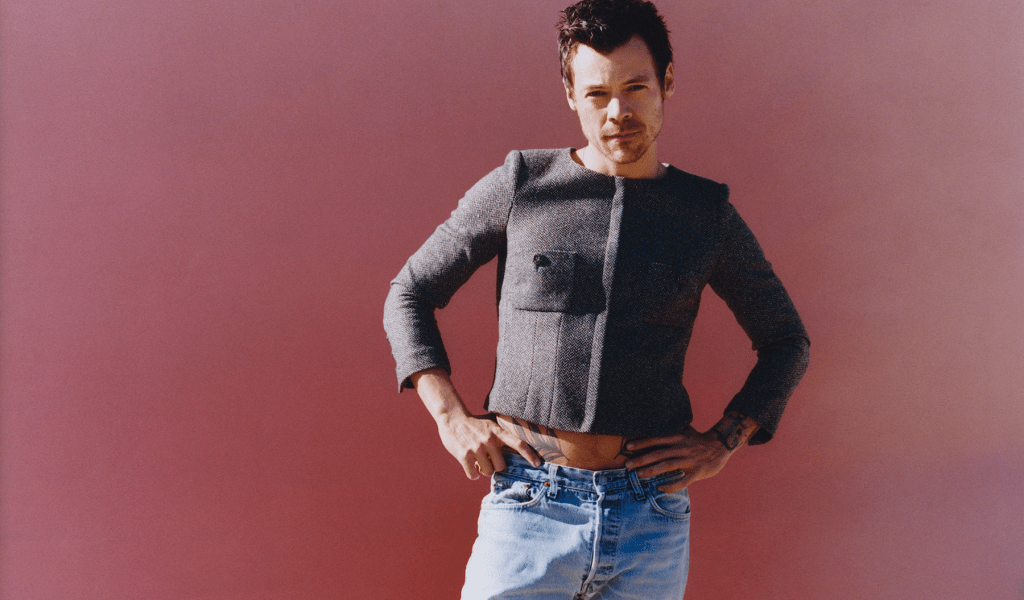
Overall, the central theme of Kiss All the Time. Disco, Occasionally is that the music serves as Harry Styles’ personal gift — a celebration of freedom and following one’s instincts. Its appeal lies in how it uplifts all of us as well.
In the liner notes for his fourth studio album — which is set to release on Friday — Styles expresses gratitude to “those who inspire me to create anything” and “those who taught me when to say yes.” This reads like a love letter to the voices and impulses that shape the cross-generational superstar’s inner world, reminding us that freedom is more enjoyable when shared. The album reflects this sentiment, featuring songs that navigate through romantic sorrow, restlessness, and self-discovery, all returning to a recurring theme: sometimes, nightclubs can have the power to change a person forever.
On an impromptu night out, the magic may be in the hands of the DJ, but it relies on the energy and connection of a community united by music. Since Styles last released an album — the dazzling Harry’s House, which debuted at No. 1 on the Billboard 200 and won album of the year at the 2023 Grammys — he has been seen outside Berlin’s superclub Berghain and losing himself at a Jamie xx concert, while also recuperating in Italy after a Billboard Boxscore-breaking world tour that lasted two years.
These experiences have shown Styles living beyond the spotlight. Consequently, rather than focusing on the polished, highly stylized pop arrangements of Harry’s House, in Kiss All the Time, Styles explores his introspection more creatively, incorporating acoustic instrumentation, jagged beats, and bursts of feedback that thrive on delayed gratification. There is a fresh immediacy and even a hint of intensity in some of these tracks, although not necessarily the sense of release that the Billboard Hot 100-topping lead single “Aperture” suggested.
Under the guidance of trusted collaborator Kid Harpoon, the flashes of ‘70s guitar and ‘80s hooks that characterize much of Styles’ earlier work evolve into explorations of rock, disco, and electronic house, often resting on the thrill of combustion by merging contrasting sonic elements. Drawing clear inspiration from LCD Soundsystem or even the euphoric catharsis of Hot Chip’s A Bath Full of Ecstasy era, this record feels exploratory and intimate and at times explosively alive.
Despite dominating mainstream music over recent years, Styles seems to be pursuing new curiosities and crafting sounds that feel uncharted for him. The results are uneven in places, but perhaps that’s what makes them so intriguing.
While all of Kiss All The Time. Disco, Occasionally is worth experiencing, read Billboard‘s breakdown and preliminary ranking of every song on Styles’ latest album below.

-
“Taste Back”
Styles has long been known for his elusive writing style. Elements from his back catalogue are filled with fleeting confessions: 2019’s “Lights Up” hinted at sexuality; “As It Was” referenced his parents’ divorce. With specific mentions of Paris and day drinking, the wistful “Taste Back” invites fans to engage closely with its lyrics for deeper meanings—a delightful clash of desire and nostalgia.
-
“Are You Listening Yet?”
If Kiss All The Time has a central flaw, it’s that some lyrics seem forced or overly emphasized: “If you must join a movement/ Make sure there’s dancing,” he sings on “Are You Listening Yet?” More notable than the album’s vibrant nightlife influence is how often the music reflects the disrupted tone of its themes, as evidenced by this track’s oscillating melody and use of sprechgesang.
-
“American Girls”
A natural ease flows through “American Girls,” though it leans a bit too closely to classic rock influences reminiscent of Styles’ subtler tracks from his self-titled debut in 2017: melodies so light and airy they feel weightless. Here, there is a gentle merengue rhythm and a call-and-response chorus; however, this track lacks the genuine experimental spark found elsewhere on much of Kiss All The Time, leaving it charming yet somewhat safe in comparison.
-
“The Waiting Game”
“The Waiting Game” is a sweeping song that evokes an uncanny dreamlike quality. Blending digitized strings with acoustic guitar, it feels sweet yet slightly unsettling; it could be interpreted as an exploration of balancing fame’s demands with some semblance of normalcy. This is where broader themes of the album — particularly the tension between personal desires and external expectations — come into focus.
-
“Pop”
A confident exploration around themes of sex, drugs, and dancing emerges in “Pop,” which carries an “if it ain’t broke, don’t fix it” familiarity reminiscent of Harry’s House track “Cinema.” The dynamic bounce from the bass enhances the chorus’s energy while aligning with the song’s narrative about how one cannot resist moving along to infectious beats during thrilling moments.
-
“Paint By Numbers”
The more understated sections of Kiss All The Time can occasionally feel low-stakes as if they lack space to truly develop amidst denser production elsewhere. However, “Paint By Numbers” stands out for its slightly frayed edges; it feels powerful and spacious as if created in an inspired emotional rush. “It’s a little bit complicated when they put an image in your head,” Styles sings at one point. “And now you’re stuck with it.”
-
“Season 2 Weight Loss”
On first listen, “Season 2 Weight Loss” may not stand out immediately; however, it sprawls impressively with its apprehensive drums and weighted silences. Lyrically, Styles delves into indecisiveness and intrusive thoughts before a trip-hop arrangement brings his earthy falsetto back down to earth with a jolt. The track is delivered with elegance and care—a reminder that strength doesn’t always require volume.
-
“Aperture”
A chilling synth merges with distorted guitar to create something reminiscent of an EDM hit echoing through an empty club. On “Aperture,” this effect conveys pure melancholy: lyrics about seeking solace on a dancefloor are heightened not only by Styles’ lower register but also by musical accompaniment. His final cry of “Time won’t wait on me” resonates with heartfelt desperation.
-
“Dance No More”
On one day you may feel invincible in the club; on another day you may crash down. Nevertheless, in “Dance No More,” Styles expresses love for both his surroundings and people; he exists on a higher plane. As starlit grooves spiral into delirium, he discovers music feels “heaven-sent,” noting that there’s “no difference between tears and sweat” while dancing. A wondrous moment awaits in the bridge as tempo builds and repeated vocal chants resonate deeply.
-
“Coming Up Roses”
A celebration of new love intertwined with past insecurities emerges in “Coming Up Roses,” showcasing ambivalence masterfully; its yearning string-assisted bridge beautifully transitions into the final chorus. Arranged by Grammy-winning conductor Jules Buckley, Styles’ voice sounds more commanding than ever as it reaches soaring heights while thematically addressing tensions between appreciating the present moment and being unable to escape one’s thoughts. Tissues will be needed…
-
“Ready, Steady, Go!”
To snap out of a funk? Play “Ready, Steady, Go!,” where juddering drums collide with metallic slap bass alongside flurries of Spanish guitar while a repeated vocal line twists off-key. Balancing claustrophobia with pop reminiscent of Fontaines D.C.’s “Starburster,” this track is genuinely exhilarating; every beat lands like a pulse in your throat while tension coils tighter without resolution.
-
“Carla’s Song”
A spiritual successor to Styles’ joyful yet bittersweet mega-hit “As It Was,” resplendent closer “Carla’s Song” expands upon the album’s cinematic scope: featuring bright synth swells layered with rippling piano while Styles’ voice cascades effusively from every angle. This song is bound to feel even more immersive live when crowds join in for its key refrain: “It’s all waiting there for you.” This summer on tour will be its time to shine.
Here you can find the original article; the photos and images used in our article also come from this source. We are not their authors; they have been used solely for informational purposes with proper attribution to their original source.