

From 2019 to 2022, HBO released a three-season fantasy adaptation of a bestselling book series, which surpasses the absolute failure that was the 2007 movie <em>The Golden Compass</em> by embracing a key aspect of the source material. Many children’s book series have been transformed into movies, only to receive a TV adaptation years later.
While this often appears to be a cash grab, the TV shows are sometimes a welcome relief because the movies were subpar. A prime example of this is the dreadful 2007 fantasy movie The Golden Compass and HBO’s His Dark Materials, both of which are based on Philip Pullman’s His Dark Materials trilogy.
The heavily challenged and occasionally banned books are known for their controversial subject matter. However, that doesn’t change the fact that they’re also extremely beloved. While it didn’t technically fail at the box office internationally, it completely bombed in the US.
Fortunately, the His Dark Materials TV show is exceptional. It might not receive as much attention as Game of Thrones, but it’s truly HBO’s best underrated fantasy TV show.
A significant part of that stems from showrunner Jack Thorne’s commitment to authentically bringing Pullman’s books to life, including the anti-religious messaging that the movie The Golden Compass completely removed.
The Golden Compass Pandered To Religious Audiences After Boycotts

The production company New Line faced significant backlash after announcing a movie adaptation of The Golden Compass, which continued until its December 2007 release. I remember the heated discussions about whether or not parents should take their kids to this movie.
Focus on the Family and US Catholic organizations called for boycotts of The Golden Compass due to the atheist and anti-organized religion messages in Philip Pullman’s books. The Catholic League released a booklet explaining why parents should not take their children to see The Golden Compass (via the Catholic League).
Christians wrote letters to their churches urging boycotts. Op-eds in publications like The Reflector encouraged parents to avoid the movie. Meanwhile, religious leaders like Jerry Wilkins, the former director of missions for the Tuscaloosa County Baptist Association, may not have explicitly called for a boycott, but they encouraged parents to exercise caution (via the Tuscaloosa News).
Consequently, the movie pandered to religious audiences. According to a 2007 article from The Guardian, “The anti-religious content has reportedly been toned down in the film version on the orders of studio New Line cinema, which feared a backlash in the States.”
Director Chris Weitz stated, “To me, that was about not being aggressive and offending the individual audience goer who might be religious” (via Reuters). In the end, The Golden Compass removes all references to God, the Church, and most anti-religious sentiments. Unfortunately, this was detrimental to the film.
The Golden Compass’ Story Becomes Shallow Without The Religious Critique
Whether you personally agree with the messages or not, it’s undeniable that anti-authoritarianism and anti-religiously dogmatic themes are integral to Lewis Pullman’s His Dark Materials trilogy. They might not be as pronounced in the first book, but the messages are definitely still present. The Golden Compass movie lost all of its impact when it removed the books’ core message.
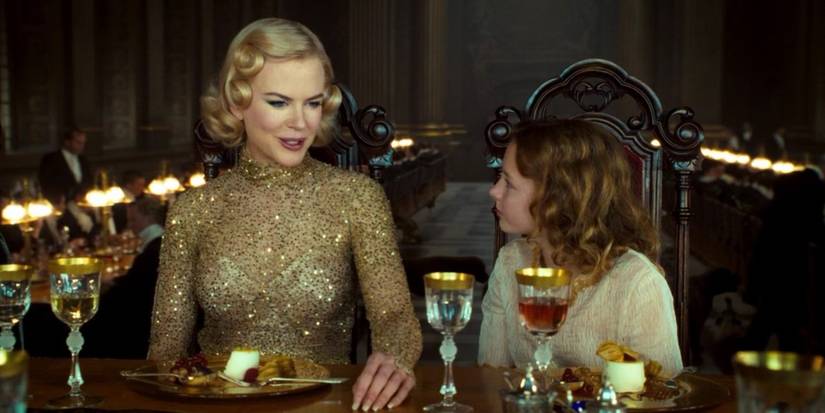
The visuals in The Golden Compass are extremely impressive. It’s a beautiful movie with a moving score. However, the actual story feels empty. Lyra had a strong enemy to work against in the book, but the Magisterium just doesn’t feel as threatening because they come across as a generic evil authority. Her goal doesn’t feel as urgent.
Without the religious references, The Golden Compass becomes one of the most generic fantasy movies of all time. If it weren’t for the controversy that surrounded it, I’m convinced that this adaptation would have been completely forgotten by now.
Philip Pullman’s Book Themes Are In Every Part Of HBO’s His Dark Materials
Unlike The Golden Compass, His Dark Materials fully embraces Philip Pullman’s critique of organized religion with overt references and parallels to high-demand forms of Christianity and Catholicism.
The Magisterium has many clearer parallels to the Catholic Church. They dress like clergy members and emphasize hierarchy within their organization. They punish blasphemy and heresy—two explicitly Christian concepts. The Magisterium is known for abducting and abusing children while worshiping “the Authority,” a stand-in for God based solely on blind faith.
The theme pits science and critical thinking against dogma and control. The story features ideas such as Original Sin, daemons, and mankind’s Fall. They fully embrace Lord Asriel’s journey in His Dark Materials season 3 to destroy the Authority who dominates Heaven and oppresses others. The book themes are undeniably present in HBO’s show.
They might have ruffled some feathers by leaning into anti-religious messaging, but it also made the fantasy show high-stakes and compelling. The writing was top-notch. The actors fully embodied their characters. Plus, there weren’t any major controversies due to these themes.
Some religious viewers even praised it for criticizing authoritarian control and power structures rather than faith itself. Ultimately, by embracing Pullman’s books, His Dark Materials compensates for the failure of the 2007 movie The Golden Compass.