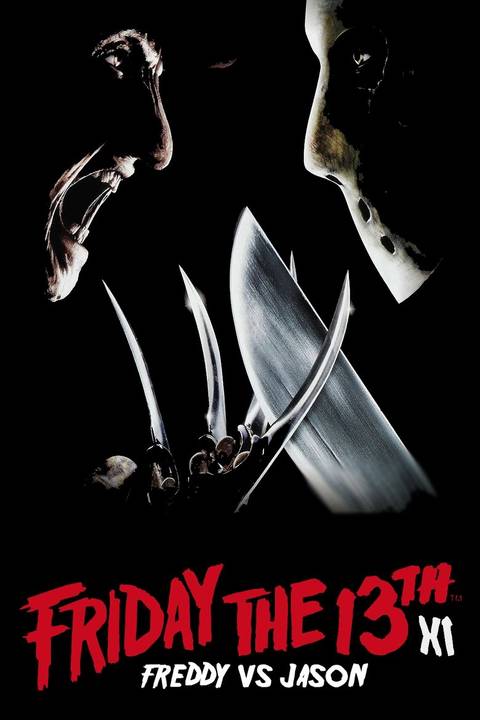

Few horror movies have ever been built so completely around a single promise as <em>Freddy vs. Jason</em>. Long before the film finally reached theaters in 2003, the idea of these two slasher icons colliding had existed as a kind of genre myth, passed around by fans who understood how naturally the rivalry made sense. The characters represented two completely different eras and philosophies of horror, yet their reputations made a confrontation feel inevitable. When the movie finally happened, it wasn’t sold as just another sequel. It was positioned as an event built around a simple question: what happens when two unstoppable horror legends finally meet on equal ground?
More than two decades later, what makes Freddy vs. Jason interesting is how directly the film commits to answering that question. The movie structures itself around escalation, carefully building from Freddy’s manipulation of events into a series of increasingly destructive encounters that eventually explode into the kind of prolonged, chaotic confrontation that the premise demands. That sense of follow-through is what continues to make the film stand out. It never treats the crossover like a gimmick. It treats it like the entire reason the movie exists. That focus ultimately matters more than the film’s imperfections. The script occasionally takes shortcuts to move the story forward, some of the human characters exist primarily to serve the rivalry, and parts of the early-2000s tone are impossible to ignore. None of those issues change the fact that the movie delivers exactly what its premise promises: a brutal, surprisingly committed showdown between two of horror’s most enduring figures.
‘Freddy vs. Jason’ Works Because It Fully Commits to Both Characters
One of the most difficult aspects of any crossover is maintaining credibility for both sides. Audiences immediately begin evaluating whether one character feels diminished or whether the story is favoring one franchise over the other. Freddy vs. Jason largely avoids that problem by leaning into the idea that these characters should feel dangerous in completely different ways rather than competing on the same terms.
Jason’s presence is defined by physical inevitability. The film emphasizes his strength through weight and impact, staging his attacks in ways that reinforce the sense that he cannot simply be outmaneuvered. His violence feels heavy, almost mechanical, as if stopping him requires more than just surviving an encounter. That approach restores a sense of menace that had fluctuated across some of the later Friday the 13th installments, grounding the character again as a force rather than a gimmick. Freddy, by contrast, remains dangerous because of his intelligence. Robert Englund plays him with the same theatrical confidence that defined the character at his peak, allowing Freddy to feel like a planner rather than just a killer. His manipulation of fear and memory gives him an entirely different type of control, and the film wisely allows that contrast to define the rivalry rather than trying to force both characters into the same type of confrontation.
This difference is what gives the movie its identity. Jason represents the kind of horror that cannot be reasoned with, while Freddy represents the kind that cannot be escaped. Watching those two forces collide gives the film a natural tension that doesn’t require complicated justification. Their conflict works because their strengths are fundamentally incompatible.
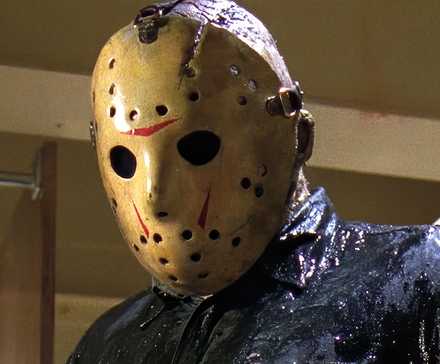
After 17 Years, Friday the 13th Is Officially Back With First Prequel Images
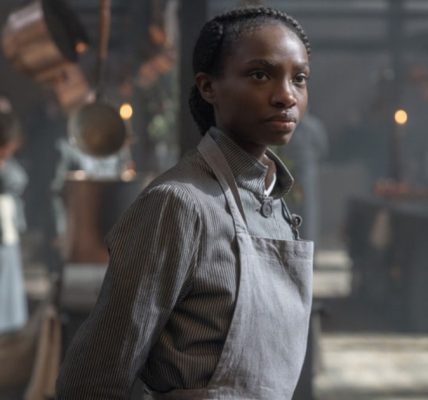
Linda Cardellini will play a horror icon in the series.
Its Rough Edges Haven’t Diminished Its Lasting Appeal
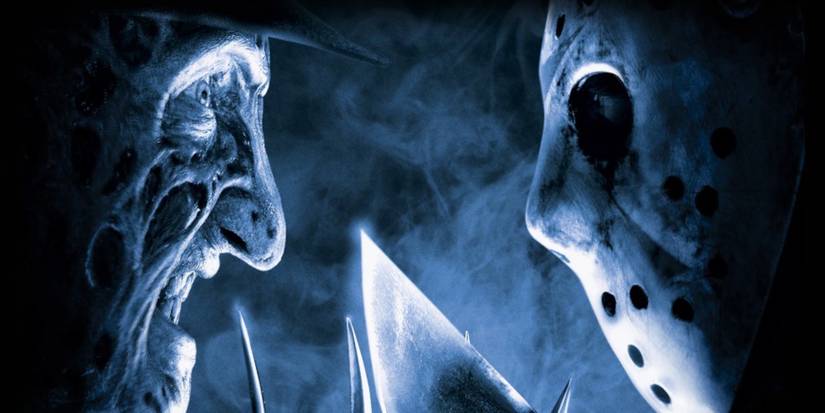
Freddy vs. Jason has never been a polished film, and part of its longevity comes from the fact that it never tries to pretend otherwise. The movie embraces the directness of its concept, prioritizing momentum over complexity and spectacle over subtlety. While that approach means some characters receive limited development and some tonal choices feel dated, it also keeps the film from losing focus on what matters most. Over time, that clarity has helped the movie maintain a stronger reputation among horror fans than its initial critical response suggested. While it may not always be grouped with the most influential horror releases of its era, it continues to stand out as one of the rare crossover films that fully delivered on its central idea rather than simply using it as marketing.
That may ultimately be the film’s greatest strength: Freddy vs. Jason understands exactly what it is supposed to be and builds every major decision around that understanding. The result is a movie that still functions as a satisfying piece of franchise storytelling more than twenty years later, not because it reinvents either character, but because it allows them to collide in a way that feels appropriately destructive. Even now, Freddy vs. Jason remains one of the clearest examples of how effective a crossover can be when it treats its premise not as a novelty, but as something worth fully committing to.