
They just don’t make ‘em like James Cameron anymore. The iconic filmmaker and mastermind of the Avatar franchise never phones anything in, spending copious amounts of time and resources to perfect his vision and translate it to the screen. And the results speak for themselves. Avatar: The Way of Water was a stunning feat, advancing the story of the first film in a new direction while raking in over $2 billion at the box office. It cemented Cameron as one of the most successful and profitable directors of all time, but that’s not apparent just from talking to the man — his commitment is to story and delivering a spectacle to audiences that they’d never expect to see on screen.
With Avatar: The Way of Water‘s return to theaters ahead of the next installment, we caught up with Cameron to speak about the challenges of making the film and, of course, to find out what fans can expect to see in the third film in the franchise, Avatar: Fire and Ash.
How ‘Avatar: The Way of Water’ Pushed Technology to the Limit — and Surpassed It
“Being underwater is a very, almost dreamlike experience that you can have in the waking world.”
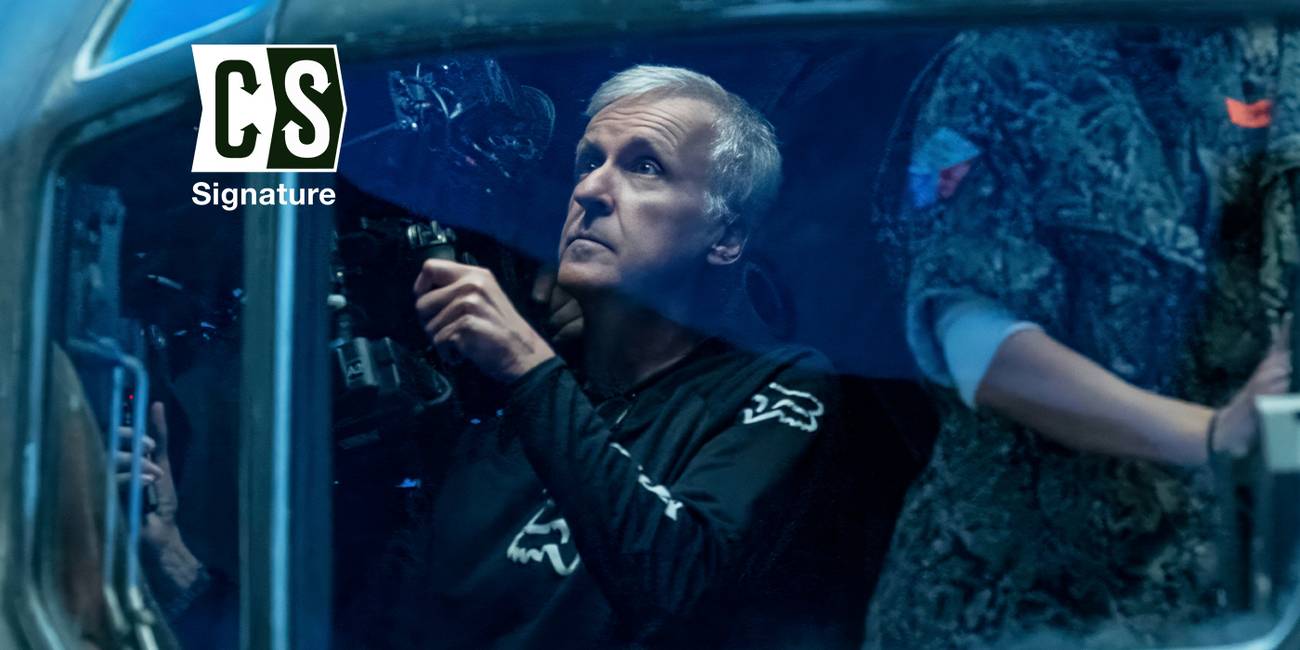
Via Jefferson Chacon
JAMES CAMERON: Have we talked before?
COLLIDER: We have not. You’ve spoken to a lot of people from Collider before.
CAMERON: Yeah, yeah, that’s why I’m asking. Of course, you know I love Collider as an outlet. You guys always have the good stuff going on.
I appreciate that. We kind of pride ourselves on digging into some places where other people might not go. We’re big fans of yours, obviously, and your prolific career in Hollywood. It’s just been amazing to watch these movies grow over time. I’ve gotta ask, you’ve made so many exciting action scenes that really push technology in new and exciting ways, always at the forefront of innovation in Hollywood. Which one do you consider the hardest to pull off in your career?
CAMERON: Well, since we’re here to talk about The Way of Water, I think about some of the difficult scenes in that that were shot underwater that required enormous amounts of preparation. First, we had to teach the actors how to hold their breath for three, four minutes at a time because the characters are supposed to be holding their breath. The ones that are ocean-adapted are supposed to be like seals or dolphins that can hold their breath for ages. So we had to get actual human actors to be able to do that, like Sigourney Weaver and Kate Winslet. We also had to figure out how they’re going to ride these creatures.
There’s a classic image of a girl riding on a dolphin like it’s a horse. That would work for about two seconds until the dolphin accelerated, and she’d get peeled off. So we had to figure out how the creatures would move. We had to build real-world analogs for that, so we built these kind of big robotic vehicles that could actually race around underwater at 20 knots, even pop out of the water and fly over water. Then we had to use stunt people to figure out how to ride them, what positions actually worked. Not just to hang on for dear life, but to look like you’re in control, and you can handle a spear or an underwater crossbow, or even, in Jake’s case, a machine gun, and figure all that out. Then we had to teach the actors how to do that. Then we had to figure out how we were going to capture that.
Are we going to go race around out in the ocean? How are we supposed to do performance capture? So we built an underwater wind tunnel, literally built an underwater wind tunnel that could race the currents over the actors’ bodies while they flew around on these kinds of machines. Then we had to create these plausible and beautiful creatures to put into that. So it was this multi-layered preparation. Of course, actors love anything new, anything that they can use to prepare. Most of them had to actually ride these creatures. So I would say from a complexity standpoint, not from a dangerous standpoint, we weren’t blowing anybody up or something on fire. It was all done safely, but it was very, very challenging.

Related
James Cameron Promises ‘Avatar: Fire & Ash’ Is “The Best of the Three Movies So Far”
He’s setting the bar high with this one.
That brings me to one of my next questions. What’s the biggest misconception that you feel some filmmakers might have about filming underwater? Because you’ve had three major movies in which that’s a major set piece, and so you’re obviously well-experienced, and technology has changed over time. What do you feel is a big misconception about filming underwater?
CAMERON: Well, I think a misconception is that it’s impossible, but I think most filmmakers quite rightly understand that everything is harder underwater. Everything is more expensive. It’s more difficult. It’s more time-consuming. So you have to really want to do it, which I do. I spend a lot of time underwater myself, deep ocean exploration, in submersibles, more shallow work in helmets and masks, tactical diving, all that stuff. I love it. And I also believe that, done correctly, audiences love it. Maybe not some grim North Sea oil rigger kind of story, but a beautiful, transportive story like The Way of Water, where we’re in shallow, beautiful tropical waters with lots of sunlight and cool creatures and coral reefs and fish and a profusion of biodiversity. There are reasons to do it because it brings something very special into our lives.
Being underwater is a very, almost dreamlike experience that you can have in the waking world. You can have a very dreamlike experience. I think divers can relate to The Way of Water, but I think people who’ve never dived can still relate to the wonder of it. So you have to understand it’s going to be harder, but it’s going to be quite rewarding on screen. And it’s not for everybody. I don’t recommend that every filmmaker go out and try to do some of the stuff that we do. And by the way, I started filming underwater on <em>The Abyss</em> in 1988. It’s taken all of my experience, all of the things I’ve done between then and now, to be able to do the things that we do on The Way of Water. By the way, all the water scenes are not just in The Way of Water. There are a lot of water scenes in Fire and Ash as well because we take what we’ve done before and we build on going forward. We’re just introducing new characters and new environments on top of the ones you would recognize from the first two films.
‘The Way of Water’ Fans Will Get a Special Surprise for ‘Fire and Ash’
“There might be a glimpse through the doorway there.”
It’s funny that you mentioned The Abyss because that made me very terrified of deep water. And so you mentioned that you do your submersible and all that interesting stuff with your documentary and Titanic. I love snorkeling because of the beauty of it. So it’s really interesting that you created this really special, beautiful biome on an alien world that just really feels natural but also is so spectacular almost like just going snorkeling off a reef of a tropical island.
CAMERON: Yeah, I mean look at it this way —the deeper you go—the less life there is generally speaking—it’s dark—it can be quite bleak in many places—if you want to experience wonder and beauty—15-foot dive snorkeling is all you need—The Way of Water is about beauty contrasted with ugliness violence hate—all those sorts—and beauty—and what must be protected—you know—I heard there was this kind post-Avatar depression phenomenon—in first film—I would say people “Just go for walk forest.” You don’t have go another planet—everything Pandora inspired by natural world right here—if have post-Way Water depression—just go snorkeling—it’s right there for you—in shadows where sunlight hits coral reef—I mean—you might want go someplace tropical do it—but even snorkeling more temperate water amazing.
And it’s a very special thing but people are going out theaters see Way Water again—and it’s really cool—it’s coming IMAX—it’s going be on 3D screens—is there anything special you’re going have them considering Fire Ash going coming out? Can viewers expect something special when they go see it?
CAMERON: Well—we’re not announcing anything officially—but there might be some surprises fans if they stick around end movie—and don’t mean end eight minutes credits—it’s kind right after main title—there might be glimpse through doorway there.
That’s what wanted hear—Gotta hook readers with catchy headline—you know—So technology changes advances all time—and have made lot advances pretty much every single one films—especially Avatar films—is there anything could adjust from The Way Water, knowing what know now?
CAMERON: I think going into The Way Water & Fire Ash, which were shot together as one big production—we spent about four half five years considerable amount money work it out—to kind level up our technology both facial emotional—“How do transfer great performance Zoe Sigourney Kate Winslet Academy Award-winning actresses translate perfectly CG characters?” think accomplished—I think refined little bit between two three—but quantum leap happened between one let’s call two three if makes sense—we kind went there—and we've been operating at very high level truth authenticity for actresses performances—and think you'll see that in<em> Fire Ash</em>.</p><p>I would call it more emotional film if could make strong distinction between two films.<em>The Way Water</em> beautiful emotional<em>& Fire Ash</em>, beauty underwater—but more about taking characters into—I don’t want say darker—but would say<strong> more emotionally challenging places family—and bet progressively care about these people more more as go their journey so hits harder harder films go on.</p><h2 id="is-39-avatar-fire-and-ash-39-ready-for-its-release-date">
Is 'Avatar: Fire and Ash' Ready for Its Release Date?
</h2><h3 id="quot-all-the-main-creative-decisions-have-been-made-quot">
"All the main creative decisions have been made."
</h3>
<div class="body-img landscape mobile-optimized">
<div class="responsive-img image-expandable img-article-item" style="padding-bottom:50%" data-img-url="https://static0.colliderimages.com/wordpress/wp-content/uploads/2025/07/avatar-fire-and-ash.jpg" data-modal-id="single-image-modal" data-modal-container-id="single-image-modal-container" data-img-caption=""Image via 20th Century Studios"">
<figure>
<img alt='Avatar fire ash' />
<!– Image via 20th Century Studios –>
<!– Image caption –>
<!– Image caption –>
<!– Image caption –>
<!– Image caption –>
<!– Image caption –>
<!– Image caption –>
<!– Image caption –>
<!– Image caption –>
<!– Image caption –>
<!– Image caption –>
<!– Image caption –>
<!– Image caption –>
<!– Image caption –>
<!– Image caption –>
</figure>
</div>
<p><strong>I have ask how far along? Are pretty much close finish line with<em>Fire Ash,</em> then?</ strong ></ p >
<p> CAMERON : Yeah , we've got few more weeks mixing . We're ahead schedule mix , we're right track VFX . There's still lot work do , but mostly fine details . Creatively , think from my perspective director , strong > film pretty much done , we've got great temp mix , we're just getting into Atmos finding detailing , spatial sound things people expect us do , which kind excellence image excellence sound , that's where focused right now . </ p >
<p> But all main creative decisions made , know film's playing , know ends kind resoundingly , people responding emotionally right places . almost feel like this film emotionally , like<em>Titanic</em> emotional , it's not love story per se , but definitely quite heart-wrenching places , Titanic played against kind pageantry , have quality well . It's hard film describe . The only thing can say<em>Fire Ash</em> similarly<em>The Way Water</em> just doesn't look like anything else that's out there ; got own unique signature cinematic experience , that's what strive for . </ p >
<p><strong><em>The Way Water</em> felt like really great coming-of-age film how backdrop water … connects people allowing them grow different ways challenging them . Especially first movie comes these themes nature living forest , second movie deals water obviously fire present both movies destructive element , now bringing into forefront.
CAMERON : think completes kind elemental triad . InThe Way Water life beauty fire chaotic violent symbolic hatred way least films destruction say ash emotional consequence hatred right creates loss , people dealing loss dealing trauma informs them our world today think quite relevant people told me watch films “Wow how make these films seem relevant moment?”
think not I’m doing anythingI think it’s people make connections make when see film film’s got war shot their reaction but they’re relating something hopeful something unafraid deal look eye these kind ideas our human nature how tend exist cycles hatred violence everybody feels wronged gives them permission wrong things but how break cycle? And I’m not talking bad guys I’m talking characters follow so think nature such beloved character Jake such beloved character allows challenge audience little bit but still love them they’re doing something may not agree with think getting audience into headspace really engages people.
…
…
…
…
…
…
…
…
…
…
…
…
…
…
…
…
…