A movie is only as good as its ending. As the last impression that audiences walk away with by the time the credits roll, the ending is arguably the most important part of any film. The last scene of a movie, in particular, is of tremendous importance, and over the years, many great films have offered final scenes so memorable that they go on to become absolutely legendary.
One thing is a great ending scene, and a different thing is a legendary ending scene. These are moments that aren’t just great; they have stood the test of time and aged as transcendental moments of cinema history. They’re the kind of closing scene that’s not just hard-hitting in the moment, but rather so strong that it goes down as one of the most iconic moments in all of film. These are the most legendary movie endings in cinema, ranked by how big an impact they made and what their legacy is today.
10
‘Inception’ (2010)

Once a modest up-and-coming indie filmmaker with a head full of wild ideas, Christopher Nolan nowadays may very well be the King of Hollywood. He’s made some exceptional films throughout his career, particularly in the action genre, and one of his most iconic is undoubtedly the sci-fi heist flick Inception. With a perfect balance between intelligent world-building and purely adrenaline-pumping action, it’s one of the most acclaimed action movies of the 21st century. According to IMDb users, it goes so far as being one of the best thrillers of all time.
The 21st century has had some utterly flawless movie ending scenes, many of them arguably better than Inception‘s from a strict point of view—but legendary? Inception‘s final scene, where Cobb returns home and spins his totem (a top that spins permanently when in a dream), only for Nolan to cut to black before the audience finds out whether the totem stopped spinning or not, is arguably the most legendary final scene in all of 21st-century cinema. Ambiguous endings don’t get much more popular with mainstream audiences than this.
9
‘Psycho’ (1960)
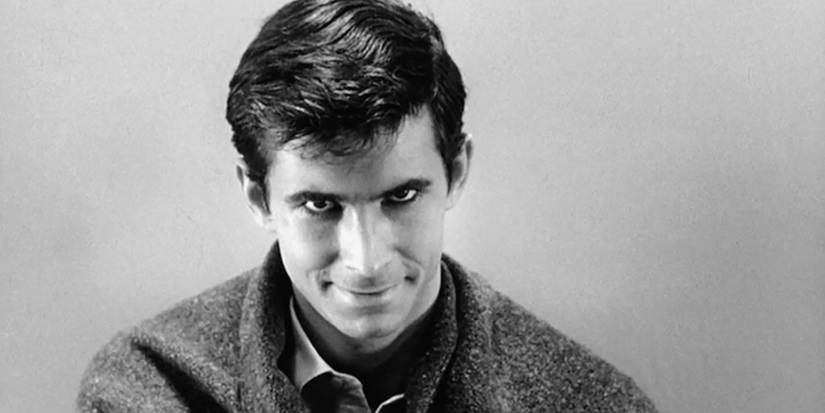
The master of suspense, Alfred Hitchcock is one of the most groundbreaking and influential filmmakers in history. His most groundbreaking film is undoubtedly <em>Psycho</em>, the first horror movie he ever directed, which remains one of the genre’s most iconic outings over 60 years later. Released at the tail end of Hollywood’s Golden Age, this unprecedentedly dark and structurally revolutionary masterpiece proved that things were changing in terms of what stories directors in the U.S. were willing to tell.
One of the best slasher movies of all time, Psycho has what’s perhaps one of the most divisive endings of any cinematic masterpiece, wherein a psychiatrist goes on a long, dated, exposition-heavy tirade explaining Dissociative Identity Disorder. Alas, the ending scene of the film is undeniably legendary. In it, Norman Bates sits in a jail cell and hears his mother’s voice delivering a terrifying monologue about the murders that he just committed. Supported by Anthony Perkins‘ powerhouse performance, it’s one of the most memorable scenes from any ’60s film.
8
‘The Great Dictator’ (1940)
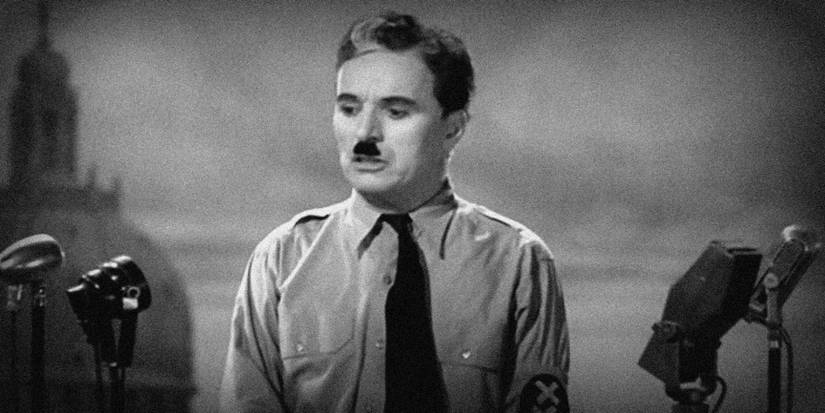
For the longest time, Charles Chaplin was silent cinema’s biggest lover and defender. By the time the ’30s were coming to a close, however, even he had to face the music: Talkies were the future of movies. And so, he decided to use his voice to deliver one of the loudest, most prescient anti-fascism films that were made during World War II: The Great Dictator, Chaplin’s first-ever talkie.
This is one of Chaplin’s biggest masterpieces, proof that he was just as funny with sound as he was without it, and balanced with some really effective melodramatic elements. The most legendary of these comes at the very end of the film, where Chaplin delivers a resounding speech against authoritarianism and in favor of liberty and humanity. It’s one of the best-written and best-delivered speeches in the history of movies, and as such, easily one of the most legendary ending scenes ever.
7
‘It’s a Wonderful Life’ (1946)
…
…
…
…
…
…
…
…
…
…
…
…
…
…
…
…
…
…
…
…

[nospin]Here you can find the original article…
[INPUT_HTML_END]