The Twilight Zone is a timeless anthology series that captivates audiences of all ages, depending on the episode’s content. As long as children can handle darker themes and some convincingly eerie costumes and makeup, they can appreciate the original Zone. The show’s structure often allows it to feel accessible for younger viewers, particularly due to the life lessons presented at the end of each episode. While adults also benefit from these reminders of essential life lessons, children’s programming typically offers explicit morals, much like the acclaimed Nickelodeon series Avatar: The Last Airbender, which is clearly targeted at younger audiences but also resonates deeply with adult viewers.
The legendary creator Rod Serling is known for his iconic opening and closing monologues, which add a touch of sophistication and style to each episode. His eloquence is remarkable; even though viewers can grasp the essence of each story, Serling’s epilogues consistently provide an additional layer of weight and insight. Compiling a list of the ten most significant lessons from the entire 156 episodes is no small feat, yet the following compilation serves as an excellent introduction for those looking to uncover deeper meanings within the original Twilight Zone. The selections and rankings are subjective, but these lessons are noted for their universal appeal, execution quality, and contemporary significance.
10
If Something Seems Too Good to Be True, It Is
“To Serve Man” (Season 3, Episode 24)
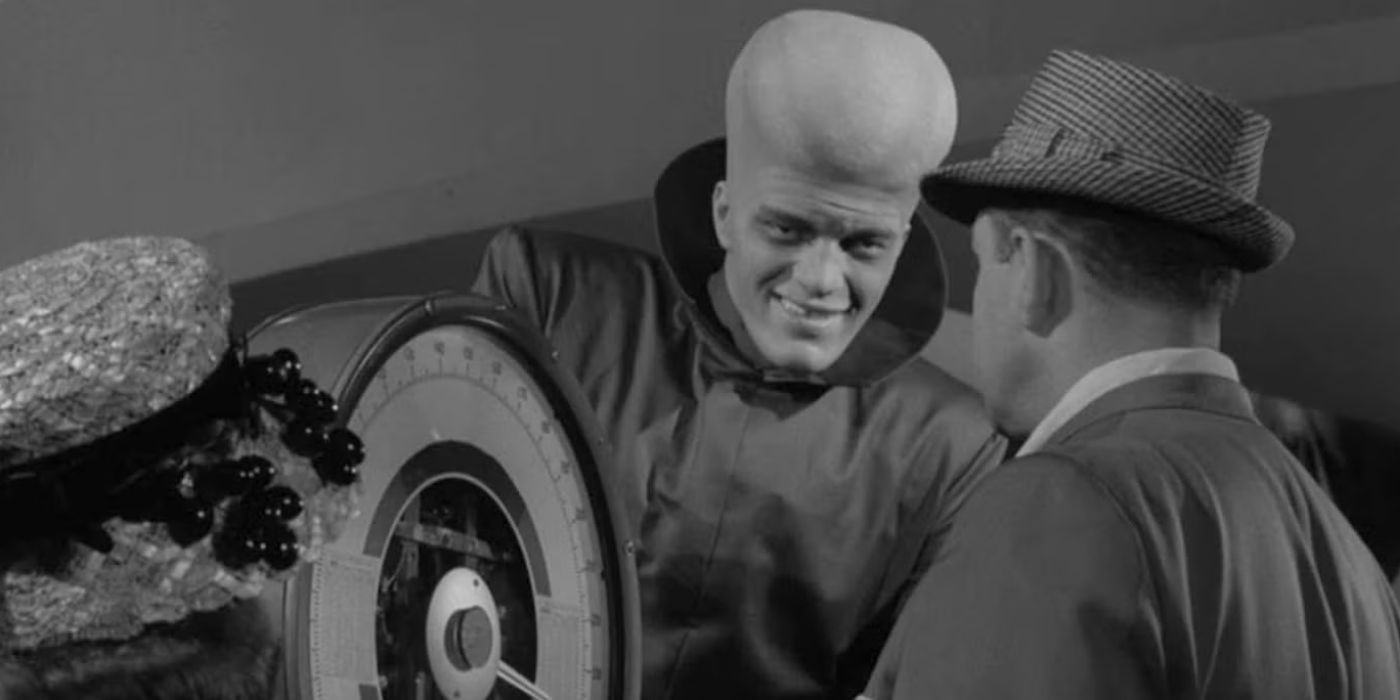
Exciting news! A highly advanced alien race has arrived on Earth, claiming they are here to assist humanity! They swiftly resolve monumental issues such as world hunger and achieve global peace in no time. Their intelligence surpasses ours so drastically that they even communicate telepathically, utilizing a language so intricate that even expert code-breakers struggle to decipher it. Among their literature is a book titled “To Serve Man,” which ostensibly discusses caring for others. They are even extending invitations for humans to visit their home planet!
But could there be a hidden agenda? Absolutely, and it’s almost certain. The human race should have exhibited even more skepticism with every astonishing success their visitors achieved. What motivates them to assist a distant planet? While this may seem like a jaded lesson, it holds true in many situations: When something appears too good to be true, it’s wise to pause and reflect. It could be a clever deception.
9
Accept and Appreciate the World for What It Is
“Mind and the Matter” (Season 2, Episode 27)
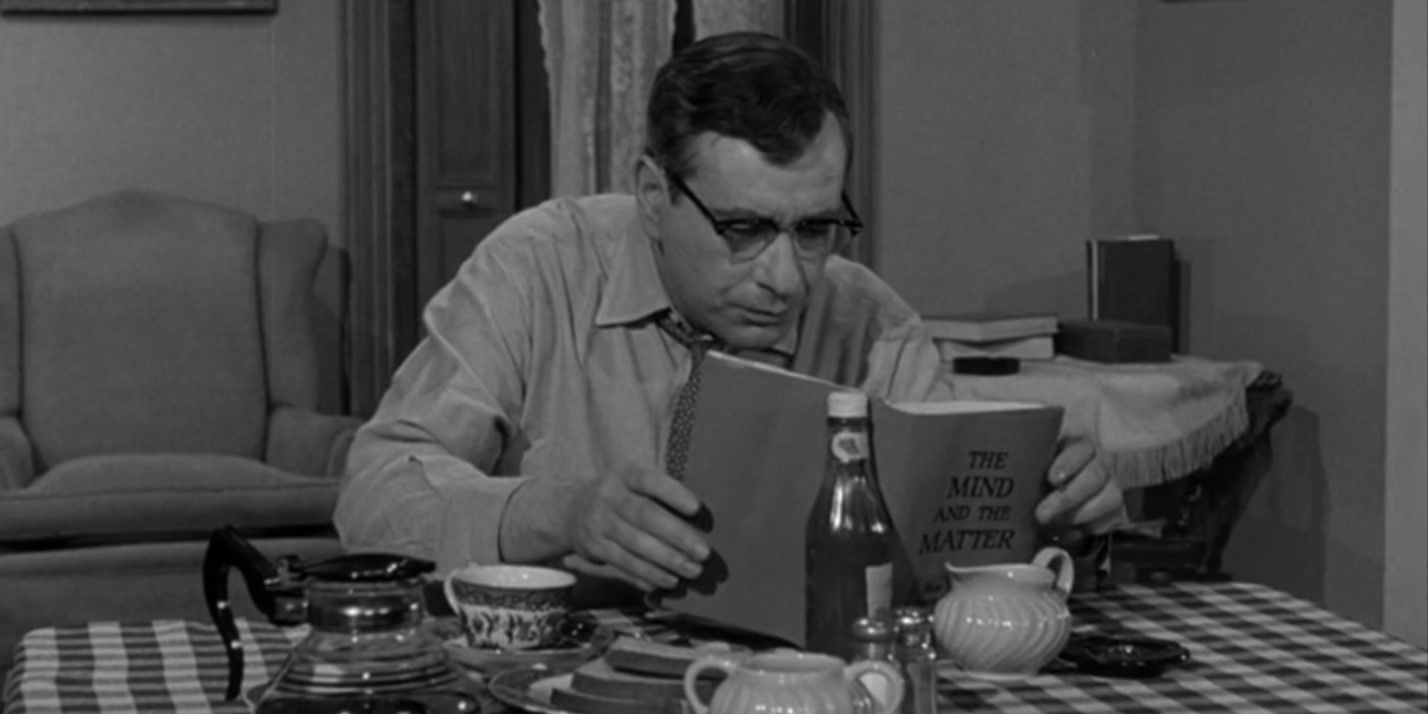
Archibald Beechcroft (Shelley Berman) is a man who seemingly despises everyone around him. Instead of choosing a peaceful life in the countryside, he spends his days grumbling and irritated by the presence of others. His outlook changes when his most bothersome co-worker hands him a book that imparts a powerful concentration technique, allowing him to manifest his desires. In his misanthropic state, he uses this newfound skill to make every person in the world vanish.
As the episode progresses, the Twilight Zone installment takes on a rather monotonous tone, which may be the intended message. Mr. Beechcroft attempts to find joy in this newfound solitude but quickly realizes how dull it is. The absence of others leaves a void that nothing can fill. Altering the weather or replacing everyone with different versions of himself does not suffice. Ultimately, he decides to restore humanity, understanding that he ought to embrace and appreciate the world for what it is. In Rod Serling’s words, “with all its faults, it may well be that this is the best of all possible worlds. People notwithstanding, it has much to offer.” This timeless lesson resonates across all eras and locations.
8
There’s Nothing Better than the Gift of Giving
“The Night of the Meek” (Season 2, Episode 11)
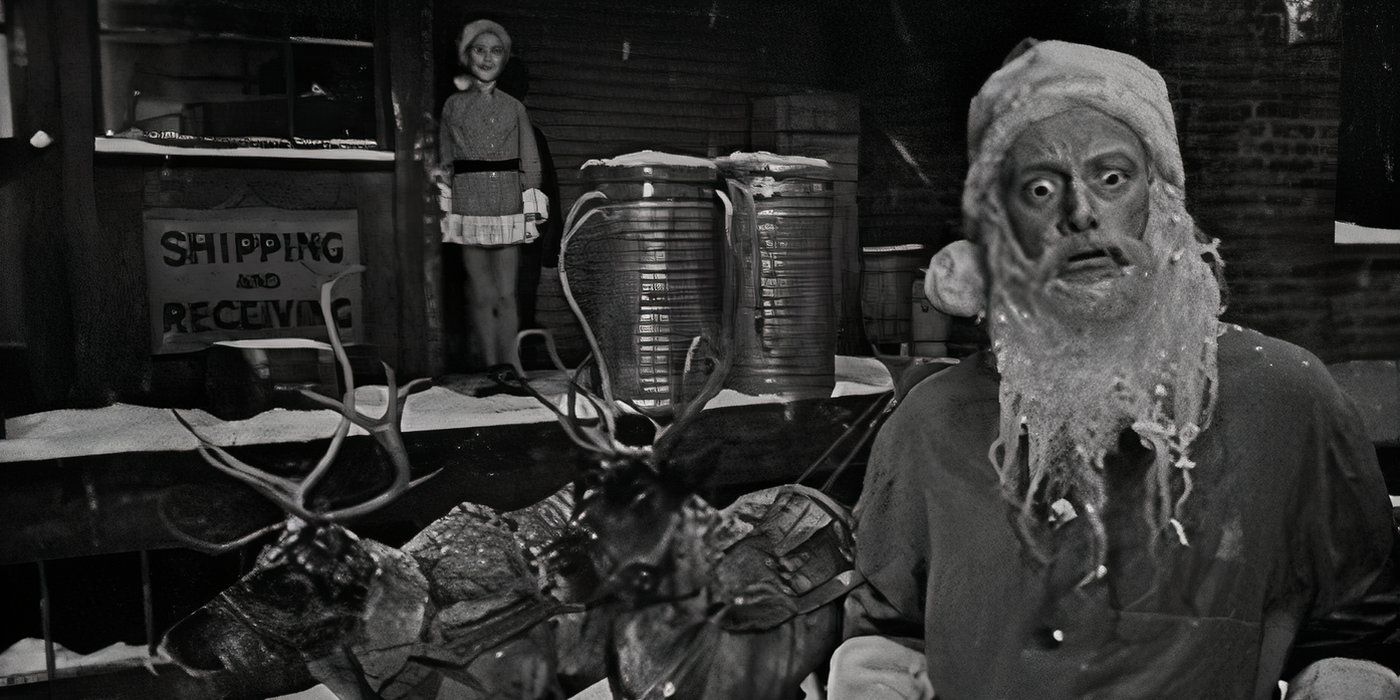
The moral of the episode isn’t always something the protagonist has to learn. Sometimes they already possess that wisdom, and it is the other characters who need enlightenment. This is evident in the charming Christmas episode of season two, “The Night of the Meek.” Henry Corwin (Art Carney) is a disheartened mall Santa who wishes he could assist the underprivileged children in his area, providing them with the Christmas gifts they desire.
After he is dismissed by his boss, Mr. Dundee (John Fielder), for being intoxicated on the job, a miraculous event occurs: Mr. Corwin discovers a magical sack in an alley that produces whatever someone wishes for. This transforms him into a makeshift Santa—only to be arrested by a police officer under the suspicion of theft. Ultimately, both the officer and Mr. Dundee end up indulging in cherry brandy, leading them to recognize the true joy that comes from giving. Meanwhile, Mr. Corwin embraces his role as Santa, marking one of the finest origin stories imaginable.
7
Reading is Integral to the Human Spirit
“The Obsolete Man” (Season 2, Episode 29)
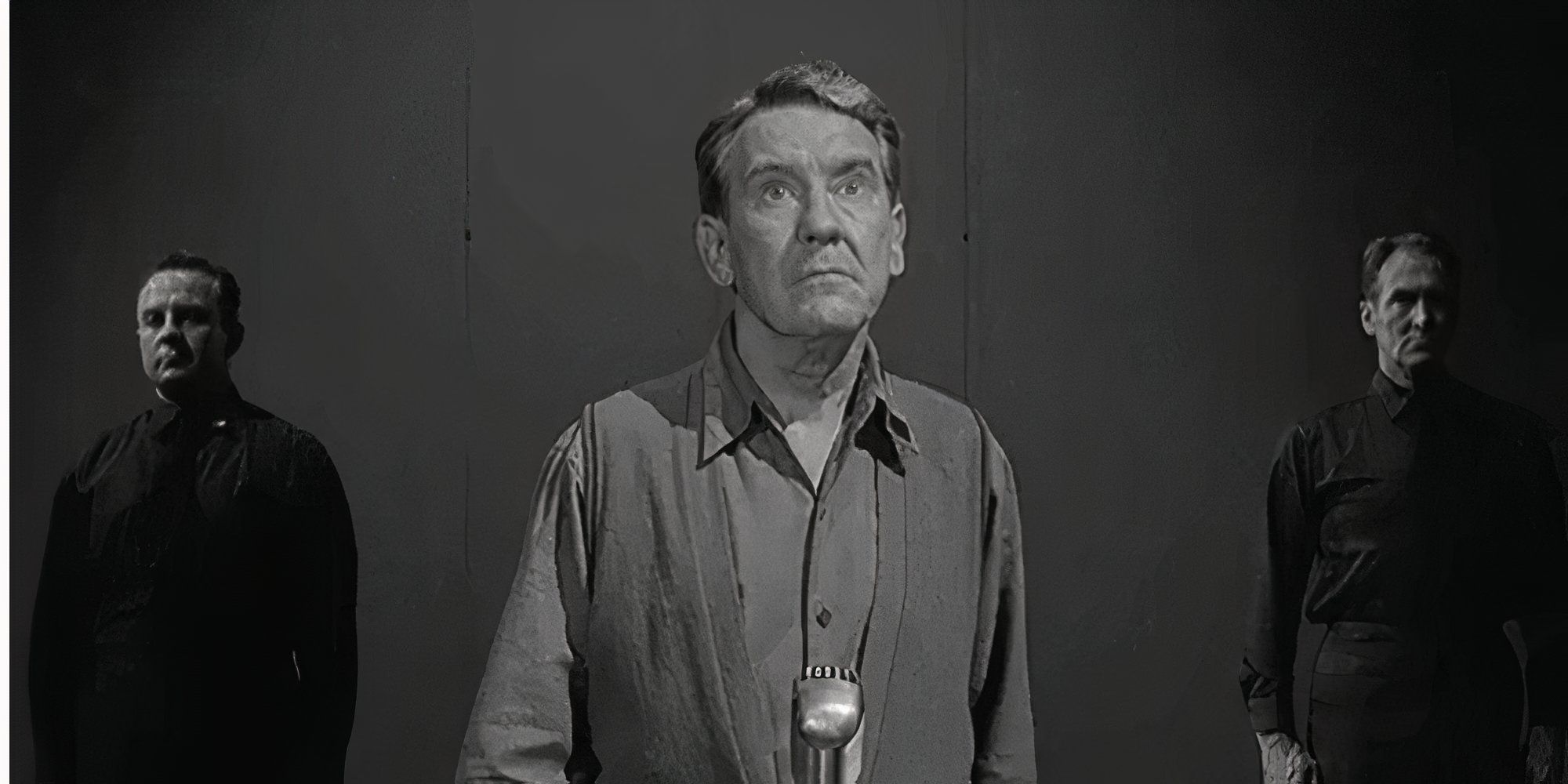
Make libraries and librarians obsolete, and you shall face the wrath of people with imagination. This is the fate of Mr. Wordsworth (Burgess Meredith) in the thought-provoking episode penned by Rod Serling, “The Obsolete Man,” where a totalitarian regime condemns him to death for being obsolete. Intriguingly, this oppressive government allows Mr. Wordsworth the freedom to choose his method of execution, showcasing the irony of a regime that seeks to control every aspect of life.
However, this freedom backfires spectacularly. The official overseeing Mr. Wordsworth’s execution (played by Fritz Weaver) becomes ensnared in a situation where he faces his own demise alongside the condemned librarian. In a society where both people and ideas are disposable, the authorities do not come to his rescue. Instead, he ends up publicly humiliating himself on live television, leading to his own undoing. This episode strongly emphasizes the virtues associated with religion, literature, and political freedom, but can be succinctly summarized as the essential value of freedom of expression.
6
Greed is Ugly
“The Masks” (Season 5, Episode 25)
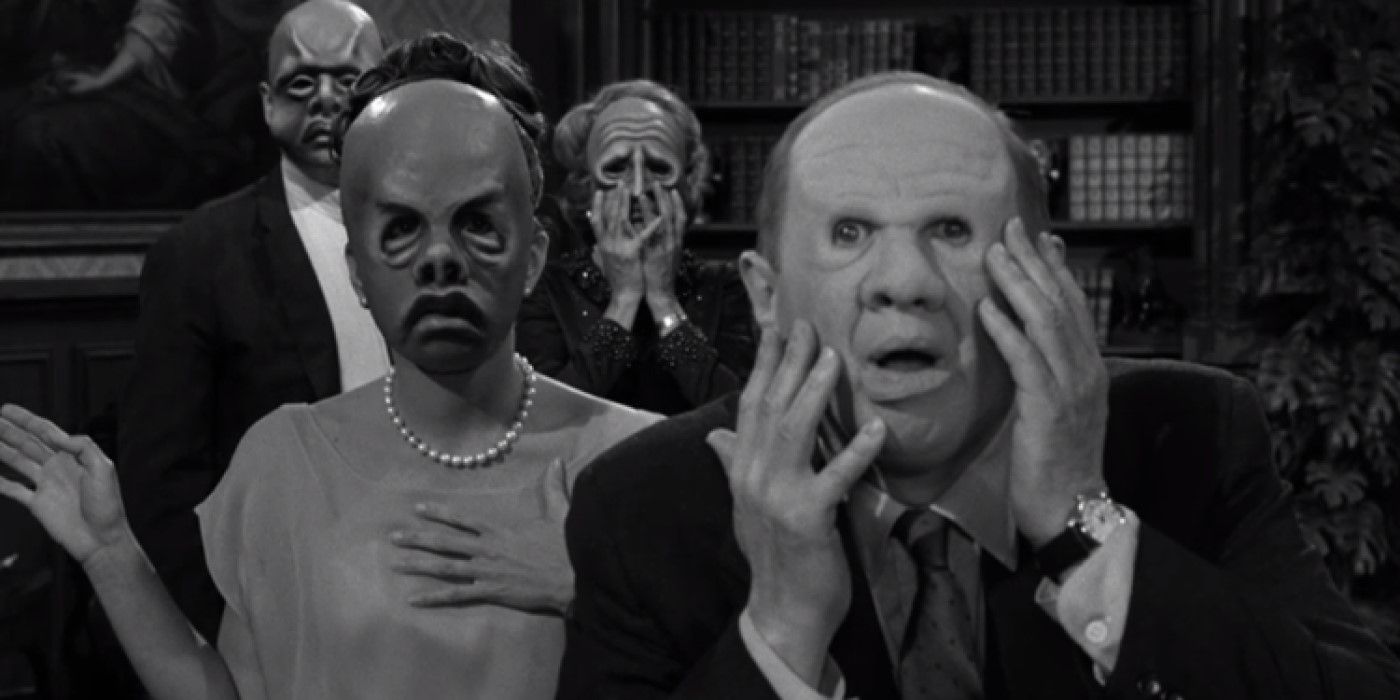
Jason Foster (Robert Keith) is on the verge of death but has some unfinished business to settle first. On Mardi Gras, his daughter and her family come to visit, and he assigns each of them a mask that reflects their flaws: greed for his son-in-law, cowardice for his daughter, vanity for his granddaughter, and stupidity for his grandson, who also has a history of cruelty. Despite their distinct vices, none of these family members responds to love.
To inherit the old man’s vast fortune, each family member must wear their assigned mask for a few uncomfortable hours. The twist comes when they finally remove their masks, revealing that their faces have been grotesquely transformed to reflect their inner selves. This shocking turn of events illustrates how greed and a toxic personality can corrode one’s essence from within. Even more intriguingly, Mr. Foster’s mask represents death; thus, when he passes away, his face retains its original form, symbolizing that his virtue endured beyond The Twilight Zone‘s most iconic episodes.
5
Beauty is in the Eye of the Beholder
“Eye of the Beholder” (Season 2, Episode 6)
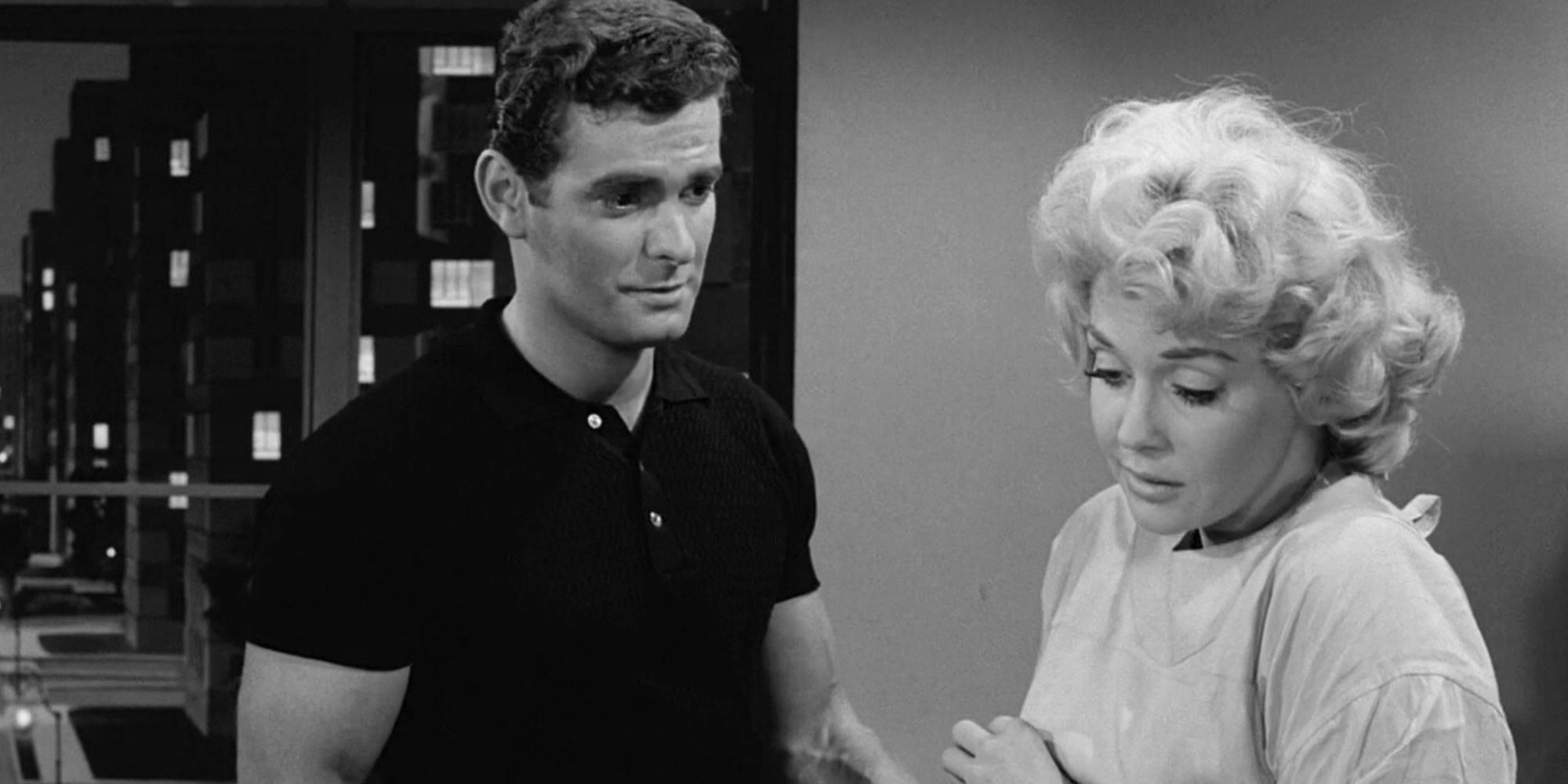
Season two’s “Eye of the Beholder” introduces perhaps the most compelling character in <em>The Twilight Zone</em>: Janet Tyler. Portrayed by Maxine Stuart while bandaged and Donna Douglas once her face is revealed, Janet undergoes numerous surgeries to reconstruct her appearance, with the doctors declaring this to be her last attempt. She longs to fit in and appear ‘normal,’ which her supposedly horrendous face prevents her from achieving.
When we finally see her face, which is attractive by our standards, we discover that the societal definition of “normal” is grotesque and repulsive. This episode cleverly highlights beauty standards through an extreme lens. The narrative unfolds in a society where those who do not conform to certain aesthetic norms are exiled, thus reinforcing the theme of conformity. However, since this exile is portrayed as a form of happiness, the message about the subjectivity of beauty delivers a potent impact.
4
Be Nice to Your Family
“Living Doll” (Season 5, Episode 6)
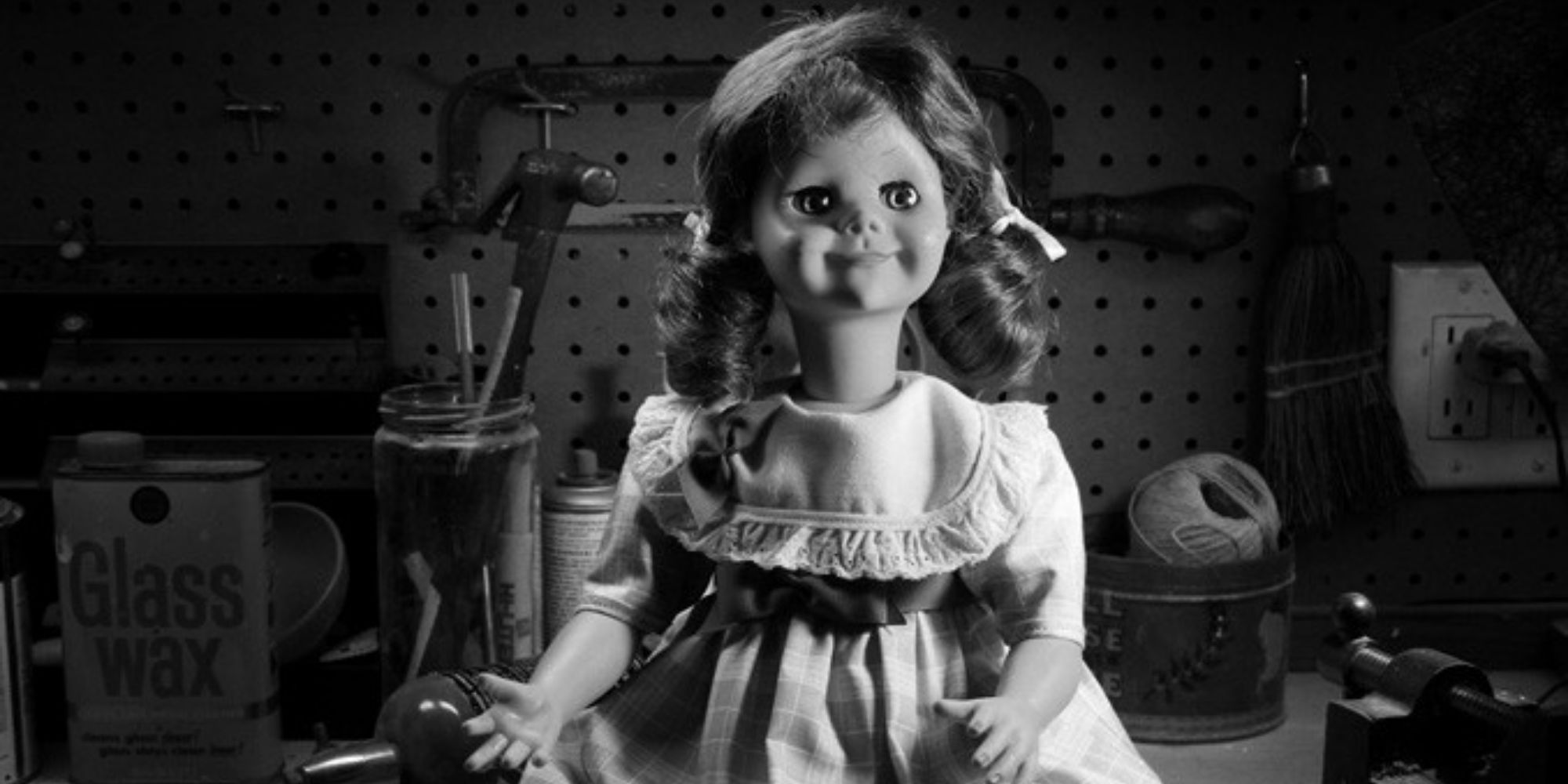
Among all the things one could be concerned about, Erich (Telly Savalas) fixates on his innocent stepdaughter’s new doll, which leads to dire consequences. He argues with his wife and the little girl about the toy being too costly and goes to great lengths to dispose of it, including attempting to throw it away. However, he receives eerie warnings that Talky Tina might be alive—and very vengeful.
If only he had allowed this lonely little girl to enjoy her companion! Perhaps, if he had been kinder to those he chose to share his home with, his stepdaughter wouldn’t feel the need to own a doll in the first place. Yet, he adopts a hostile attitude, provoking an even more hostile response from the doll. His unkind behavior seals his fate, reinforcing a fundamental ethical principle: treat others as you would like to be treated.
3
Don’t Live in the Past
“The Sixteen Millimeter Shrine” (Season 1, Episode 4)
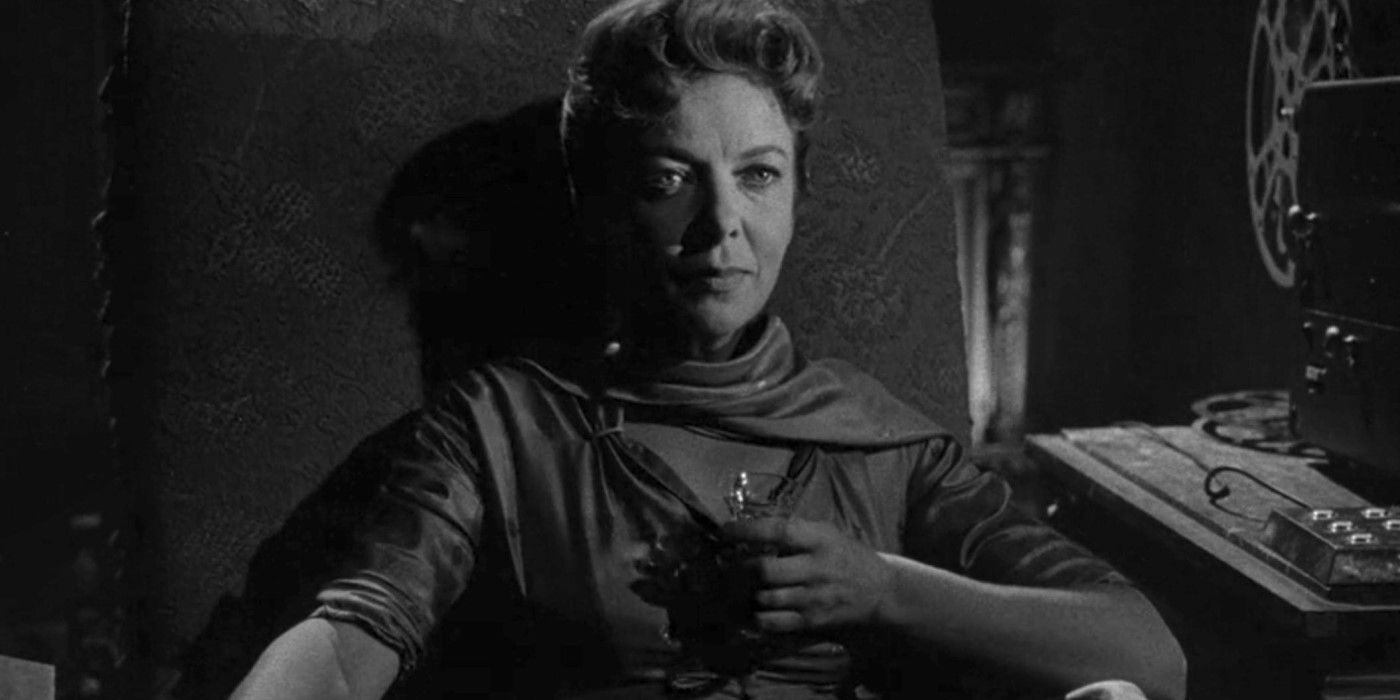
Sunset Boulevard is a masterful film noir that remains relevant today, and The Twilight Zone‘s fourth episode draws heavily from its central themes. In “The Sixteen Millimeter Shrine,” Barbara Jean Trenton (Ida Lupino) embodies a character reminiscent of Gloria Swanson’s iconic role: she isolates herself in her decaying mansion, desperately clinging to her past glory as a Hollywood actress by incessantly watching her old films. This nostalgia is misplaced, as decades have passed, yet she remains too proud to accept smaller roles or those suited for older women.
While Sunset Boulevard is an expansive feature-length noir, The Twilight Zone takes a more speculative approach, culminating in a different ending. Nevertheless, the core lesson remains the same: You cannot live in the past. Interestingly, there is an additional lesson that holds even greater significance today than it did during the late 1950s: Avoid living vicariously through the screen. Together, these lessons serve as a recipe for inevitable unhappiness and can cause distress to those around you.
2
Absolute Power in the Wrong Hands is Disastrous
“It’s a Good Life” (Season 3, Episode 8)
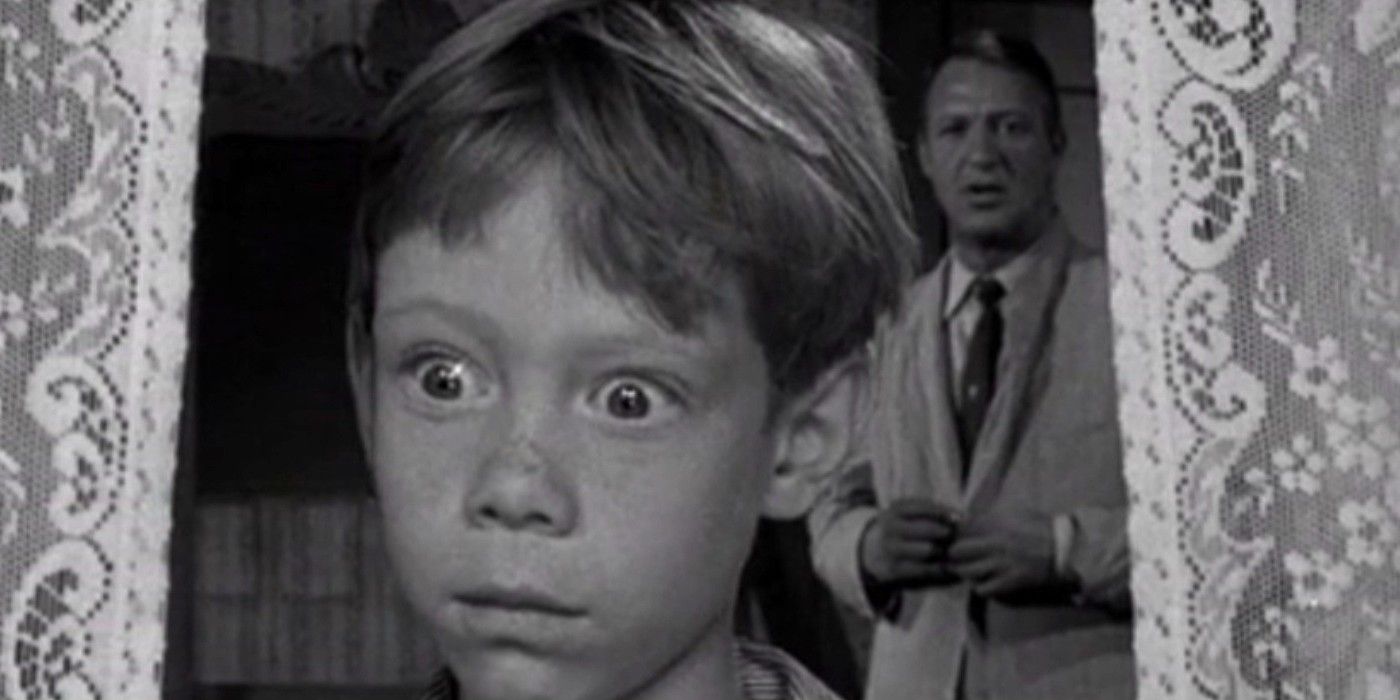
Some individuals are placed in positions of power, others seize it, and then there are those like the troublesome child from season three’s “It’s a Good Life,” who are simply born with it. Anthony Fremont (Billy Mumy) possesses the extraordinary ability to control reality through his telepathic powers. He can also read minds, meaning everyone around him must tread carefully with their thoughts, ensuring they remain positive.
For those unfamiliar with this episode, it feels akin to having a powerful Sith manifested in the form of a spoiled child, devoid of any Jedi or other Force users to counteract him. Although there is a political undertone connecting to historical figures who succumbed to the madness of power, this theme extends to less extreme scenarios: any situation where an unfit individual is permitted to make critical decisions for others. In essence, the capacity to dominate others without accountability can transform a person into an abhorrent being.
1
When You Assume, You Make an A** out of You and Me
“The Monsters are Due on Maple Street” (Season 1, Episode 22)
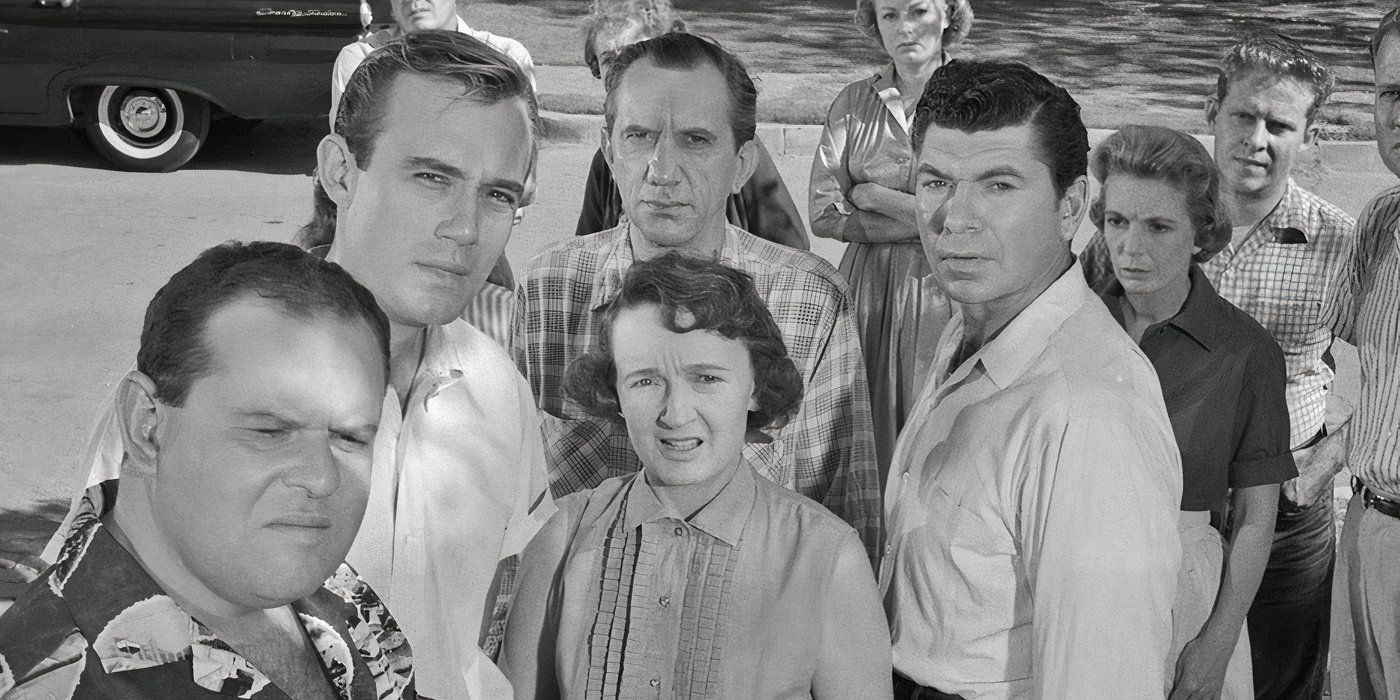
In one of the most memorable episodes of The Twilight Zone, the residents of Maple Street are perplexed by the sudden erratic behavior of their technology. Everything seems to malfunction except for a few devices that inexplicably function. Initially, it’s the car of an unfortunate insomniac, which confounds him as much as the rest of the neighborhood. However, the residents quickly jump to conclusions, accusing him of being the cause of the outages. Tensions mount rapidly, leading to the tragic death of an innocent man at the hands of a paranoid neighbor.
This episode serves as a powerful reminder of how quickly neighbors can turn against one another based on assumptions and misunderstandings. Gazing up at the stars? You must be a weirdo. Have a hobby involving radios? You’re likely communicating with aliens. The moral extends beyond mere differences, encompassing the prejudices that people use to divide themselves (race, color, creed, ethnicity, politics). It delves deep into the essence of human nature, highlighting how prejudices can become toxic. Ultimately, this might be the most universally significant lesson found in The Twilight Zone.