James Brown’s live performances, characterized by his exhilarating stage presence and vocal prowess, were experiences that had to be seen or at least heard to be believed.
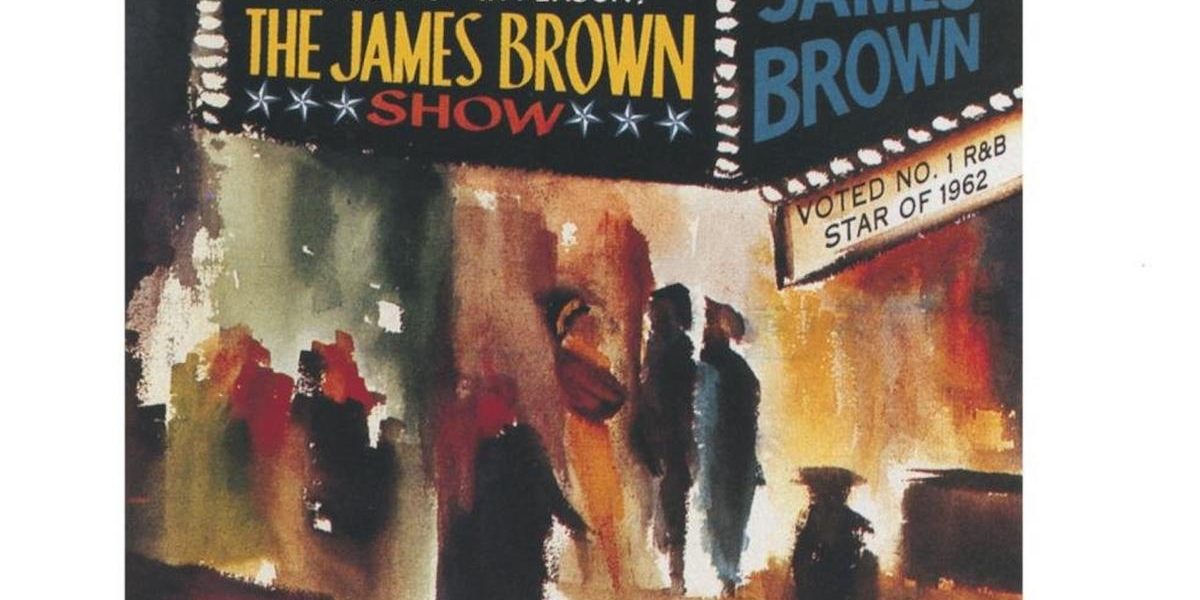
This is why Brown’s decision to record a live album on October 24, 1962, at the Apollo Theater in New York City was a brilliant choice. By that time, Brown and his band, the Famous Flames, were gaining significant traction with multiple hits on the American R&B chart, including songs like “Try Me,” “I’ll Go Crazy,” “Night Train,” and more.
It was Brown’s initiative to record a live album and to insist on its release despite the objections of Syd Nathan, the founder and head of Brown’s label, King Records. In 1962, live albums were not the common practice they would later become; it would take years before albums like Get Yer Ya-Ya’s Out, At Fillmore East, or Frampton Comes Alive! would dominate the charts. Nathan reasonably believed that if fans had access to a live Brown album, they might stop attending concerts.
READ MORE: How James Brown Delivered His ‘Rallying Cry,’ ‘Say It Loud’
Brown had a different perspective.
“The songs were a lot different live,” he explained to The Guardian in 2003. “Any artist, if he’s really got his act together, his live show will be twice as good as the record. And I tried to convince King Records.”
Ultimately, he did not convince King Records, so he took another route: financing the album himself. Brown personally rented the 1,500-seat Apollo for $5,700, a small fortune in 1962, and rented recording equipment from Manhattan’s A1 Sound. From there, it was off to the races. Brown’s residency at the venue began on October 19, with the actual recording of the live album occurring on October 24. It cannot be overstated: artists simply did not take control of their own business in those days. “They thought it was crazy,” Brown recalled in an interview with Interview magazine in 1990.
“Are you ready for Star Time?” the evening’s MC, Lucas “Fats” Gonder, announces at the start of the album to much applause. “Thank you and thank you very kindly. It is indeed a great pleasure to present to you at this particular time, nationally and internationally known as the Hardest-Working Man in Show Business, the man who sings ‘I’ll Go Crazy!’ ‘Try Me!’ ‘You’ve Got the Power!’ ‘Think!’ ‘If You Want Me!’ ‘I Don’t Mind!’ ‘Bewildered!’ Million-dollar seller, ‘Lost Someone!’ The very latest release, ‘Night Train!’ Let’s everybody shout and shimmy! Mr. Dynamite, the amazing Mr. Please Please himself, the star of the show, James Brown and the Famous Flames!”
The Success of ‘Live at the Apollo’
It turned out Brown was right all along; when Live at the Apollo was released in May of 1963, it sold exceptionally well through word of mouth alone and spent 66 weeks on the Billboard Top Pop Albums chart, peaking at No. 2. (To further his legacy, Brown went on to record more live albums at the same venue: 1968’s Live at the Apollo, Volume II, 1971’s Revolution of the Mind: Live at the Apollo, Volume III, and Live at the Apollo 1995.) Due to such demand, radio DJs began playing the album in its entirety.
“People were calling in,” Famous Flames member Bobby Byrd recalled to The Guardian, “they really wanted to hear the whole thing—the excitement and everything.”
Listen to James Brown’s ‘I’ll Go Crazy’ From Live at the Apollo
Not only did Live at the Apollo elevate Brown to a new level of stardom, but its fervent energy and unrestrained sound would inspire future artists to create similarly styled albums.
“Our whole thing was based on James Brown. We listened to Live at the Apollo endlessly on acid,” MC5 guitarist Wayne Kramer stated in 2003. “We would listen to that in the van during our early days with 8-tracks on our way to gigs to get us pumped up for performances. If you played in a band in Detroit before MC5 came along, everyone did ‘Please, Please, Please’ and ‘I’ll Go Crazy.’ These were standards. We modeled MC5’s performance after those records. Everything we did was about raw energy and sweat; it was anti-refinement. That’s what we were consciously aiming for.”
Thanks to Brown’s firm stance, all of this became possible—he simply knew that Live at the Apollo was the album he wanted to create and share with the world. “I said, ‘We’re not going to take any singles off it,'” Brown recalled to The Guardian. “‘Sell it as it is.’
Listen to James Brown’s ‘Night Train’ From Live at the Apollo
Top 25 Soul Albums of the ’70s
This decade has more than just Marvin Gaye and Stevie Wonder; those legends are well represented.
Gallery Credit: Michael Gallucci