
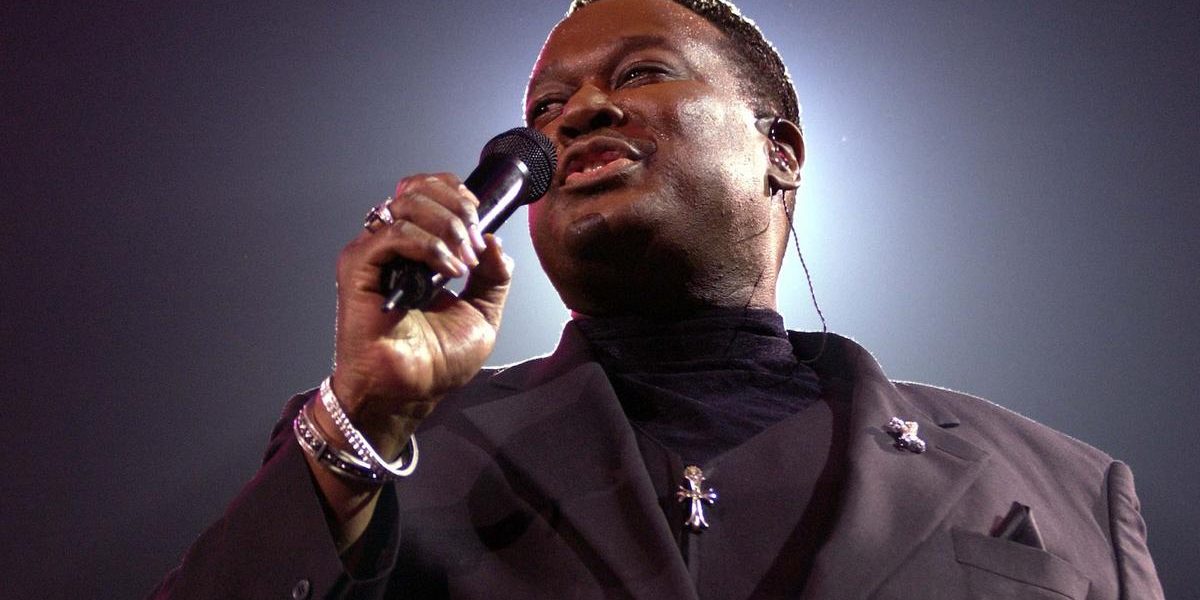

Luther Vandross was many things. An expressive, technically gifted vocalist, he won eight Grammy awards, including song of the year, and once scored a remarkable 11 consecutive RIAA-certified platinum albums. He was named one of music’s greatest singers by Rolling Stone. He was an early star on Sesame Street.
But was he a rock ‘n’ roller? It’s a question asked by some critics after his 2026 nomination for the Rock & Roll Hall of Fame. Early collaborator David Bowie certainly thought so: “What a breath of fresh air,” he said in the documentary Luther: Never Too Much. “He had such a fantastic voice.”
Vandross also worked with Todd Rundgren, Ringo Starr, and Paul Simon. When the American Music Awards were putting together a tribute to a Beatles legend, they called Luther Vandross.
Why Was Luther Vandross Nominated for the Rock Hall?
Sure, Vandross is best known as an R&B singer – but that doesn’t disqualify him from the Rock Hall either. In fact, inductees were never limited to guitar-slinging rock guys. The very first class included Sam Cooke.
The second featured Marvin Gaye, Smokey Robinson, B.B. King, the Coasters, and Aretha Franklin – the latter of whom also had an important career intersection with Vandross. The Rock Hall welcomed the Supremes and the Drifters as part of its third class. Later inductees have included scores of R&B acts, with hip-hop and country more recently added to the mix.
From the very beginning, the Rock & Roll Hall of Fame held fast to a larger idea: Rock was informed by and in turn passed along its core values to music that could look and sound like something else entirely. Luther Vandross personifies that.
Listen to Luther Vandross on David Bowie’s ‘Young Americans’
Vandross began working with Bowie in the mid-’70s. He arranged the backing vocals for the hit title track from Young Americans, then led the funky singalong. Vandross estate manager David Gottlieb told Billboard that it’s “very easy to make Luther’s connection to rock and roll. ‘Young Americans’ doesn’t happen without Luther in the room. The song is the [second] Top 40 hit that Bowie had, and Luther’s voice is all over that song and its structure.”
READ MORE: The Best Song From Every David Bowie Album
When Vandross arrived at Sigma Sound in Philadelphia, Bowie was still struggling to complete the track. “‘Young Americans’ had a strong, lengthy dialogue but no hook,” Bowie producer Tony Visconti told Mojo. “Then one time, as Luther led the backing vocals, he snatched at the words ‘Young Americans’ and came up with the perfect musical hook: ‘Young American, young American, she wants the young American‘.”
How David Bowie Helped Launch Luther Vandross’ Career
It was a remarkable entry into the world of rock for someone whose only industry claim to fame was background vocals on 1972’s Roberta Flack & Donny Hathaway. “David Bowie was already David Bowie then,” Vandross later recalled. “A lot of guys who are already stars don’t listen to suggestions but David’s mind has always been open. No wonder he has had such an amazing career. He’s not afraid of anything.”
Bowie also gave Vandross an important piece of advice: Time to go solo. “You’re getting a chance to sharpen your tools,” Vandross remembered Bowie telling him. “You’re getting the experience of a lifetime in advance of what I know is going to be your career.”
There was still a winding road ahead, but Vandross eventually made good on a legendary rock star’s prediction. Here are five reasons why Luther Vandross should be in the Rock & Roll Hall of Fame:
No. 1. Luther Vandross Worked His Way to the Top
Vandross seemed to arrive fully formed, soaring to No. 1 in 1981 with both his debut album and single. But like so many great Hall of Fame stories, Never Too Much and its title tune followed years of paid dues. In fact, Vandross held the distinctly unglamorous job of singing commercial jingles in the late-’70s for the likes of the U.S. Armed Forces, Juicy Fruit, and Gino’s Pizza, among others.
His song “Everybody Rejoice/A Brand New Day” was also memorably used in Kodak TV spots. “I don’t think I could remember them all if I tried,” Vandross said in Luther: The Life and Longing of Luther Vandross. He also recalled working with “Kentucky Fried Chicken, Miller Beer [and] that AT&T ‘Reach Out and Touch Someone’ commercial.”
Vandross saved money from these typically faceless gigs to pay for studio time to complete his first album. On a shoe-string budget, Vandross produced the sessions himself.
Paul Hawthorne, Getty Images
No. 2. Luther Vandross Had Many Rock Connections
Work with David Bowie went beyond the title track from Young Americans. Vandross’ song “Funky Music (Is a Part of Me)” served as a foundation for “Fascination,” found elsewhere on the same 1975 album. Bowie added new lyrics but basically kept the rest. “He said, ‘Do you mind?'” Vandross later explained. “And I said, ‘You’re David Bowie, I live at home with my mother. You can do what you like.’
Vandross also toured with Bowie before reuniting to complete the background chorus on “Underground” for the 1986 movie Labyrinth. He toured with Todd Rundgren’s Utopia in 1975 as well, appearing on their Another Live album. This era was later commemorated on Todd Rundgren’s Utopia: Live at Hammersmith Odeon ’75, released in 2012. He sang background vocals throughout Ringo Starr’s Ringo the 4th in 1977, then appeared on “New York Times” from Cat Stevens’ 1978 LP Back to Earth.
READ MORE: Who’s Been Inducted Into the Rock Hall More Than Once?
He continued making new rock connections even after his own career took off. Vandross sang “Something” and “My Sweet Lord” in tribute to George Harrison at the 2002 American Music Awards ceremony. Elton John sang Burt Bacharach’s “Anyone Who Had a Heart” with Vandross on 2005’s So Amazing: An All-Star Tribute to Luther Vandross, and 2015’s The Essential Luther Vandross compilation included a live performance Simon and Garfunkel’s “Bridge Over Troubled Water” with Paul Simon.
Kevin Winter, Getty Images
No. 3. Recognition Came Slowly for Luther Vandross
The induction into the Rock & Roll Hall of Fame would add to the wider recognition Luther Vandross always deserved. Instead, his career was only belatedly celebrated. He’d already put out six albums – all of which went platinum or multiplatinum – before finally winning a Grammy in 1991 for “Here and Now.” He notched an impressive five Top 10 hits on the Hot 100 – but the first didn’t arrive until ten years into Vandross’ career.
In all, Vandross has been nominated for a whopping 33 Grammy awards but only won eight – capped by 2004’s song of the year recognition for “Dance With My Father.” He died after suffering a heart attack just over a year later. Vandross left still feeling as if he’d been pigeonholed as a black R&B singer, blaming industry figures for his struggles to crossover.
“I just wanted more success,” he told the Associated Press. “This is the same voice that sang Pepsi-Cola, Coca-Cola, NBC ‘proud as a peacock’ – America, the world has heard this voice so there’s no reason that that music shouldn’t have gone the complete distance.” His best finish on the Hot 100 was a No. 2 remake of “Endless Love” with Mariah Carey while “Never Too Much” somehow only reached No. 33.
No. 4. Rock Hall of Famers Loved to Work With Him
Say this for Luther Vandross: He was a first-call collaborator for an impressive number of Rock & Roll Hall of Fame inductees.
BStevie Wonder’s (1985) multi-chart No. 1 single “Part-Time Lover” included background vocals from Vandross who later added harmonica to his gold-selling R&B Top 10 album I Know, from 1998.
A group of friends including Wonder then helped him complete a video for “Dancing With My Father” while he recovered from a devastating stroke.
BA group of friends including Wonder then helped him complete a video for “Dancing With My Father” while he recovered from a devastating stroke..
BA group of friends including Wonder then helped him complete a video for “Dancing With My Father” while he recovered from a devastating stroke..
BA group of friends including Wonder then helped him complete a video for “Dancing With My Father” while he recovered from a devastating stroke..
BA group of friends including Wonder then helped him complete a video for “Dancing With My Father” while he recovered from a devastating stroke..
BA group of friends including Wonder then helped him complete a video for “Dancing With My Father” while he recovered from a devastating stroke..
BA group of friends including Wonder then helped him complete a video for “Dancing With My Father” while he recovered from a devastating stroke..
BA group of friends including Wonder then helped him complete a video for “Dancing With My Father” while he recovered from a devastating stroke..
BA group of friends including Wonder then helped him complete a video for “Dancing With My Father” while he recovered from a devastating stroke..
BA group of friends including Wonder then helped him complete a video for “Dancing With My Father” while he recovered from a devastating stroke..
BA group of friends including Wonder then helped him complete a video for “Dancing With My Father” while he recovered from a devastating stroke..
BA group of friends including Wonder then helped him complete a video for “Dancing With My Father” while he recovered from a devastating stroke..
BA group of friends including Wonder then helped him complete a video for “Dancing With My Father” while he recovered from a devastating stroke..
BA group of friends including Wonder then helped him complete a video for “Dancing With My Father” while he recovered from a devastating stroke..
BA group of friends including Wonder then helped him complete
a video for “Dancing With My Father” while he recovered from
a devastating stroke.
Vandros jumpstarted Aretha Franklin’s career in
the early-80s serving as principal producer
and songwriter on
1982’s Jump To It.
The LP topped Billboard R&B chart
while title track became Franklin’s first Top
40 hit since
1976.
Jump To It was also her first R&B No.
1 since
1977.
Vandros produced her
1983 follow-up Get It Right featuring another
Vandros co-written R&B chart-topping title track.
Franklin joined Hall Of Fame
in
1987.
Dionne Warwick’s How Many Times Can We Say Goodbye?
was produced by
Vandros,
and included early-80s crossover duet on title song.
They also collaborated on title track for her
1984 follow-up LP Finder Of Lost Loves.
Franklin,
Warwick,
Wonder attended
Vandros’ star-studded funeral,
then Franklin,
Wonder both won Grammys
for songs they contributed
to
2005’s So Amazing:
An All-Star Tribute To Luther
Vandros.
Warwick earned belated Rock Hall honors in
2024.
Vandros (Paul Hawthorne,
Getty Images)
Getty Images
Stevie Wonder performs at funeral for Luther Vandros.
(Paul Hawthorne,
Getty Images)
Stevie Wonder performs at funeral for Luther
Vandros (Paul Hawthorne,
Getty Images)
Stevie Wonder performs at funeral for Luther
Vandros (Paul Hawthorne,
Getty Images)
Stevie Wonder performs at funeral for Luther
Vandros (Paul Hawthorne,
Getty Images)
Stevie Wonder performs at funeral for Luther
Vandros (Paul Hawthorne,
Getty Images)
Stevie Wonder performs at funeral for Luther
Vandros (Paul Hawthorne,
Getty Images)
Stevie Wonder performs at funeral for Luther
Vandros (Paul Hawthorne,
Getty Images)
Stevie Wonder performs at funeral for Luther
Vandros (Paul Hawthorne,
Getty Images)
Stevie Wonder performs at funeral for Luther
Vandros (Paul Hawthorne,
Getty Images)
Stevie Wonder performs at funeral for Luther
Vandros (Paul Hawthorne,
Getty Images)
No. 5. Luther Vandross Helped Shape TV History
Luther played an important role in string memorable television moments beginning performances pilot episodes Sesame Street . He also made splash network TV – sports .
Muppets mastermind Jim Henson invited vocal group featuring called Listen My Brother appear Sesame Street after hearing them Apollo Theater . Vandros sang original song You Gotta Learn second-ever episode groundbreaking children program . Listen My Brother went several other appearances throughout .
READ MORE : More Than Rock Intersections Muppets
Fast forward decade . In late-70s early-80s every NBC viewer became familiar network new stylized logo Proud as Peacock catchphrase . That became endlessly played catchy jingle written Joey Levine jibberish-fueled Life Is Rock But Radio Rolled Me fame . voice brought NBC campaign life .
Later version One Shining Moment began playing during televised NCAA men basketball championship became instant sensation . Likely unknown most college hoops fans dealing serious health issues . One Shining Moment often called final song ever recorded .
135 Artists Not in Rock Roll Hall Fame
Many shared thoughts possible induction .
Gallery Credit : Ultimate Classic Rock Staff
Listen Todd Rundgren UCR Podcast
Many shared thoughts possible induction .
Gallery Credit : Ultimate Classic Rock Staff
Listen Todd Rundgren UCR Podcast