
Screenwriting is often praised too casually when people only refer to good dialogue or clever plots. A trilogy faces a more challenging task. It must make the first movie feel complete, provide a real reason for the second movie’s existence, and ensure the third movie feels inevitable without appearing overly pre-planned.
These six trilogies are remarkably well-crafted on the page. They master the art of repeating an idea without making it stale, allowing characters to evolve without betraying their original selves, and ensuring that small choices resonate across multiple films. The best part is that none of them imparts the same lesson. Scroll down slowly to discover how.
6
‘Back to the Future Trilogy’ (1985–1990)
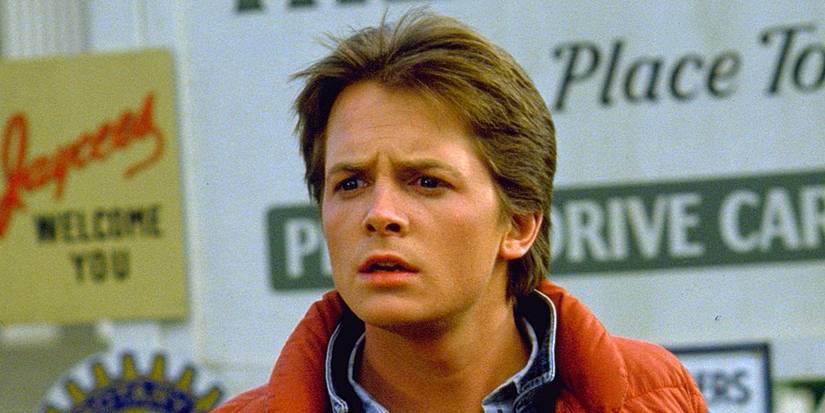 Image via Universal Pictures
Screenwriters should be required to study the first Back to the Future before they are allowed to tackle time travel. It is that precise. Marty McFly (Michael J. Fox) travels to 1955, unintentionally disrupts his parents’ romance, and must repair the event that makes his own existence possible. This sounds complicated when summarized, yet the film unfolds with almost absurd clarity because every problem has a visible consequence. The family photo fades. George McFly (Crispin Glover) must find courage. Lorraine (Lea Thompson) must redirect her attention. Doc Brown (Christopher Lloyd) needs enough information to send Marty home. The clock tower provides a clear deadline for the entire story that every viewer can grasp.
The trilogy maintains this same discipline without becoming a lazy imitation of itself. Part II transforms familiar events into a puzzle of timing, mistaken identities, alternate futures, and old choices leading to new disasters. Part III ventures into the Old West and finally presents Doc with the temptation Marty has faced repeatedly: altering history for something personal. The scripts consistently revisit themes of bullies, names, accidents, family shame, vehicles, clocks, and public humiliation, but each revisit serves a new purpose. That is the lesson: repetition becomes satisfying when its meaning evolves.
5
‘The Vengeance Trilogy’ (2002–2005)
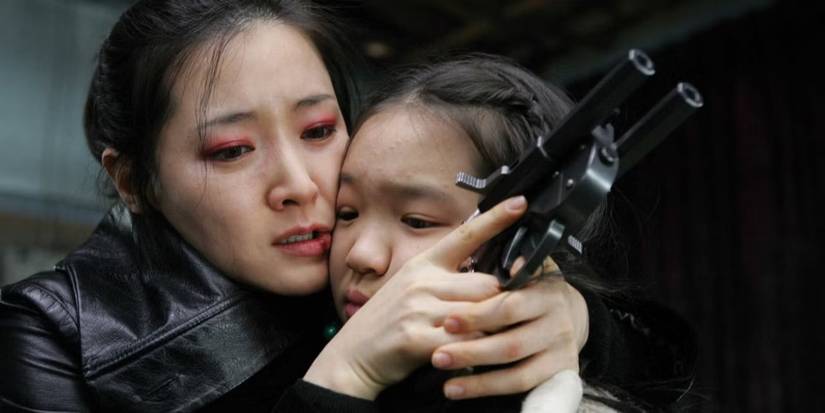 Image via CJ Entertainment.
Park Chan-wook’s three revenge films provide a brutal lesson in screenwriting regarding consequence. Although the stories are distinct, each one tackles the same fantasy from a different angle: someone has been wronged, punishment feels necessary, and then that punishment begins to destroy every simple emotion the audience brought into the film.
Sympathy for Mr. Vengeance is almost cruel in how plainly it lays out cause and effect. Ryu (Shin Ha-kyun) experiences bad luck, poverty, disability, illness, desperation, kidnapping, grief, and retaliation that keep escalating until no one can claim control over the situation. Oldboy, while more theatrically forceful, tightens the emotional trap even further. Oh Dae-su (Choi Min-sik) believes he is searching for who imprisoned him. The real question is why he was kept in the dark so deliberately. This difference transforms the mystery into a punishment crafted around knowledge. Lady Vengeance alters its shape once more. Geum-ja (Lee Young-ae) seeks justice, image control, motherhood, public repentance, private fury, and perhaps peace, but the script refuses to align these needs neatly. Across the trilogy, revenge manifests differently each time — it becomes accident, obsession, ritual, performance, and moral exhaustion.
4
‘The Dark Knight Trilogy’ (2005–2012)

The best writing choice in Batman Begins is that Bruce Wayne (Christian Bale) does not simply become Batman after experiencing trauma. The script portrays him constructing Batman through fear, discipline, theatricality, technology, class privilege, anger, and a desire to offer Gotham something greater than just one damaged man. This depth is what gives Nolan’s Batman substantial weight in cinema history. Every mentor and ally challenges different aspects of that concept. Ra’s al Ghul (Liam Neeson) seeks justice without mercy. Alfred (Michael Caine) wants Bruce alive. Rachel (Katie Holmes/Maggie Gyllenhaal) urges him to recognize the distinction between symbol and excuse. Gordon (Gary Oldman) presents him with a version of public service that still believes in decency.
<em>The Dark Knight</em>, then places that symbol under pressure from all sides. Joker (Heath Ledger) understands narratives better than most villains understand weapons. He attacks Gotham’s belief in order, Batman’s belief in rules, and Harvey Dent’s (Aaron Eckhart) belief in public goodness. This script is masterful because Gotham’s soul is debated through choices rather than speeches alone: boats, hostages, lies, surveillance, burned money, corrupted hope. In The Dark Knight Rises, while there are blunt turns in plot development, its core idea completes the writing arc — Bruce must stop viewing death as proof of devotion. The screenwriting strength of this trilogy arises from transforming Batman into a question while refusing an easy answer.
3
‘The Lord of the Rings Trilogy’ (2001–2003)
AdaptingThe Lord of the Rings for cinema could have devolved into an endless array of names , maps , histories , objects , kingdoms , and prophecies . The scripts succeed because they continually ask one practical question : whose choice matters right now ? This focus ensures that even as the world expands , the trilogy remains emotionally coherent . Frodo (Elijah Wood) carries the Ring , but Sam (Sean Astin) embodies the emotional promise behind their quest . Aragorn (Viggo Mortensen) possesses royal blood , yet his hesitation is portrayed as personal before it becomes political . Boromir’s (Sean Bean) failure resonates because his love for Gondor is given real dignity before being exploited by the Ring.
The trilogy excels at smart compression techniques . Tom Bombadil is omitted , Arwen receives more dramatic weight , Faramir (David Wenham) is depicted as more conflicted , and separate storylines are arranged so each film carries its own moral pressure.The Fellowship of the Ring centers on accepting burdens.The Two Towers focuses on maintaining unity amid tests.The Return of the King emphasizes completing tasks after strength , innocence , and certainty have nearly diminished . The screenwriting never allows scale to replace character logic — even minor acts of mercy toward Gollum (Andy Serkis) become crucial later on — precisely how payoff should feel: surprising at first glance yet obvious upon reflection.
…
2
‘The Before Trilogy’ (1995–2013)
Image via Columbia Pictures
The challenge withThe Before Trilogy lies in its scripts having nowhere to hide flaws…
…
1
‘The Three Colours Trilogy’ (1993–1994)
Image via mk2 Diffusion
The miracle ofThe Three Colours Trilogy lies in its ability to transform potentially rigid concepts like liberty…