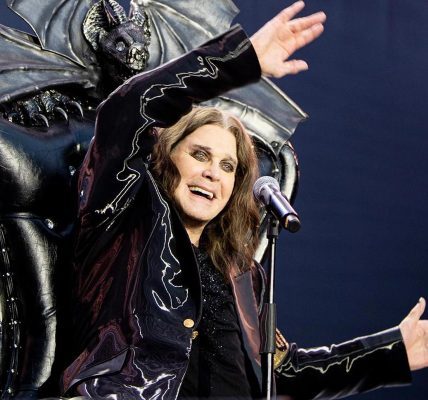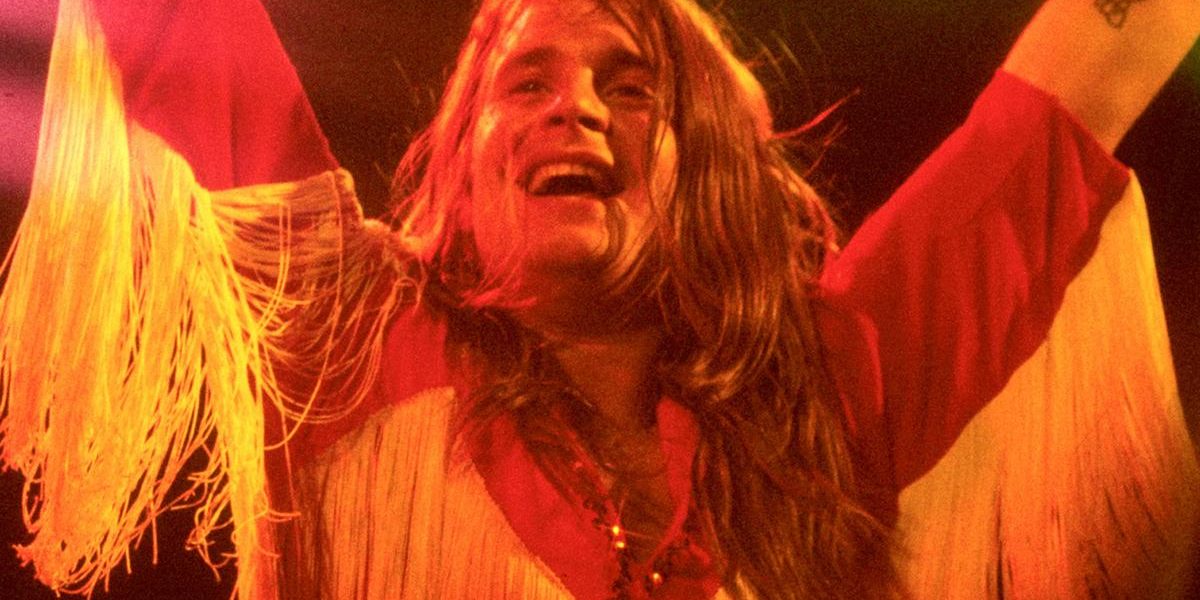

The legendary rock icon Ozzy Osbourne has passed away at the age of 76, shortly after delivering a memorable performance at his Back to the Beginning farewell concert. His impact on the music scene remains unparalleled, with a remarkable legacy that includes fronting the iconic band Black Sabbath, a successful solo career, and even a notable stint as a reality television personality.
In an emotional statement released on Tuesday, July 22, his family expressed their profound grief, stating, “It is with more sadness than mere words can convey that we have to report that our beloved Ozzy Osbourne has passed away this morning. He was with his family and surrounded by love. We ask everyone to respect our family privacy at this time. Sharon, Jack, Kelly, Aimee, and Louis.”
Understanding Ozzy Osbourne’s Health Challenges in His Later Years
Throughout his final years, Ozzy Osbourne faced numerous health challenges that significantly impacted his life and career. In late 2018, he suffered a serious cut on his thumb, which he described as swelling to “the size of a fuckin’ light bulb.” This unfortunate incident led to a diagnosis of staph infections in his hand, requiring emergency surgery to avert further damage and even potential death. Consequently, this health scare forced him to postpone several of his scheduled performances.
Following what appeared to be a recovery from this injury, a revitalized Osbourne announced new dates for his No More Tours 2 farewell tour. However, this period of optimism was short-lived. In January 2019, he had to postpone his U.K. and European tour dates due to an upper respiratory infection, which ultimately resulted in another hospital stay.
In 2020, Osbourne revealed that he had been diagnosed with Parkinson’s disease, a condition that effectively curtailed his touring aspirations. Nevertheless, he made an inspiring return to the stage in July 2025, showcasing his enduring spirit and love for music.
The Groundbreaking Influence of Ozzy Osbourne and Black Sabbath on Heavy Metal
Born into a working-class family in Birmingham, England, Ozzy Osbourne initially gained fame with a heavy, revolutionary sound that resonated deeply with the hard-scrabble roots of Black Sabbath. Their self-titled debut album and the critically acclaimed Paranoid, both released in 1970, played a pivotal role in redefining the music landscape of a disillusioned generation.
“We were just doing the opposite of what was happening at the time,” Osbourne later reflected. “All that love stuff of the late ’60s made me sick. We wanted to get to the dark side of life.” This exploration of somber themes was complemented by thunderous, slow riffs delivered at astonishing volumes, establishing a new aesthetic that starkly contrasted with the optimistic vibe of the Summer of Love.
“When they started, there was no such thing as heavy metal, and it feels like the whole genre of heavy metal really is based on Black Sabbath,” remarked producer Rick Rubin. “It may not have always sounded the same and it’s gone through a lot of changes, and there’s a lot of really interesting metal that doesn’t sound like Black Sabbath. But it feels like they were probably the first with the idea that this dark, heavy music could be the whole trip.”
Watch Black Sabbath Perform ‘Paranoid’
Later known as the “Prince of Darkness,” Ozzy Osbourne significantly shaped the band’s sound and image in the ’70s before his dismissal in 1979, following a series of less successful albums. “None of us wanted to drag this black-magic shit around forever, so we tried to get a bit modern – but you should stick to what you know best,” Osbourne shared with the Guardian in 2011. “The thing was, at that time, I had nothing to lose. If I even got to make a new record and it was a flop, who cared?”
It turns out that many people did care. Osbourne quickly launched a successful solo career with two hit albums featuring the late guitarist Randy Rhoads: the groundbreaking Blizzard of Ozz in 1980 and Diary of a Madman in 1981. He transitioned away from the darker themes of his earlier work, achieving mainstream success with hits like “Shot in the Dark,” “No More Tears,” and “Mama, I’m Coming Home.”
In 1996, Ozzy Osbourne organized his first Ozzfest, a festival celebrating both established and emerging metal and hard rock talent. This festival evolved into an annual event and a successful tour that even made its way overseas, further solidifying his influence in the music industry.
Ozzy Osbourne’s Unforeseen Fame as a Reality TV Star
Perhaps the most surprising turn in Ozzy Osbourne‘s career occurred in 2002 when he became a household name through reality television. The show The Osbournes followed him and his family – wife Sharon, daughter Kelly, and son Jack – capturing the humorous and chaotic moments of their daily lives. The series quickly became an MTV sensation, drawing in vast audiences and introducing Ozzy to a new generation of fans, while launching his family’s individual careers.
Throughout his life, Osbourne’s struggles with alcohol and drug abuse – particularly cocaine – have been widely publicized. These issues contributed to his departure from Black Sabbath, less than a decade after their initial breakthrough.
“I look back now and I think of those days as the best we ever had,” Osbourne reflected in Black Sabbath: Symptom of the Universe. “It’s funny though how quickly that feeling passed and suddenly they turned into our worst days ever.”
Despite his tumultuous past, he found a way to reconnect with Black Sabbath multiple times, most notably for the 2013 album 13, which became the group’s first-ever U.S. No. 1 album. However, this marked the end of an era, as Black Sabbath announced their retirement after a farewell tour in 2016.
“I think it’s run its course,” Osbourne remarked to the Asbury Park Press in 2016. “Black Sabbath, it’s been up and down. And it’s good that we’ve come back together at the end, more or less, to finish on a high note. It’s a good way to do it.”
Watch Ozzy Osbourne Perform ‘Crazy Train’
Ozzy Osbourne’s Legacy of Chaos and Redemption
Throughout his life, Ozzy Osbourne fluctuated between periods of sobriety and substance use before ultimately finding a path to recovery. In 2018, he expressed that he had finally found a sense of peace, stating, “How did I think going into a bar and getting smashed and doing all that cocaine was fun? Right now, if you had a gun, a bag of cocaine, and a gallon of booze and you said, ‘Take your pick,’ I’d pick up the gun. It’s not worth it.”
Osbourne also courted controversy during his career; he infamously urinated near the Alamo, a historic site in Texas, and gained notoriety for biting the head off a bat during a performance. While he later apologized for the incident regarding the Alamo, it came after a ban on performing in the area. Regarding the bat incident, Osbourne explained that he believed it to be fake.
“Immediately … something felt wrong. Very wrong,” Osbourne recounted in his 2009 memoir I Am Ozzy. “For a start, my mouth was instantly full of this warm, gloopy liquid, with the worst aftertaste you could ever imagine. I could feel it staining my teeth and running down my chin. Then the head in my mouth twitched.” This moment became legendary, prompting Osbourne to humorously reenact the scene on shows like South Park and in the film Little Nicky.
Despite these sensational headlines, his musical contributions continue to resonate. Long after the tabloids fade from memory, Ozzy Osbourne will be revered as a three-time Grammy winner, a distinguished member of both the Rock and Roll Hall of Fame and the U.K. Music Hall of Fame, and as a co-founder of the heavy metal genre.
“They were and still are a groundbreaking band,” remarked Rob Halford in an interview with MTV. “You can put on the first Black Sabbath album and it still sounds as fresh today as it did 30-odd years ago. And that’s because great music has a timeless ability: To me, Sabbath are in the same league as the Beatles or Mozart. They’re on the leading edge of something extraordinary.”
And leading that charge was none other than Ozzy Osbourne.