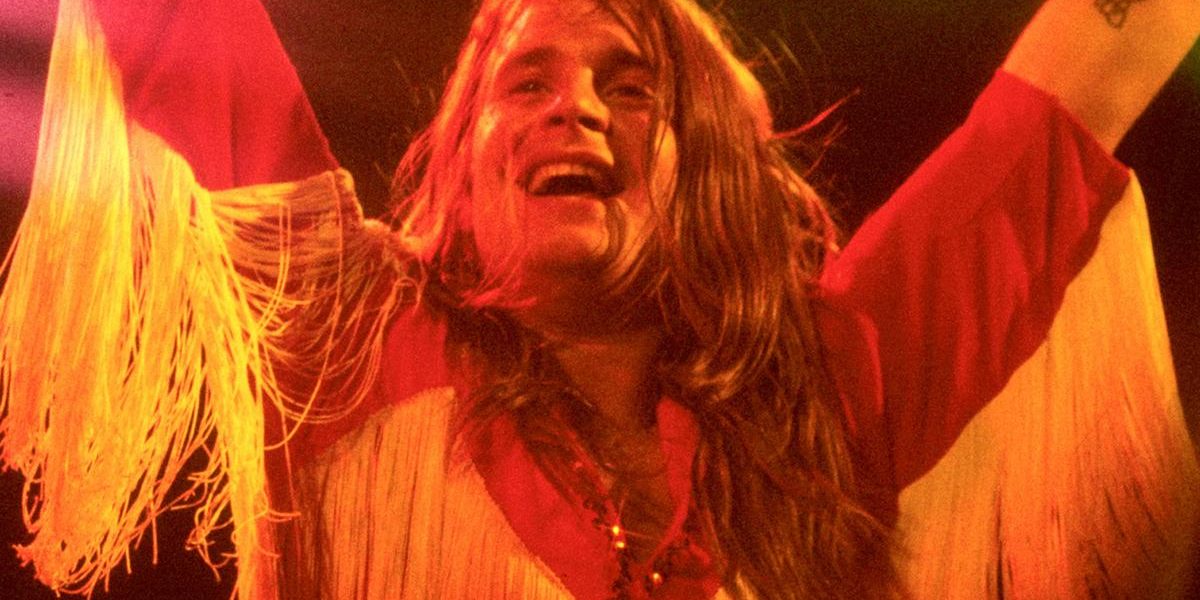

Ozzy Osbourne, the legendary rock icon, has passed away at the age of 76, just weeks after delivering a powerful performance at his Back to the Beginning farewell concert. His remarkable journey through music and entertainment has left an indelible mark on the industry.
Osbourne will be celebrated for his groundbreaking tenure as the frontman of Black Sabbath, his successful solo career, and his unexpected role as a reality TV star, captivating audiences worldwide. His family shared the heartbreaking news stating, “It is with more sadness than mere words can convey that we have to report that our beloved Ozzy Osbourne has passed away this morning.” They requested privacy during this difficult time, emphasizing the love surrounding him at his final moments.
Understanding Ozzy Osbourne’s Health Struggles in His Later Years
Throughout his final years, health challenges plagued Ozzy Osbourne, significantly impacting his life and career. In late 2018, he experienced a severe injury when he suffered a serious cut on his thumb, which he described as swelling to “the size of a fuckin’ light bulb.” This injury led to a diagnosis of staph infections in his hand, compelling him to undergo emergency surgery to avert further complications, including potential life-threatening conditions. As a result of these health issues, he had to postpone several much-anticipated shows, showcasing the toll that his health was taking on his legendary career.
After what appeared to be a recovery from his thumb injury, a revitalized Osbourne announced new tour dates for his No More Tours 2 farewell tour, igniting excitement among fans. Unfortunately, this resurgence was short-lived; in January 2019, he had to postpone his U.K. and European tour dates due to an upper respiratory infection, necessitating another hospital stay. These ongoing health issues underscored the challenges he faced as he attempted to maintain his vibrant legacy.
In 2020, the situation took a serious turn when Osbourne disclosed that he had been diagnosed with Parkinson’s disease, a revelation that effectively halted his touring career. Nevertheless, he made a commendable return to the live music scene in July 2025, demonstrating his resilience and dedication to his craft.
How Ozzy Osbourne and Black Sabbath Revolutionized the Heavy Metal Genre
Hailing from a working-class background in Birmingham, England, Ozzy Osbourne first gained prominence through his innovative and heavy sound that resonated with the gritty realities of Black Sabbath's origins. Their self-titled debut album and the iconic Paranoid, both released in 1970, played a pivotal role in reshaping the musical landscape of a disillusioned new decade, establishing heavy metal as a dominant genre.
Reflecting on their impact, Osbourne noted, “We were just doing the opposite of what was happening at the time. All that love stuff of the late ’60s made me sick. We wanted to get to the dark side of life.” This exploration of darker themes was paired with thunderously heavy riffs and an unprecedented volume, creating a soundscape that starkly contrasted with the prevailing sentiments of the Summer of Love.
Producer Rick Rubin acknowledged Black Sabbath’s foundational role in the heavy metal genre, stating, “When they started, there was no such thing as heavy metal, and it feels like the whole genre of heavy metal really is based on Black Sabbath.” He noted that while the genre has evolved and diversified, Black Sabbath’s influence remains profound, embodying the notion that dark and heavy music could encapsulate the essence of a musical journey.
Watch Black Sabbath Perform ‘Paranoid’
Osbourne, later dubbed the “Prince of Darkness,” was instrumental in shaping the band’s sound and image throughout the 1970s. However, after being dismissed in 1979 due to a series of underwhelming albums, he remarked, “None of us wanted to drag this black-magic shit around forever so we tried to get a bit modern – but you should stick to what you know best,” during an interview with the Guardian in 2011. At that point in his career, he felt he had little to lose, reflecting on the transient nature of success.
However, his return was met with overwhelming success; Osbourne burst onto the solo scene with two immensely successful albums featuring the late guitarist Randy Rhoads: the groundbreaking Blizzard of Ozz in 1980 and Diary of a Madman in 1981. He gradually moved away from the darker themes, achieving mainstream success with memorable hits like “Shot in the Dark,” “No More Tears,” and “Mama, I’m Coming Home,” solidifying his status as a rock icon.
In 1996, Osbourne took a significant step in the music industry by curating his first Ozzfest, a music and lifestyle festival dedicated to showcasing both established and emerging talents in the metal and hard rock genres. This festival quickly evolved into an annual event and a successful tour, expanding its reach even beyond U.S. borders.
Ozzy Osbourne’s Surprising Transition to Reality Television Stardom
In a remarkable twist in his career, Ozzy Osbourne became a reality TV sensation in 2002 through the hit show The Osbournes, which captured his family’s amusing day-to-day antics, featuring his wife, Sharon, and children, Kelly and Jack. The series became an instant sensation on MTV, quickly becoming the network’s most-watched program. This unexpected exposure introduced Osbourne to a new generation of fans, while simultaneously allowing his family members to pursue their own individual careers in the entertainment industry.
Osbourne’s struggles with alcohol and substance abuse, particularly his battles with cocaine addiction, have been widely documented. His issues with addiction ultimately led to his dismissal from Black Sabbath, occurring less than a decade after their monumental success in the early 1970s.
Reflecting on his past, Osbourne stated, “I look back now and I think of them days as the best we ever had,” in his memoir. “It’s funny though how quickly that feeling passed and suddenly they turned into our worst days ever.” This poignant reflection illustrates the duality of his experiences in the music industry and the personal turmoil that accompanied his rise to fame.
Despite these struggles, Osbourne repeatedly reunited with Black Sabbath throughout the years, most notably for their 2013 album 13, produced by Rick Rubin, which marked the band’s first-ever U.S. No. 1 album. However, this reunion also signified the closing chapter of an era, as Black Sabbath announced their retirement following a farewell tour in 2016.
In an interview with the Asbury Park Press in 2016, Osbourne reflected, “I think it’s run its course. Black Sabbath, it’s been up and down. And it’s good that we’ve come back together at the end, more or less, to finish on a high note. It’s a good way to do it.”
Watch Ozzy Osbourne Perform 'Crazy Train'
Ozzy Osbourne’s Life of Chaos and Redemption
Despite his turbulent past, Osbourne oscillated between periods of sobriety and substance use before ultimately achieving lasting recovery. In 2018, he expressed a newfound sense of peace, reflecting on his past choices. “How did I think going into a bar and getting smashed and doing all that cocaine was fun?” he pondered. “Right now, you had a gun, a bag of cocaine and a gallon of booze and you said, ‘Take your pick,’ I’d pick up the gun. It’s not worth it.” This candid admission highlights his journey toward self-awareness and personal growth.
His life was marked by infamous controversies, such as urinating near the historic Alamo in Texas and the notorious incident where he bit the head off a bat. While he later issued an apology for the urination incident, the initial backlash resulted in a ban from performing in the area for a significant period. Regarding the bat, Osbourne explained that he believed it was a prop, leading to a surreal and shocking moment in his career.
In his 2009 memoir, I Am Ozzy, he recounted, “Immediately … something felt wrong. Very wrong. For a start, my mouth was instantly full of this warm, gloopy liquid, with the worst aftertaste you could ever imagine.” This incident eventually