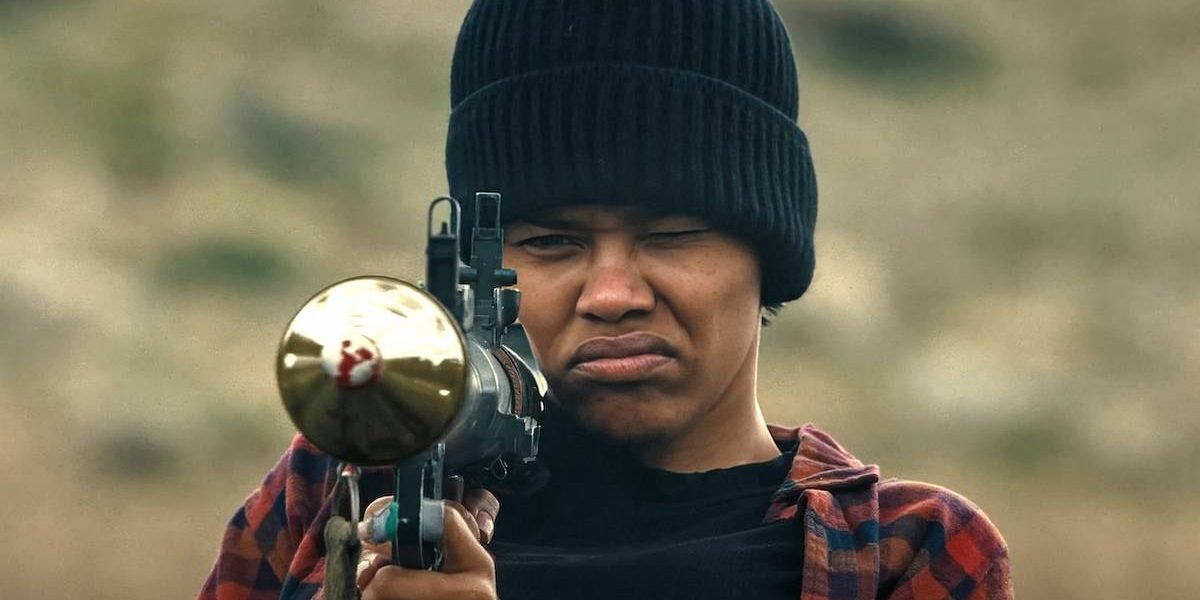
Editor’s Note: The following contains spoilers for One Battle After Another.The rumors are true: Paul Thomas Anderson made an action-adventure epic that’s more exciting and visceral than any major franchise movie and is also funnier than the average comedy you’ll see in theaters or streaming. One Battle After Another, the 10th feature film of Anderson’s exceptional filmography, is a major step up for him as a director and a salesperson, with viewers asking, “How in the world did PTA sneak this $150 million, nearly 3-hour, polemic movie about radical revolutionaries past a major studio like Warner Bros.?”
On the surface, One Battle After Another feels like a notable outlier for Anderson, whose work is usually reserved for prestigious intimate character dramas and somber reflections of humanity and society. However, the newly released film miraculously features all of Anderson’s hallmarks in between the gunfight and car chase sequences without ever compromising on any component.
Paul Thomas Anderson Delivers on Spectacle in ‘One Battle After Another’
The budding director who once walked away from film school after his professor belittled the intrinsic artistic quality of Terminator 2: Judgment Day finally got to make his own action blockbuster and transcend to the heights of James Cameron with One Battle After Another. The film not only samples Anderson’s thematic traits seen in There Will Be Blood and Phantom Thread, but it is also a seamless convergence of obvious influences like The Searchers, The French Connection, and <em>Midnight Run</em>.
One Battle After Another is not just an action movie superficially, or in relation to the director’s previous work. The various action scenes, from the heists performed by the French 75 in the opening act to the awe-inspiring car chase through the hilly, wide roads in the climax, will leave you on the edge of your seat.Anderson utilizes his VistaVision photography to its maximum by capturing the entire scope of Baktan Cross as it unravels upon being invaded by Col. Steven J. Lockjaw (Sean Penn). The film features a variety of modes in these specific forms of action sequences, with gunfire coming from a blitzfire of bullets as well as intense standoffs. Anderson swiftly shifts from the hectic, tight, French Connection-esque car chase of the French 75’s disastrous bank heist to the vastness of the straight line chase with minimal cuts involving Willa (Chase Infiniti), Tim (John Hoogenakker), and Bob (Leonardo DiCaprio).
No matter how high-octane and immersive the action scenes get, they never lose that magical PTA touch. The opening act, an extended prologue, taps into the perverse romantic beauty of orchestrating radical acts of terrorism that drives the relationship between Bob (then “Ghetto Pat”) and Perfidia (Teyana Taylor). Lockjaw’s entire vendetta against Bob and Willa stems from pent-up rage and insecurity, as well as the desire to be accepted into a family, a staple of Anderson’s oeuvre, this instance being the ominous Christmas Adventurers’ Club. One of the film’s most indelible moments comes during the mesmerizing climactic chase when Willa lets out a primal scream after shooting Tim. Not only does this accurately reflect the harrowing sensation of pulling the trigger, but it also speaks to Anderson’s preference for emotionally raw characters.
PTA Infuses His Unique Characterization Into Action Tropes in ‘One Battle After Another’
Bob Ferguson, defined by his admirable redemption arc and love of his daughter, and Col. Lockjaw, featuring grotesque physical attributes and an unhealthy desire for control, are archetypal action movie heroes and villains, respectively. Lockjaw emerging from the hills after being gunned down by Tim is an image akin to Robert Patrick‘s T-1000 in Terminator 2. While their motivations are clearly outlined, Anderson’s characterization remains bold, as few big-budget blockbusters would dare to position a radical revolutionary as the source of good and a decorated military colonel as the embodiment of unchecked power and aggression.
Despite being a stoner who’s lost grasp of the present day, Bob is not a complete buffoon, as he still possesses many of the tricks and instincts that made him a venerable demolition expert with the French 75. Anderson’s keen eye for nuanced characters helps place Bob in a unique sphere as an action lead. Bob, an aimless man wandering through various pockets of the world in need of a master, is undoubtedly a trademark PTA protagonist. Like the emotional dynamics seen in Magnolia and The Master, Bob is as strong as his bonds with Willa and fellow revolutionaries like Sensei Sergio (Benicio del Toro).
You knew Paul Thomas Anderson would upend the action genre somehow, and he did so by ostensibly making Bob a bystander to all the chaos and drama. While Willa returns to him, Bob never truly accomplishes anything, and he is easily pulled into Sergio’s own revolution. This reflects Anderson’s aimless character proclivities and the overwhelming sensation of America losing all order amid the fighting, where individuals get swallowed up by countering causes.
In many ways, One Battle After Another , thanks to its virtuosic craft, epic ambition, and bold and soulful commentary, represents the pinnacle of the medium. For those who witnessed it in a theater, especially a premium format, you’ve experienced a once-in-a-generation phenomenon.
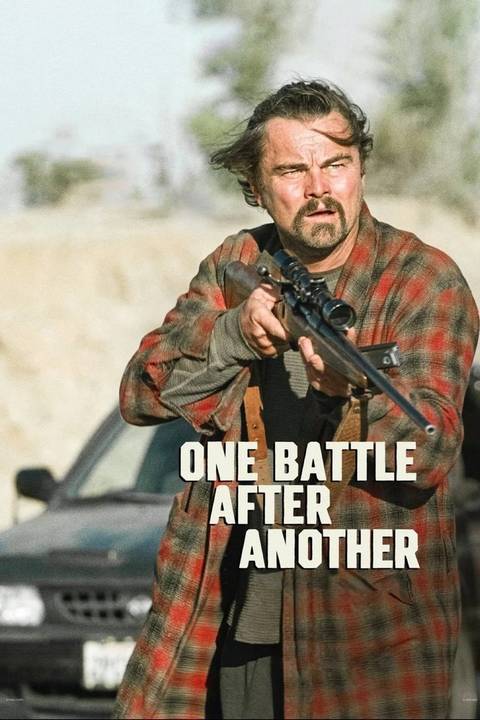
- Release Date
-
September 26, 2025
- Runtime
-
162 minutes
- Director
-
Paul Thomas Anderson
- Writers
-
Paul Thomas Anderson, Thomas Pynchon
- Producers
-
Adam Somner