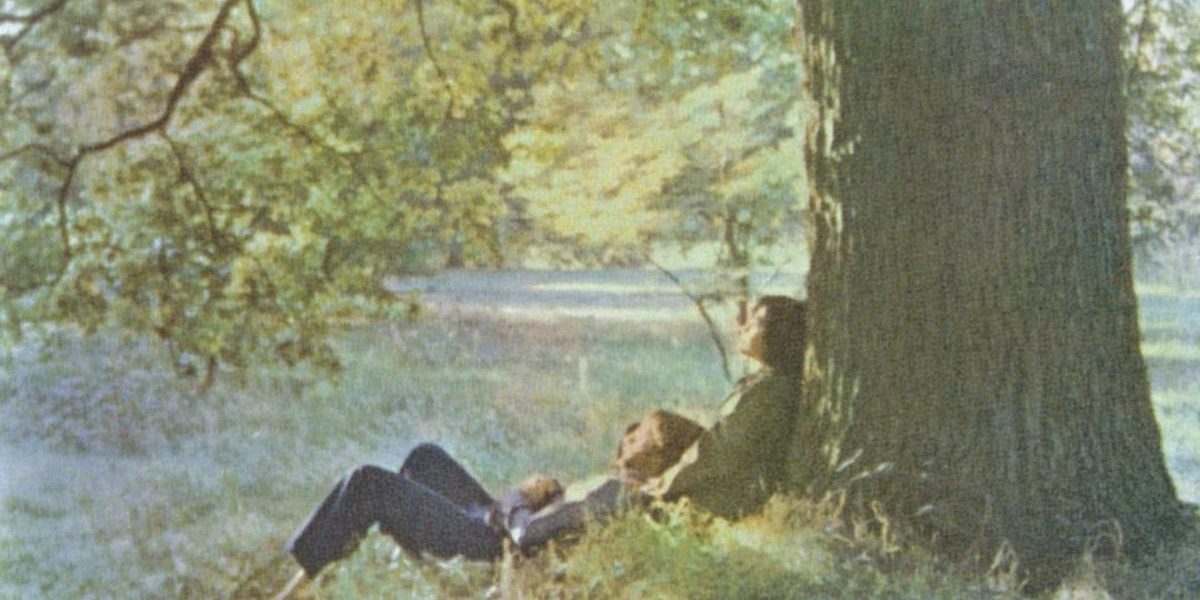
Plastic Ono Band was more than John Lennon’s farewell to the Beatles. It represented his dismantling of everything the previous decade symbolized, a stark confrontation with the demons that haunted him, and a desperate plea for whatever love remained.
The album, released on Dec. 11, 1970, was significantly influenced by Lennon and his wife Yoko Ono’s therapy sessions with Dr. Arthur Janov, an American psychotherapist who taught that repressed pain from childhood could be released through primal screams. Ultimately, the couple would only stay with Janov for about four months, but the emotional release led to one of rock’s most confrontational, brutally honest, and deeply personal albums.
While George Harrison is often seen as having found his own identity after stepping out of Lennon’s shadow alongside Paul McCartney, John experienced his own rebirth following the Beatles’ breakup. “This time it was my album,” Lennon once told Jann Wenner in one of their extensive interviews. “It used to get a bit embarrassing in front of George and Paul because we know each other so well: ‘Oh, he’s trying to be Elvis [Presley]; oh, he’s doing this now,’ you know. We’re a bit supercritical of each other. So, we inhibited each other a lot.”
Who Played on John Lennon’s ‘Plastic Ono Band’?
There were no such inhibitions here. Lennon poured out anguished cries for his late mother on the album-opening “Mother,” then shredded his vocal cords in defiance of the ennui of the late ’60s on “Well Well Well.” He expressed his deep disillusionment on “I Found Out,” framed his struggle to find something real to cling to in “Working Class Hero,” and briefly found comfort in a relationship in “Love.” Then, in the album’s most significant statement, he casually dismissed fallen idols – from Bob Dylan to religion to, yes, his old band – on “God,” declaring bluntly that “the dream is over.”
Plastic Ono Band was recorded – alongside a concurrent solo album by Ono – in a manner reminiscent of the Beatles’ troubled Get Back project, over approximately a month starting in September 1970 at Abbey Road and Ascot Sound Studios. The core group of Lennon, bassist Klaus Voormann, and drummer Ringo Starr was supplemented only by nominal producer Phil Spector on piano for “Love” and Billy Preston on piano for “God.”
Listen to John Lennon's 'Mother'
“The simplicity of what Klaus and I played with him gave him a great opportunity to actually use his voice and emotions as he could for the first time. There was no battle going on,” Starr said in the Classic Albums: John Lennon/Plastic Ono Band documentary. “He would just sit there and sing them, and we would just sort of jam, and then we’d find out how they would sort of go and we did them. It was very loose actually, and being a trio also was a lot of fun.”
Lennon sang live with each run-through. Rare were moments like “Working Class Hero,” where he combined parts of two separate vocal takes. The tormented wails that conclude “Mother” were also added during a late-night session so there’d be time to rest before another round of sessions the next morning. Tracks like “I Found Out” and “Isolation” arrived with such visceral power that they distorted on the tapes.
READ MORE: 20 Beatles Songs That John Lennon Hated
“All these songs just came out of me,” Lennon said in Wenner’s Lennon Remembers. “I didn’t sit down to think, ‘I’m going to write about my mother’ or I didn’t sit down to think, ‘I’m going to write about this, that or the other.’ They all came out, like all the best work of anybody’s ever does.”
The results marked an end to everything that preceded it while highlighting the safety he found in his relationship with Ono. The act of stepping away from the Beatles’ overwhelming celebrity on “God” may have made headlines, but Lennon ultimately names and discards all his earlier idols – only to follow this with a quiet affirmation of his love for Ono.
John Lennon and Yoko Ono. (Keystone Features, Getty Images)
Where Does John Lennon’s ‘Plastic Ono Band’ Rank?
As with so much of this cathartic and utterly remarkable project, even that conclusion came from a deeply honest place. “I just rolled into it,” Lennon told Wenner regarding the powerful conclusion to “God.”
“The first three or four just came out, whatever came out,” he added. “I don’t know when I realized I was putting down all these things I didn’t believe in […] Beatles was the final thing because it’s like I no longer believe in myth, and Beatles is another myth. I don’t believe in it. The dream’s over. I’m not just talking about the Beatles being over; I’m talking about the generational aspect. The dream’s over, and I have personally got to get down to so-called reality.”
Lennon would produce bigger hit albums and more culturally significant songs. Plastic Ono Band, after all, has never surpassed gold-selling status – and “Mother” failed to reach the Top 40. Meanwhile, 1971’s Imagine became a double-platinum success with an ageless title track; 1980’s Double Fantasy eventually sold 3 million copies following Lennon’s untimely death. “Whatever Gets You Thru the Night” and “(Just Like) Starting Over” both topped the singles charts.
READ MORE: Top 10 Beatles Guitar Solos Not By George Harrison
Still, Plastic Ono Band remains Lennon’s most consistent and important solo work. Every aspect of his complex genius – Utopian dreamer, angry fighter, lonely orphan, naked provocateur – is present here and laid bare within the most stripped-down and revealing context of his solo career.
Lennon framed that legacy in a way that echoed this album’s intense struggle to free itself from his former group during a conversation with Playboy just before his murder. “I came up with ‘Imagine,’ ‘Love,’ and those Plastic Ono Band songs – they stand up against any songs written while I was a Beatle,” Lennon stated in 1980. “Now, it may take you 20 or 30 years to appreciate that; but these songs are as good as any fucking stuff that was ever done.”
Listen to John Lennon’s ‘God’
Beatles Solo Albums Ranked
This includes albums that still feel like time-stamped artifacts alongside others that have only grown in esteem.
Gallery Credit: Nick DeRiso
See John Lennon in Rock’s Craziest Conspiracy Theories