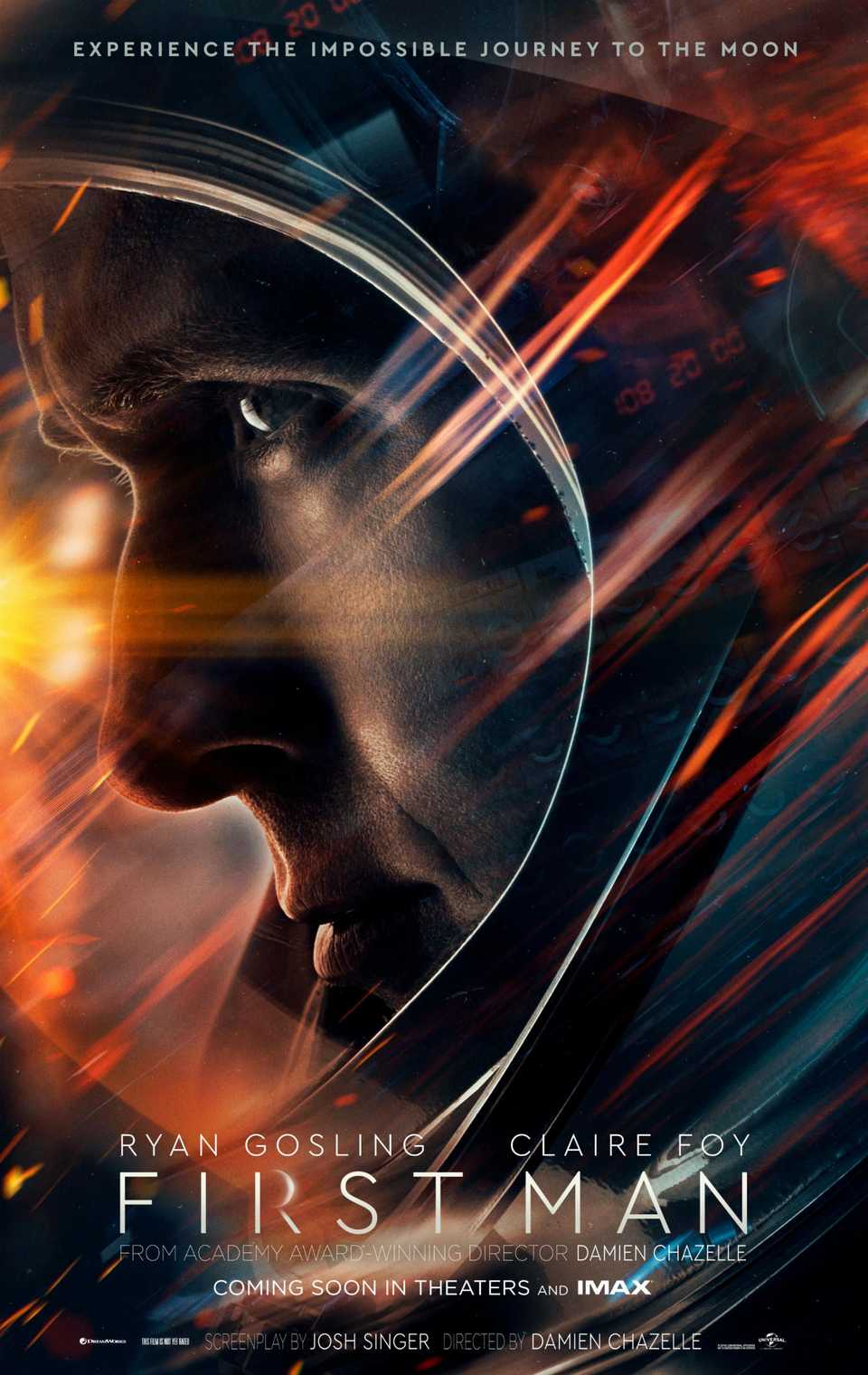
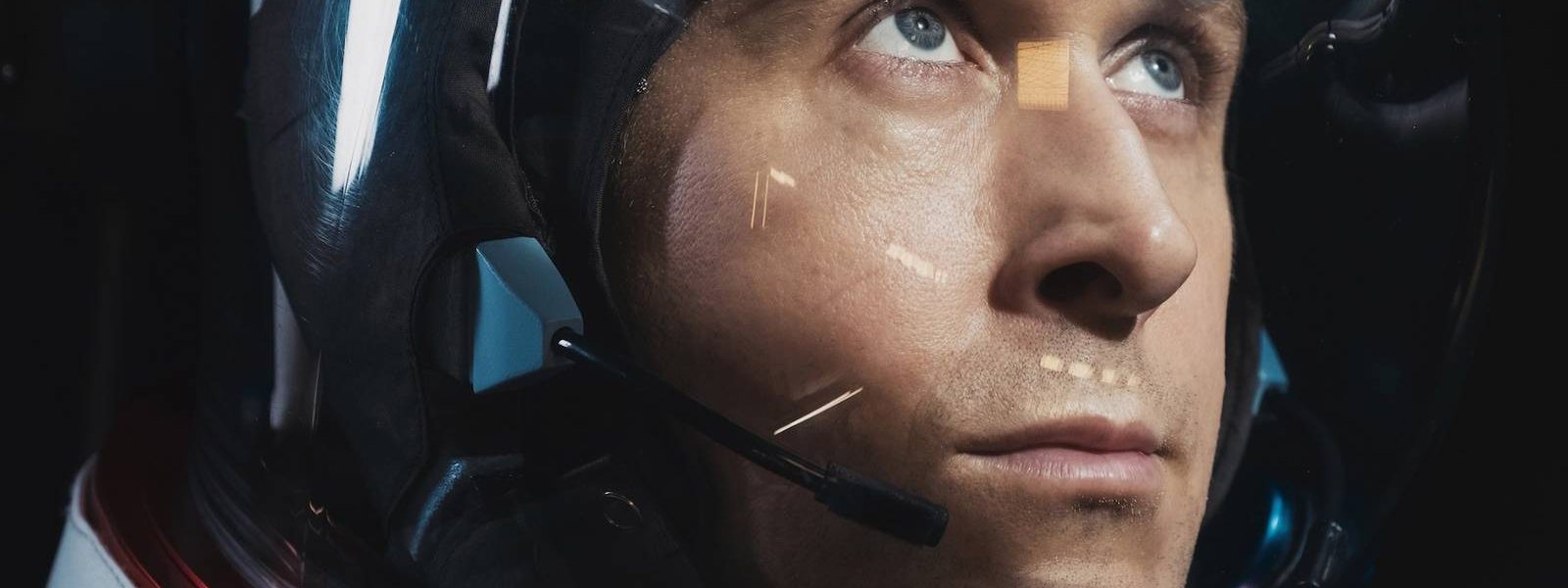
Project Hail Mary, the new science-fiction adventure film directed by Phil Lord and Chris Miller, arrives in theaters with critical acclaim and high audience enthusiasm. The first major event film for cinephiles in 2026 marks a crucial moment for its star, Ryan Gosling, who firmly cements himself as a champion of the space movie. It turns out that there are few things more engaging than a lonely Gosling stuck in outer space or determined to discover a breakthrough in the field. With Project Hail Mary expected to be a smash hit, this will surely be a lesson to audiences in 2018 who rudely ignored Gosling’s first foray into space travel, First Man, Damien Chazelle‘s biopic about Neil Armstrong‘s historic journey to the moon on the Apollo 11 mission in the late 1960s. It may not have the most satisfying and rollicking tone, but First Man has already stood the test of time as a triumph of craft and performance.
‘First Man’ Was a Bold Swing by Damien Chazelle
Although it notoriously failed to win Best Picture, La La Land gave Chazelle, who is still the youngest director to ever win the Best Director prize at the Oscars, carte blanche to fulfill any passion project. The path he took was a left turn that ultimately underwhelmed audiences and awards voters, even if, on paper, a historical drama about a legendary figure in modern American history should’ve been a guaranteed hit. This is because First Man was not the uplifting, jingoistic story of American heroism associated with Neil Armstrong’s first steps on the moon, but rather, a dour character drama about obsession and a steadfast commitment to achieving a goal.
Armstrong is not dissimilar to Chazelle’s previous ambitious protagonist, Sebastian from La La Land, who was willing to compromise his personal life and close relationships for the sake of attaining greatness, and who was also played by Ryan Gosling. While Sebastian had clear intentions, primarily stemming from his complex as a savior vowing to revive jazz music in pop culture, Armstrong is deeply inscrutable throughout First Man, and through tragedy and triumph, he never breaks his unflappable stillness. For many, Gosling’s stark decision to play this beloved symbol of American excellence as an aloof enigma was a major turn-off, and the film itself lacks the wholesome appeal and crowd-pleasing charge of Apollo 13.
Ryan Gosling Embodies the Darkness of the Space Race in ‘First Man’
In his career-best dramatic performance, Gosling embodies the sense of disillusionment surrounding the space race between the United States and the Soviet Union. Amid the social upheaval and turmoil of the late ’60s, the government allocated its resources to trying to one-up the Soviets in space, without the proper bandwidth, while their territory on planet Earth was proverbially on fire. Opposite Gosling is the equally brilliant and Oscar-snubbed Claire Foy as Janet Armstrong, the astronaut’s wife who is resistant to her husband’s reckless abandonment of their life together on Earth. Neil’s ineffable pursuit of this goal resembles NASA’s own selfish motivations to land on the moon—born from sheer pride and a need for validation. Mired in controversy before its release, surrounding its exclusion of the real-life moment when the American flag was planted on the moon, First Man didn’t need to explicitly engage with any political commentary, as the downbeat tenor of the film underlines the facade of American exceptionalism.
Gosling’s turn as Neil Armstrong is a continuation of the actor’s distinct brand of angst-riddled, tortured lone wolves seen in Drive and Blade Runner, which was his default archetype until proving himself to be a comedic genius in The Nice Guys and Barbie. In First Man, however, Gosling brings a more grounded, unshowy side to his dramatic persona. There is a kind, loving person beneath Armstrong’s icy veneer, but he’s just so wrapped up in his mission that he loses his own soul. The fact that you can still root for this dramatized version of Armstrong, despite his cold demeanor, is a testament to Gosling’s innate movie star aura, which allows for the final scene with Neil and Janet between the glass to pay off like a slot machine.
Damien Chazelle likes to play it loud, a fitting approach for a director who’s fascinated by music and showbiz. In some cases, like his most recent film, Babylon, his theatrical nature comes off like nails on a chalkboard. Those who felt alienated by Babylon ought to revisit First Man, Chazelle’s most humble and meditative character study and exploration of pursuing greatness. Between Drive and The Nice Guys, audiences often overlook Ryan Gosling and his impressive filmography upon release, and his stunning performance as Neil Armstrong may be the most egregious oversight.
First Man is available to rent or buy on VOD services.