

Ridley Scott’s <em>Alien</em> changed the sci-fi horror landscape, but 25 years later, Parasyte: The Maxim refined it. Alien, released in 1979, was a massive hit. Today, it’s regarded as a classic, with rare unanimous approval from critics and general audiences. Alien expanded into a handful of films and TV sequels and spinoffs, as well as several comics, books, and video game adaptations. What’s more, Scott’s film inspired a wave of other sci-fi horror projects.
An example of a story that continues the sorts of body horror established by Alien is Parasyte. Originally a manga series by Hitoshi Iwaaki, the sci-fi horror eventually expanded into a popular anime titled Parasyte: The Maxim. Released in 2014, this show contained only a single season of 24 episodes. This was all it needed, however, to refine the concept of alien parasites.
What Is Parasyte: The Maxim About?
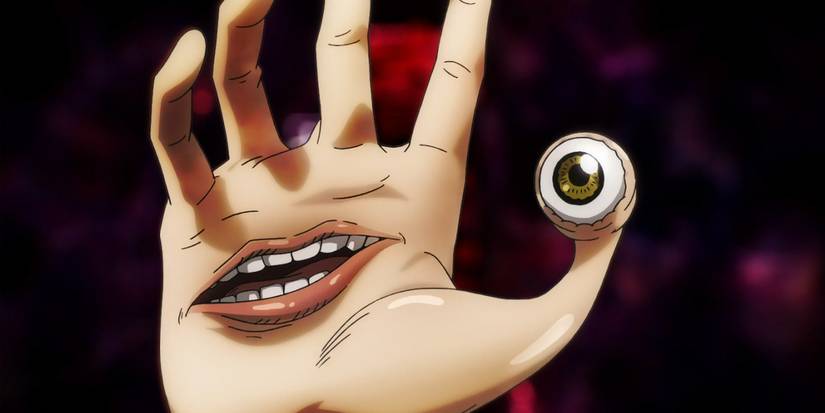
Parasyte: The Maxim follows teenager Shinichi Izumi, who unexpectedly becomes the victim of a parasitic alien. Typically, this race would settle in a host’s brain, where it would fully take over and begin to feed on other humans. However, in Shinichi’s case, the parasite accidentally matured in his hand.
The parasite, called Migi in Parasyte: The Maxim, has complete control of Shinichi’s hand and arm, but Shinichi retains consciousness and control over the rest of his body. For both to survive, Shinichi and Migi must maintain their symbiotic relationship. All the while, other Parasytes take over humans’ minds and begin to covertly feed on the population.
Migi is both an enemy and a friend to Shinichi at first. The Parasyte race is intelligent but lacks emotions, so Migi has no understanding of what makes humans tick. However, as the pair work to survive, they begin to understand one another more. Parasyte: The Maxim explores the nature of humanity, the necessity of cultural cooperation, and compassion. All of this is enhanced by the anime’s deliciously disturbing body horror.
Parasyte: The Maxim Delivers Sci-Fi And Horror Excellence

Scott’s original Alien earned its legacy through its shocking gore. The 1979 film achieved its disturbing visuals largely through practical effects, and this art form, though cruder than modern adaptations, will be appreciated for decades to come. Even though we know the characters aren’t really being torn apart, that practical element makes the whole thing equally as thrilling and nauseating.
Similarly, Parasyte: The Maxim‘s animation is the perfect medium for the genre. There are even fewer limitations than CGI or practical effects, so this anime pulled off body horror to absolute perfection. This is blended by Parasyte: The Maxim‘s social and emotional parallels. While body horror projects don’t traditionally explore deeper themes, sci-fi has been the perfect genre for such explorations—a prime example being the massively popular Severance. Parasyte: The Maxim blends these deeper sci-fi themes with masterfully produced horror, and it’s truly excellent.
There Are Multiple Parasyte Live-Action Adaptations

Given Parasyte‘s peak exploration of sci-fi horror, it’s no surprise that it has been adapted in various ways. As previously mentioned, this story started out as a manga series, and manga is traditionally adapted into anime. Live-action remakes (especially good ones) are a bit rarer. Parasyte was lucky enough to get a few.
Back in 2005, New Line Cinema held the rights to Parasyte and placed the project with Jim Henson Studios, with Don Murphy at the helm. This could have been pretty amazing, but New Line’s rights expired in 2013, leaving the project unmade.
Japanese film studio Toho won the movie rights to Parasyte in 2013 and produced a two-part film series in 2014 and 2015. These movies performed well enough, though they never rose to the mainstream. It wasn’t until Netflix’s Korean live-action TV show, Parasyte: The Grey, released in 2024 that the adaptation fully lived up to the original story.
Parasyte: The Grey is a six-episode miniseries covering a complete arc, so this adaptation is an excellent binge. Audiences who aren’t big on anime may prefer this version, and The Grey certainly stands well on its own. However, the stories share continuity. Though Parasyte: The Maxim keeps the alien invasion contained to Japan,The Grey‘s protagonist Su-in faces a similar issue in South Korea.
The experience with her Parasyte is also different in The Grey. This alien and Su-in alternate control of their shared body rather than having the more cooperative relationship seen in Shinichi’s story. Additionally, while the Parasyte invasion was covert in Japan, Korea experienced a much more overt explosion of violence.
Parasyte: The Maxim‘s animation was its superpower, but The Grey demonstrated wonderfully how this same idea could be brought to live-action. Additionally, the story was enhanced by the more public takeover of parasites so that the gore was essentially tenfold. It will be interesting to see how the sci-fi horror genre will develop from here. If things have come this far since Alien, who knows what could come next?









