

Scream had humble beginnings as a tongue-in-cheek horror film, and at the time, it was already ahead of the curve. Wes Craven had established himself as a solid horror director and, in 1996, was one of the first to create a mainstream meta film in the genre. Starring Neve Campbell as the ultimate final girl, Sidney Prescott, Scream became a phenomenon, spawning two more films in the original trilogy.
Two decades later, Scream is still going strong, this time in the hands of original screenwriter Kevin Williamson. Campbell and Courteney Cox continue to reprise their roles from the original films, but it isn’t a stretch to say that the franchise has lost some of its luster. The most recent film is one of the lowest-rated, with a current rating of 31% on Rotten Tomatoes. This, along with the controversy following Melissa Barrera’s firing, has put a stain on the film series. Scream is one of many franchises that continues to meander along, even though the best twist has already happened.
‘Scream IV’ Identified the Rise of Influencer Culture
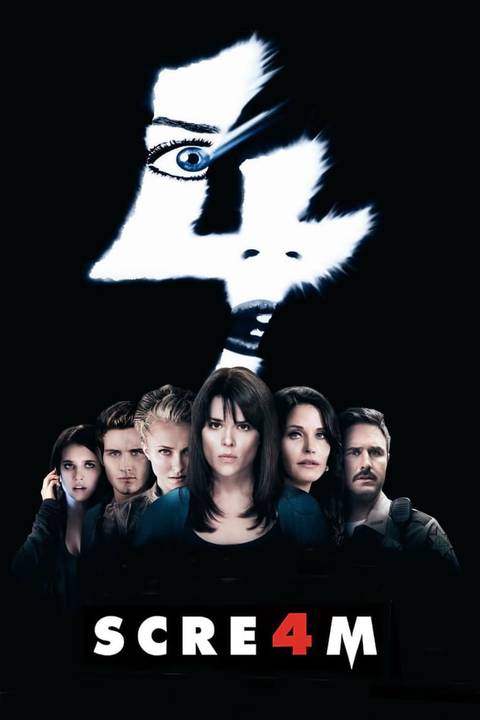
Wes Craven’s last Scream film before his passing was slightly divisive, but it served as a perfect send-off for the director. Though the trilogy had ended with a hopeful conclusion for Sidney, Scream IV justified its existence by bringing everyone back to the fold in a different way. Instead of forcing Sidney to be the young ingénue again, that honor went to her cousin, Jill, played by rising star Emma Roberts.
Sidney returns to Westboro to promote her memoir about the Ghostface killings, only to experience a new batch of murders. Scream IV brought the characters into a new decade with more advanced technology that modernized the story. This time, Ghostface was livestreaming the murders, turning horror into a viral event. Scream IV set itself apart from its predecessors with a twist ending that brought the story together.
Ghostface was once again created by two killers, but one was too close to home. The Ghostface in Scream IV was none other than Jill herself, who expertly played the part of the victim with help from tech expert Charlie (Rory Culkin). Jill is the perfect villain for this age, desperately wanting fame above all else. She saw how the media treated Sidney as the survivor of the original killings and wanted that for herself.
The use of two killers wasn’t new, but Jill’s viciousness was. She uses technology to exonerate herself and nearly gets away with it. As with traditional slashers like Michael Myers and Jason Voorhees, Sidney refuses to die and foils Jill’s plans. Jill’s motivations for becoming a killer fit perfectly within this time frame. It starkly contrasts with the disillusionment presented by Billy and Stu’s schemes.
Jill is so committed to becoming a famous final girl that she doesn’t care about killing her own friends. This terrifying element allows Scream IV to stand apart. It is also tragic that the series did not go as originally intended. Jill was meant to start a new trilogy of her own in subsequent films, but this idea was discarded, and the sequels were canceled. The story of Jill was not only a genuinely surprising plot twist but could have been a way to refresh a series that has plateaued in recent years.
A Hitchcock Film That Never Was — The Collider Movie Quiz!
To celebrate the one-week-iversary of this quiz, Collider is scoping out the long-lost Hitchcock project that never materialized: Kaleidoscope.
- Release Date
-
April 15, 2011
- Runtime
-
111 minutes
- Writers
-
Kevin Williamson
- Producers
-
Bob Weinstein, Cathy Konrad, Ehren Kruger, Harvey Weinstein, Iya Labunka, Marianne Maddalena, Matthew Stein