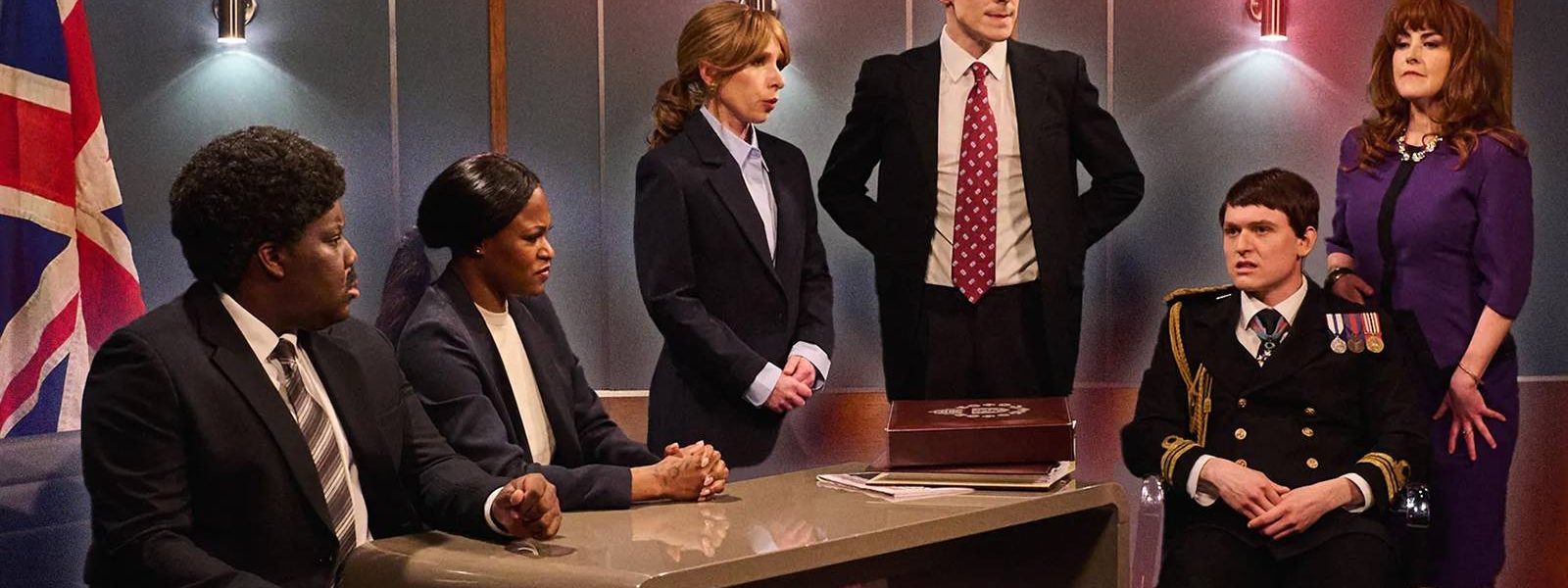
Between its launch and Episode 2, Saturday Night Live UK has experienced its first ratings dip. As reported by Deadline, the second episode of SNL UK— hosted by the very good yet slightly confusing choice of Jamie Dornan — drew 205,000 viewers on Sky One, down around 9% from its 226,000 premiere. SNL UK captured a 3.2% audience share, still a solid performance for a subscription-based broadcaster and, crucially, it outperformed rival programming on Freeview channels in the same late-night slot. The drop in viewership after Episode 1 may be making commissioners nervous, but a decline is to be expected once the initial curiosity wears off. It may also indicate that the UK version is following the same slow-burn trajectory that turned the original Saturday Night Live into a cultural institution that has lasted 50 years.
A Dip in Ratings Between Episode 1 and 2 of ‘SNL UK’ Was Expected
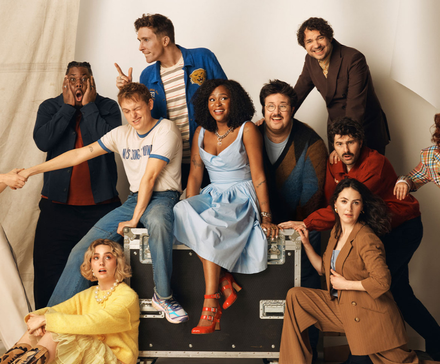
The debut of SNL UK generated significant curiosity, with audiences tuning in largely to witness an experiment. Could a distinctly American format translate to British comedy? Live comedy on this scale—let alone live sketch comedy—hasn’t existed on UK screens for years. The format itself, with its fast turnaround, unpredictability, and weekly hosts, is a sharp detour from a schedule dominated by templated panel shows designed to be evergreen enough for endless repeats. With SNL UK’s launch, audiences were also tuning in to see whether an entirely new cast of largely unknown performers would stumble or thrive. This level of initial curiosity almost guarantees a drop in week two. Once the “event television” factor fades, audiences tend to settle back into habitual viewing patterns.
‘Saturday Night Live UK’ Could Be The 1 Exact Thing That British Comedy Has Been Missing
Will this bold move pay off, or will it be met with the cold shoulder?
Saturday night TV in the UK has traditionally leaned toward earlier, family-oriented viewing — think Britain’s Got Talent, Saturday Night Takeaway, or Strictly Come Dancing — all designed to appeal to viewers from children to grandparents. A 10 PM live sketch show represents both a tonal and structural shift, asking audiences to engage with something later and markedly different. There’s also the issue of the platform itself. Sky is a paid subscription service, meaning SNL UK begins with a naturally smaller potential audience. Yet its free-to-air competitors aren’t putting up much of a fight. At the same time as Dornan’s turn on SNL UK, BBC One was airing the reliable News at Ten, BBC Two broadcast an unremarkable clip show of musical moments from the network’s archive, commercial rival ITV was repeating a 2025 episode of the game show The 1% Club, and Channel 4 aired another 2025 repeat of Bill Bailey in Vietnam. A yawnfest.
Freeview channels no longer prioritize edgy jokes or voices that reflect modern society across the full schedule, let alone at 10 PM on a weekend. While SNL UK’s ratings dipped in week two, audiences may well begin switching over from the repeated, bland, and boring once they know there is an alternative willing to take risks.
‘SNL UK’ May Be Entering the Same Slow-Burn Cycle of the Original SNL
If SNL UK’s numbers feel underwhelming, history offers reassurance. When Saturday Night Live first premiered in 1975, with George Carlin as host and a cast including Chevy Chase and John Belushi, it was far from an instant hit. It was messy, uneven, and (depending on who you asked) either the future of television or a late-night experiment that wouldn’t last a year. Sketches were short, the format shifted week-to-week, and entire episodes leaned heavily into music, like the second episode hosted by Paul Simon, who performed 11 tracks. Even staple segments like “Weekend Update” — which now features bisexual panic via Ania Magliano and Paddy Young — were still finding their rhythm.
Network executives weren’t immediately convinced by SNL, as ratings were modest and complaints about controversial content were frequent. But what those numbers didn’t capture was the show’s growing appeal among younger audiences—a demographic that advertisers valued and that traditional television struggled to reach. Remind me, how many younger viewers are tuning in to watch Bill Bailey traverse Saigon?
SNL turned into something bigger than its initial overnight ratings suggested. By 1978, it had become essential viewing. It was countercultural and redefined what late-night television could be. There’s every reason to hope for a similar trajectory on the other side of the Atlantic. For now,SNL UK requires less focus on ratings week-by-week and more attention paid to its cultural capital and accompanying social media frenzy. It needs space for sketches to fail, for the cast to develop chemistry, and for audiences to decide what they actually like about the show.
A 9% drop after a heavily anticipated premiere is simply part of the process. If anything, it suggests that SNL UK is beginning to settle into the same slow-burn growth cycle that defined the American original. And with a format that has already proven its longevity over five decades, that’s hardly a bad place to be. The real test now is whether SNL UK can build an audience that returns each week—not because it’s new but because it’s worth watching.
- Release Date
-
October 11, 1975
- Showrunner
-
Lorne Michaels
- Directors
-
Dave Wilson, Don Roy King, Liz Patrick, Andy Warhol, Linda Lee Cadwell, Matthew Meshekoff, Paul Miller, Robert Altman, Robert Smigel
- Writers
-
Will Forte, Bill Hader, Tina Fey, Kristen Wiig, Chris Parnell, Asa Taccone, John Lutz, Tom Schiller, Simon Rich, Michael Patrick O’Brien, Nicki Minaj, Herbert Sargent, Matt Piedmont, John Solomon, Chris Kelly, Alan Zweibel, Kent Sublette, Ari Katcher, Marika Sawyer, Sarah Schnedier, Scott Jung, Justin Franks, Jerrod Bettis, Rhiannon Bryan