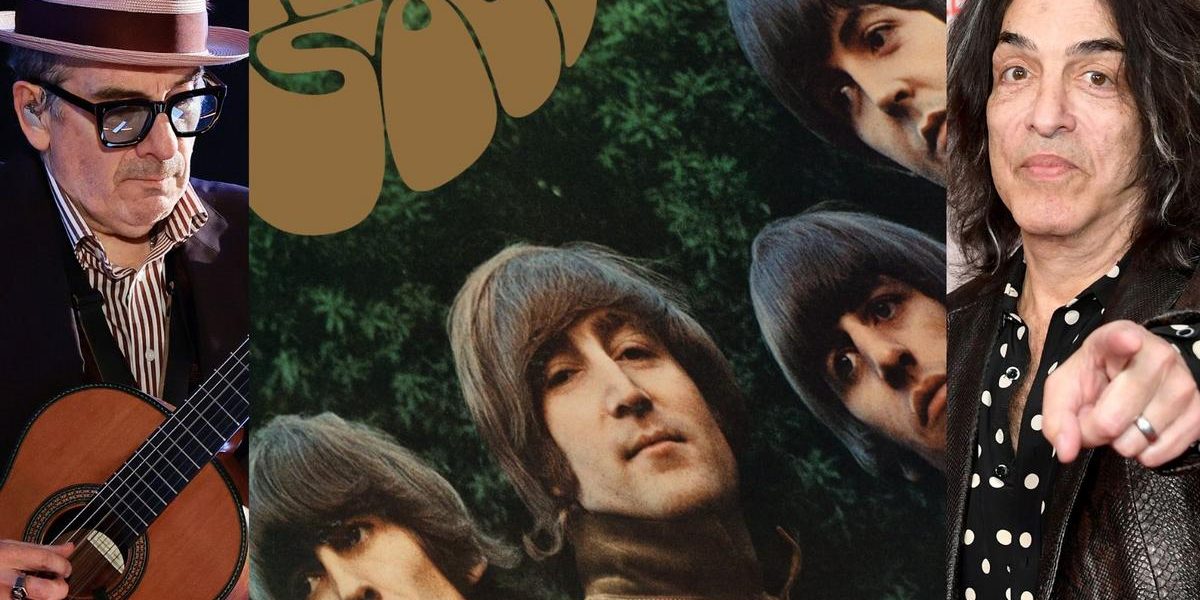
If the Beatles’ 10-year career could be broken up into two distinct acts, the dividing line might be Rubber Soul.
Released on Dec. 3, 1965, it marked an undeniable musical shift for the foursome, to the point where everything they released after it would only make sense if one had heard Rubber Soul. In John Lennon’s words from 1965: “You don’t know us now if you don’t know Rubber Soul.”
The Beatles’ sixth studio album featured much more expressive arrangements, maturer lyricism — “You can’t be singing 15-year-old songs at 20 because you don’t think 15-year-old thoughts at 20,” Paul McCartney explained to Newsweek back then — and wider use of instrumentation that had not been explored before by the Beatles or, for that matter, anyone else. Not for the first time and not for the last, the Beatles set an entirely new industry precedent.
READ MORE: Beatles Album Opening Songs Ranked From Worst to Best
The band knew it. “Rubber Soul was my favourite album,” George Harrison, who had two of his compositions included on the LP, said in the ’90s. “Even at that time, I think that it was the best one we made.”
And their peers knew it, too. Wonderfully talented musical artists in their own right heard Rubber Soul, were floored by its sound and absorbed it as inspiration for their own work. Below, we’ve rounded up 15 such people, each of whom have specifically pointed to Rubber Soul as an album that shaped their thoughts on what music could sound like.
How the Beatles’ ‘Rubber Soul’ Influenced These 15 Artists
The band’s sixth studio album was unlike anything else on the market when it was released on Dec. 3, 1965.
Gallery Credit: Allison Rapp