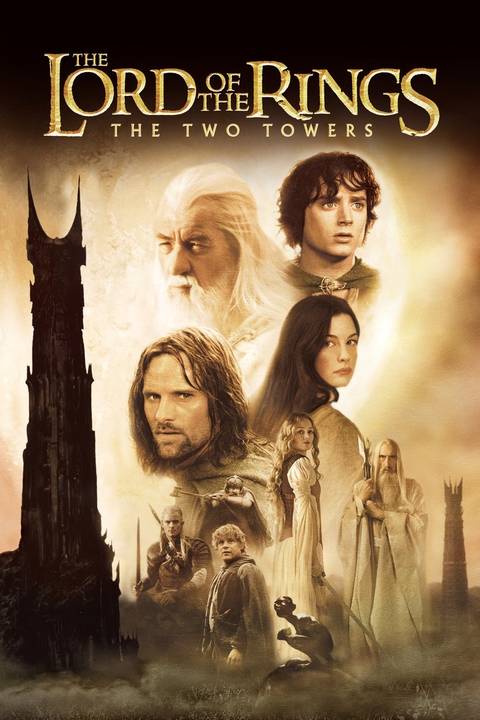
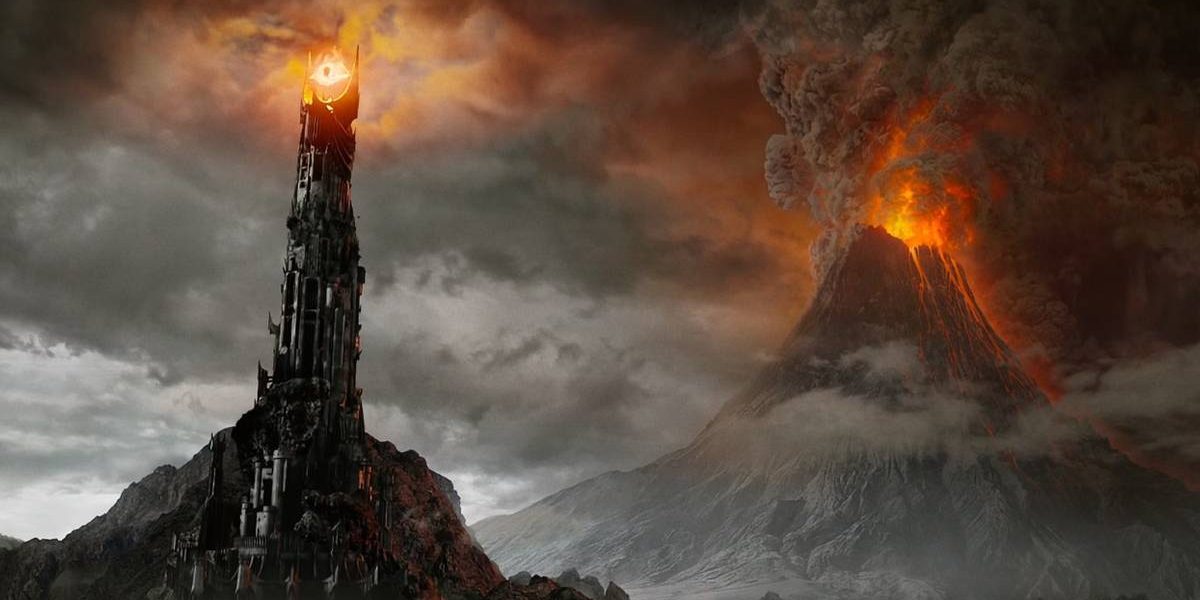

Sometimes, movie titles can deceive us. There are many reasons why this may happen, but most times it’s just about narrative needs, especially if the movie is an adaptation of another work. That’s the case in The Lord of the Rings: The Two Towers, although the movie makes pretty clear what exactly its two titular towers are. As Saruman (Christopher Lee) himself says, they are his tower in Isengard, Orthanc, and Sauron’s tower in Mordor, Barad-dûr. Despite his striking speech declaring “the union of the two towers,” however, those are not the two towers author J.R.R. Tolkien originally chose.
Tolkien left a huge amount of records and material documenting the process of writing <em>The Lord of the Rings</em>, including countless notes and letters to his editors. That’s where the evidence comes from: Orthanc is correct, but Tolkien didn’t consider Barad-dûr as the other tower. He was often divided about this issue, because he didn’t like the title The Two Towers, and accepted it only because his editors thought it would be best. So, then, the question of which towers those were arose, and, although the books don’t explicitly say it, Tolkien himself did.
In the Books, ‘The Two Towers’ Are Actually Orthanc and Minas Morgul, not Barad-dûr
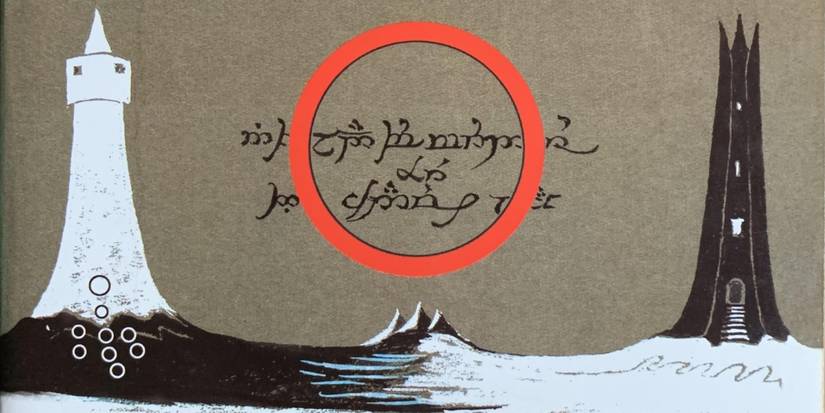
Besides being among the greatest writers of the past century, Tolkien was also a talented illustrator, having designed the covers for the original release of The Lord of the Rings books. On the dust jacket for The Two Towers, he made it clear that the title refers to Orthanc and Minas Morgul with a gorgeous illustration. It features a white tower with the symbols of a moon and nine rings to the left, and a dark tower with a star and a white hand to the right. The latter is obviously Orthanc, with Saruman’s white hand sigil. But the white tower is Minas Morgul, and Tolkien included the appropriate symbols to clarify it.
Minas Morgul is the Nazgûl headquarters, a pale-white city structured around a main tower in the darkness of the Morgul Vale. There are nine Nazgûl, and each was once a man turned into a wraith wearing their respective Rings of Power. Minas Morgul was also originally a fortress of Gondor until it was taken by the Nazgûl, and its original name was Minas Ithil, which translates to “Tower of the Moon.” So, Tolkien’s design on The Two Towers dust jacket is a dead giveaway: a white tower under the Moon where nine rings are can only be Minas Morgul; no other tower in Middle-earth fits this description.
Confirmation from Tolkien himself came around that same time, in February 1954. On a note added at the end of one of the final drafts of The Fellowship of the Ring, he wrote [sic]: “The second part is called THE TWO TOWERS, since the events recounted in it are dominated by ORTHANC, the citadel of Saruman, and the fortress of MINAS MORGUL that guards the secret entrance to Mordor.” At that moment in the story in the books, Frodo (Elijah Wood) and Sam (Sean Astin) are entering Mordor through the Morgul Vale. The staircase sequence, the fight against Shelob, and the breakout from Cirith Ungol all take place in The Two Towers, and are geographically connected to Minas Morgul.
J.R.R. Tolkien Also Briefly Considered the Tower of Cirith Ungol as Another Possibility
Because of how the books had to be structured upon release, Tolkien wasn’t happy with the title The Two Towers, and was himself uncertain about what towers should be referenced to in the title. Orthanc was the most obvious choice for the first one, but, for the other, there were many contenders, including Minas Morgul, Cirith Ungol, Barad-dûr, and even Minas Tirith. Most readers believe that the second tower should be Cirith Ungol, actually, as that’s where most of Frodo and Sam’s action takes place, and Tolkien himself briefly considered this same thought.
In his letters to his editor, Rayner Unwin, Tolkien briefly acknowledged Cirith Ungol as the second tower. First, in Letter 140, he wrote that perhaps it could “be left ambiguous” what the towers were, leaving it to the reader to decide: “It might refer to Isengard and Barad-dûr or to Minas Tirith and B [sic]; or Isengard and Cirith Ungol.” Shortly after, however, in Letter 143, he wrote that “It must, if there is any real reference in it to Vol. II, refer to Orthanc and the Tower of Cirith Ungol,” but also admitted that “since there is so much made of the basic opposition of the Dark Tower and Minas Tirith that seems very misleading.”
His reference to “Vol. 2” is key here as The Lord of the Rings actually comprises six books organized into three volumes: The Fellowship of the Ring is Vol. 1,The Two Towers is Vol. 2,The Return of the King is Vol. 3. The two books in Vol. 2 tell completely separate stories however, but Tolkien himself called them “widely divergent” in Letter 140,, butthe title of volume needed to provide some connective tissue between them band present them as part of same overarching story ,and The Two Towersbwas best Tolkien could come up with at time.
The strike of brilliance on film’s part is having Saruman reference “the union of two towers” in montage showing both Orthanc and Barad-dûr to leave no room for disputes concerning film trilogy.This is one many ways Jackson’s trilogy stands on its own almost as something separate from original books.
The Lord of The Rings: The Two Towersbis available stream on HBO Max.