
Key Takeaways
- New Version: A newly edited version of Judy Garland’s “Over the Rainbow” will debut on streaming services.
- Emotional Impact: Lorna Luft describes the song as honest and pure, evoking strong emotions in listeners.
- Production Process: The original vocals were separated from music and background noise for clarity.
- Historical Significance: The original score was created by notable musicians, including Harold Arlen and E.Y. Harburg.
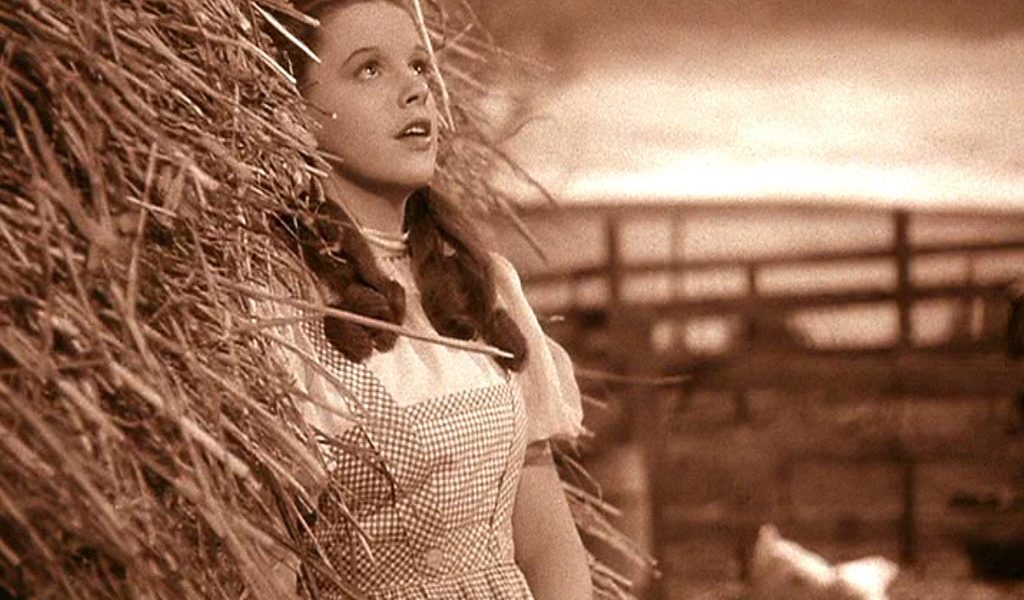
Hearing Judy Garland‘s 16-year-old voice singing the original “Over the Rainbow” a cappella — minus The Wizard of Oz orchestration — was not the intensely emotional experience you might predict for her daughter, Lorna Luft. As the singer and actress put it: “Well, I heard my mom sing it a lot.”
But this newly edited version of Garland’s signature song, which makes its debut on streaming services on Friday (Nov. 7), will blow most Oz fans’ minds. “It’s just so honest and so pure,” says Luft. “To be able to hear my mother’s vocal as if you’re in a room with her, and there is no piano, just her vocally — people have gotten so emotional when they hear this. It takes them back to where they were when they heard the song.”
Related

This stripped-down “Over the Rainbow” is part of a re-recorded The Wizard of Oz soundtrack that first aired only as part of The Wizard of Oz at Sphere, an immersive 4D version of the 1939 classic that opened at the Las Vegas venue in August. The uncluttered voice of Garland, who died in 1969, is the centerpiece of the new 42-track recording, which unites the original actors’ voices with a contemporary orchestra convened at the original MGM studio in Culver City, Calif. “You’re hearing things that you’ve never heard before — nuances and themes you didn’t catch onto — because you’re hearing it so clearly,” says Julianne Jordan, the production’s music supervisor.
To prepare Oz for its Sphere treatment, the production team separated the vocal stems from the music and the background noise from the original mono recordings. “I had an Oscar-winning friend, who will be unnamed at the moment, who did a test for me and took ‘Over the Rainbow’ and said, ‘I can help,’” says Ralph Winter, Sphere Studios’ head of production. “What he was able to do was separate out the music and the effects and the tracks and the noise and come up with just Dorothy’s vocals. It was so pure to hear what only maybe those studio executives and the director heard back in 1939.”
In August 2024, the Sphere team convened an 80-piece orchestra to re-record the tracks from the Oz score at the MGM scoring stage, now owned by Sony, in Culver City, Calif. Conducted by longtime film composer David Newman, the orchestra employed instruments used for Oz, like the ocarina, or hand flute, featured in the Scarecrow’s “If I Only Had a Brain.”
Related

To align the new orchestral recordings with the original vocals from Garland, Ray Bolger (who played the Scarecrow), Bert Lahr (the Cowardly Lion), Buddy Ebsen (the original Tin Man, who sang for the soundtrack but was replaced in the film) and the rest, Sphere Studios and Warner Bros. Post Production Creative Services teamed up to separate the tracks into stems. Thus, in spring 2024, Jordan was present when the Sphere team unveiled the a cappella “Over the Rainbow” on a Warner Bros. stage. “Not a dry eye,” she says. “Incredible. Really clean.”
The original “Over the Rainbow,” recorded in October 1938, was two Garland takes spliced together. “She got up [to] ‘somewhere over the rainbow, way up high’ — and she coughed, and she apologized, and they started again,” says John Fricke, a New York-based Oz historian who has written several books about Garland and the film. “They used the beginning of that take because they liked it more and married it with the almost-full take of the rest of the song.”
Luft shared the new a cappella version two weeks ago with Fricke, a longtime friend who first heard the original when he viewed The Wizard of Oz on TV in 1956. “My first reaction was, it’s amazing that this can get to me the way it does when I know every second of that track,” Fricke says. “The magic is that it’s still magical.”
The original Oz score and soundtrack , created at MGM studios in1938 , was created byateamofmusicians that included songwriting duo Harold ArlenandE.Y.“Yip”Harburg , whowrote classics like“OvertheRainbow”andthe vaudeville-influenced“IfIOnlyHadabrain”and“FollowtheYellowBrickRoad.” Meanwhile , thestudio’smusicdirector,HerbertSothart , composedmostofthescore , includingtheghostlystringsandbrassin“TheHauntedForest.” AccordingtoLuft ,theGarlandestate , whichincludesherhalf-sisterLizaMinnelli , ownsGarland’snameandlikenessrightsandquicklysignedoffonthe new“OvertheRainbow”releaseafterSphereinquired.
“Ijustwantpeopletounderstandhowimportantthismovieis,andthissong,andnowtobeabletohearmy mother’svocalasifyou’reinaroomwithher,”Luftsays.“It’sasongaboutfindingabetterplace.Thatdoesn’tmeanphysical.Itmeansinyourmind.Itmeansthereishope.”