
The message of V for Vendetta against fascism is more relevant than ever. With the announcement of a new TV adaptation of Alan Moore’s graphic novel, it is important to reflect on how the book resonates with today’s historical context, provided that its creators embrace the complex political themes of Moore’s work.
In V for Vendetta, Moore clearly expresses his strong opposition to fascism. He does not present an easy or glamorous alternative, but the narrative unmistakably depicts its fascist characters as both cruel and absurd.
The 2005 film adaptation of V for Vendetta partially captured its fascist villains, but the next adaptation must fully embrace the source material.
The Next Adaptation of V For Vendetta Must Fully Embrace Alan Moore’s Anti-Fascist Message
How Can a V TV Series Honor the Legacy of the Book?
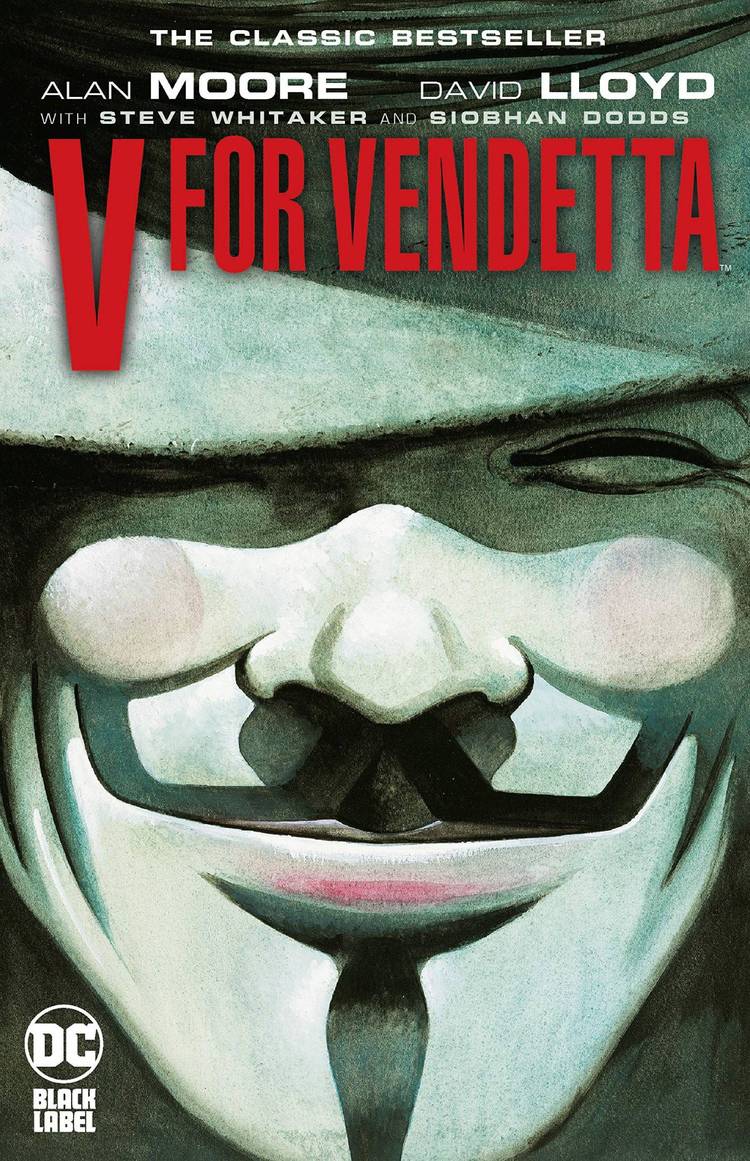
V for Vendetta fundamentally tells an “It Could Happen Here” story. Moore outlined a plausible trajectory toward unchecked authoritarianism in Britain, with every event in V stemming from that dystopian “what if?” The book reflects Moore’s anxiety that fascism could become a political inevitability.
Ultimately, V for Vendetta narrates the downfall of the fictional fascist regime Norsefire, yet the conclusion is not a victory but rather the final act of a tragedy. This nuance was lost when V was adapted into film in 2005, contributing to Alan Moore’s profound discontent with the movie’s existence.
The cautionary tale presented in Moore’s work was just as pertinent in 2005 as it is now, particularly in America, where it was met with a more complacent audience. A future adaptation of V for Vendetta will emerge in a significantly different political environment, where the threats and fears associated with fascism are more pronounced.
“V For Vendetta” Highlights the Absurdity of Authoritarianism—A Point Missed by the 2005 Film
Adam Susan and the Absurdity of Fascism
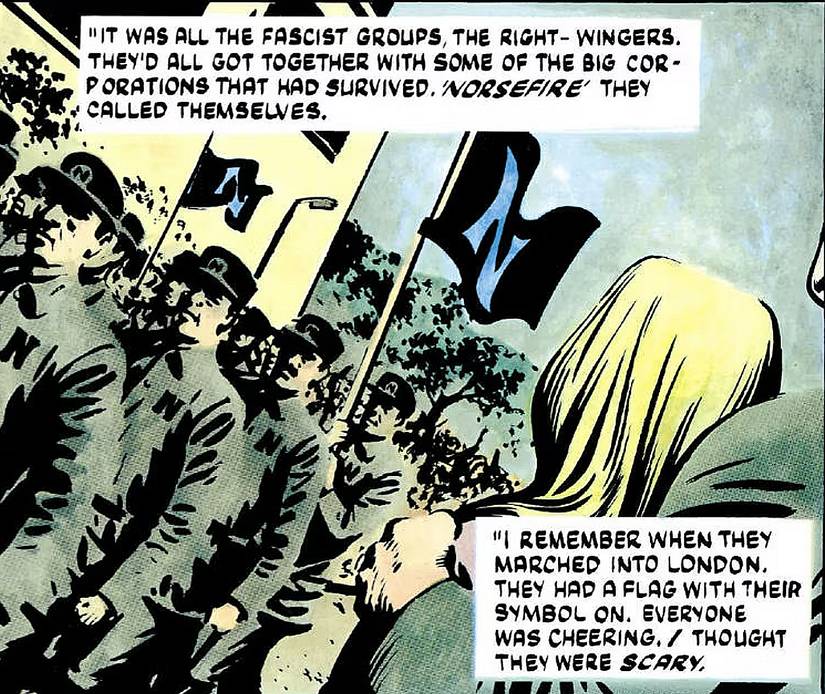
In V for Vendetta, a nuclear conflict between the United States and Soviet Union leads to global instability. Amidst this chaos, Britain’s government collapses and is supplanted by a coalition of far-right factions supported by “the major corporations that survived.” This totalitarian regime becomes known as Norsefire, personified by its leader Adam Susan.
As the narrative unfolds, Susan loses touch with reality, becoming enamored with Norsefire’s surveillance system called “Fate.” This absurd element of V for Vendetta was entirely omitted in the 2005 film adaptation, which detracted from its depth. The Adam Susan/Fate storyline is crucial to V’s critique of fascism.
The fascists depicted in V for Vendetta are violent, power-hungry, and deeply prejudiced. However, through Susan’s character arc, they are also revealed to be fundamentally weak and ludicrous. This exposes the flawed dichotomy at the heart of fascism: it is weakness that seeks strength through hierarchy and fear that confuses strict order with safety. This theme must resonate in any future adaptation of V for Vendetta.
The Ideological Tragedy at the Heart of “V For Vendetta” Remains as Relevant as Ever
What Must a V TV Series Get Right?
V for Vendetta is based on Alan Moore’s understanding of fascism and anarchy as two opposing extremes. The titular character V is a terrorist whose aim is to destabilize Norsefire’s fascist regime through instilling fear, thereby shifting power towards anarchy. Importantly, V does not provide salvation but rather an alternative.
The book illustrates the complex nature of ideological conflict while the 2005 film simplifies this struggle into an “oppression versus liberty” narrative. A notable alteration made by the movie is granting agency to Norsefire in dismantling the previous social order, indicating that the fascist government orchestrated its predecessor’s collapse.
The film replaces nuclear conflict with a virus outbreak attributed to Norsefire as part of their power grab. However, this change diminishes one of fascism’s most insidious traits: its opportunistic nature during crises. While this makes for a more dynamic villain on screen, it overlooks how fascism exploits disasters to gain control.
Despite Alan Moore identifying as an anarchist, he does not idealize his protagonist. Like his adversaries, V is also reactionary. The brutality exhibited by Norsefire compels him to adopt anarchistic principles. This complexity renders V for Vendetta a narrative steeped more in ideological tragedy than mere political commentary.
“V For Vendetta” Could Be The Ideal Story For Today’s Era But Must Not Be Compromised
V Cannot Cut Corners To Reach The Screen
The 2005 film adaptation popularized V’s phrase “ideas are bulletproof“, which originates from Alan Moore’s graphic novel. However, this cinematic interpretation altered its context significantly. In the movie, V is portrayed more as a heroic figure—a freedom fighter rather than a terrorist—leading to a misrepresentation of this pivotal quote within its anti-fascist framework.
It is crucial to recognize that V was not depicted as a hero in the original text but rather as one side of a complex moral equation. When V speaks about ideas being immortal, this applies equally to both fascist ideologies and those advocating for democracy or anarchic principles. Fascism has endured since World War II and continues to lurk within humanity’s darker instincts.
As early as 1982, Alan Moore expressed deep concern regarding both the absurdity and danger posed by fascism—elements that are vital to its portrayal in V for Vendetta. A contemporary adaptation that overlooks these themes will likely disappoint even more than the 2005 film.
This story has significant potential to influence America’s current cultural and political conversations. To achieve this impact, however, any adaptation must faithfully capture both the nuance and complexity inherent in its source material instead of simplifying it for broader appeal.
- Release Date
-
March 17, 2006
- Runtime
-
132 minutes
- Director
-
James McTeigue
- Writers
-
Lana Wachowski, Lilly Wachowski

Here you can find the original article along with images used in our piece which are credited back to their source.[nospin]