Warning: This article discusses suicide and contains SPOILERS for Black Mirror season 7, episode 2, “Bête Noire”.
Black Mirror showcased its hallmark style of dark storytelling in the captivating second episode of season 7, culminating in a thrilling yet eerie conclusion to Maria and Verity’s narrative. Although they attended the same high school, Maria and Verity were never close friends. This raises immediate concerns for Maria when Verity unexpectedly appears at her place of work. Initially, Verity’s visit appears innocuous, framed as a casual taste test. However, it quickly becomes apparent that Verity is actually vying for a job vacancy, signaling a shift in Black Mirror season 7 that transforms the atmosphere of Bête Noire into an unsettling enigma.
What begins as Maria exercising caution around Verity escalates into a complete unraveling of her life. Despite Maria’s confidence in details like the name of the chicken shop where her boyfriend previously worked and her email communication style, she finds herself repeatedly proven incorrect. Unfortunately, Maria cannot substantiate her claims that Verity is manipulating her reality, as Verity is even able to alter CCTV footage. This paves the way for a dramatic climax and a surprising revelation that elevates the seventh season to one of Black Mirror‘s finest.
Verity Harnessed a Quantum Computer to Manipulate Reality in Bête Noire
Leveraging Infinite Timelines to Engineer a Reality Where Her Words Are Absolute
Maria’s suspicions regarding Verity are validated in the climax of Bête Noire. After deducing that Verity’s pendant is linked to her erratic behavior, Maria tails her colleague home after being dismissed from her job. Upon entering a room filled with complex computer systems, she sneaks into Verity’s space while Verity is in the shower and discovers the pendant. However, her covert operation is cut short when Verity finds her hiding under the bed. Verity then reveals that the pendant is merely a remote control for the quantum compiler housed in her residence, which seemingly grants her the ability to alter reality.
The past itself didn’t change, but everyone is just wired to believe that reality is exactly what Verity says it is.
Verity explains that although it appears as if reality is shifting, nothing is genuinely transformed. She asserts, “Technically it’s not really changing anything. It just retunes our corporal frequency to one of the realities where whatever I’ve said has always been true.” This elucidates why, despite Maria’s encounter with the chicken hat labeled “Barnies” earlier in the episode, everyone except Maria accepts that it has always been known as “Bernies,” with the hat’s inscription even altered. The past remains intact; however, everyone is conditioned to trust Verity’s version of reality.
Verity also mentions the existence of infinite timelines, choosing one where Maria is the sole individual aware of the truth. Despite the technical complexities being convoluted, Bête Noire‘s conclusion serves as evidence that Verity was manipulating events in Maria’s life to make her appear unstable. Her computer proficiency enabled her to construct this advanced system, which indicates that regardless of the evidence Maria gathers to demonstrate Verity’s deceit, the latter will always possess the capability to sway perceptions as long as she retains her pendant.
All six episodes of Black Mirror season 7 are currently available for streaming on Netflix.
While Verity has utilized this ability to fulfill various desires and aspirations, she ultimately decides to target Maria due to their shared history. However, in a dramatic turn of events, Maria ends up with the pendant following a chaotic finale. This exhilarating climax effectively concludes the story, and although Bête Noire may not be remembered as one of Black Mirror‘s most outstanding episodes, it undeniably features a distinctive premise that is skillfully realized.
Maria’s Strategic Takeover of Verity’s Pendant
Maria Shot Verity and Seized Control of the Pendant Using Her Finger

Despite the distinctive design of Verity’s pendant, Maria ingeniously seizes control of the system during the intense finale of Bête Noire, turning it to her advantage. Amidst a confrontation, Verity utilizes the pendant to summon the police to her residence, causing reality to believe that Maria has lost her sanity and is attempting to harm her. In a desperate move, Maria seizes a firearm from one of the officers and shoots Verity in the head, instantly killing her as she takes cover behind the bed. During the chaos, Maria scuttles over to the pendant and wrests control from Verity.
Earlier in the episode, it was disclosed that the pendant functions solely as a remote for the system that can only be accessed via touch ID. Maria’s quick thinking allows her to use Verity’s finger, exclaiming “The pendant works for me.” Astonishingly, this strategy proves successful, as she manipulates the pendant to convince the police officers that Verity committed suicide right before their eyes. Following this, she reprograms reality to align with her desires, claiming herself as the “Empress of the Universe,” culminating in Bête Noire with her firmly in control of Verity’s intricate system.
Considering Verity’s technological expertise prior to her demise, it seems somewhat implausible that Maria could so easily commandeer her device. Verity may not have anticipated anyone would resort to such extreme measures. While Black Mirror has begun to explore sequel episodes, the likelihood of a follow-up to Bête Noire seems slim. Nonetheless, with Maria now in command of the pendant, it would be intriguing to explore how her narrative unfolds and whether she succumbs to the intoxication of power or reverts to a more ordinary existence.
The Motivations Behind Verity’s Desire to Harm Maria
The Nasty High School Rumor Maria Initiated That Haunted Verity
During the early moments of the episode, Maria reveals that she was among those who bullied Verity in high school, though she conveniently omits significant details about her level of involvement. Maria implies that the teasing came from numerous classmates due to Verity’s nerdy demeanor and her affinity for computers, but that portrayal is misleading. A scandalous rumor suggesting that Verity engaged in sexual acts with a teacher emerged, which Maria acknowledges while discussing the issue with Kae. However, she conveniently neglects to mention that she was the originator of that malicious tale.
Related
Black Mirror Season 6 Episodes Ranked Worst to Best
Black Mirror season 6 delivers five new thought-provoking & mind-blowing episodes that differ in quality. Here’s how they stack up against each other.
In their final confrontation, Verity discloses that the damaging rumor plagued her throughout her high school years, seemingly serving as the singular event that contributed to her profound sense of isolation. This is why she initially tracks down and targets Natalie, who ultimately reveals that Maria was the architect of the defamatory story. While Maria attempts to justify her actions by claiming she fabricated the allegation to appease the popular crowd, Verity remains unforgiving, implying that her reality-altering system exists primarily for revenge.
Maria’s role in making Verity’s high school experience unbearable is the underlying reason she becomes Verity’s chief target, with Verity determined to ruin her life. This revelation highlights the significant flaws in both characters and the wrongs they have committed, culminating in a tragic conclusion to Bête Noire that ultimately favors Maria over her high school friend, Natalie.
The Role of Natalie and the Question of Her Fate: Did Verity Kill Her?
Verity Utilized the Pendant on Natalie Before Targeting Maria, Leading to Natalie’s Demise

Natalie’s contribution to Black Mirror‘s Bête Noire may be minor, yet it plays a crucial role in the overarching narrative. While seeking to uncover more about Verity, Maria stumbles upon some old high school photographs, prompting her to reach out to her former friend Natalie. Although Natalie reads the text promptly, a response doesn’t arrive until the following day from her husband, who informs Maria that Natalie passed away several days prior. Upon calling to gather more information, Natalie’s husband reveals that she took her own life, a revelation that ties back to the shocking truth that Verity had been altering reality.
Verity’s confrontation with Natalie and her subsequent manipulation of her life occurred before she turned her attention to Maria, which is how she discovers who initiated the damaging rumor. According to Verity, it took Natalie five weeks to “break” before her tragic death. While it remains a possibility that Verity directly caused her death and simply made everyone believe it was suicide, Bête Noire leaves the exact circumstances surrounding Natalie’s demise ambiguous. Nevertheless, it is evident that Verity’s system played a pivotal role in the tragic outcome.
Exploring such deep, thought-provoking topics is exactly why Black Mirror has gained such a strong reputation.
Natalie’s tragic fate underscores the sinister nature of Bête Noire, despite its seemingly straightforward plot. It illustrates just how potent the ability to alter reality can be, and delving into such profound and thought-provoking themes is precisely why Black Mirror has earned its esteemed reputation, remaining one of 2025’s most anticipated returning television series.
Insights from Black Mirror’s Creator on the Ending of Bête Noire
Charlie Brooker Describes the Conclusion of Bête Noire as a “Joke Ending” That Is “Slightly Absurd”
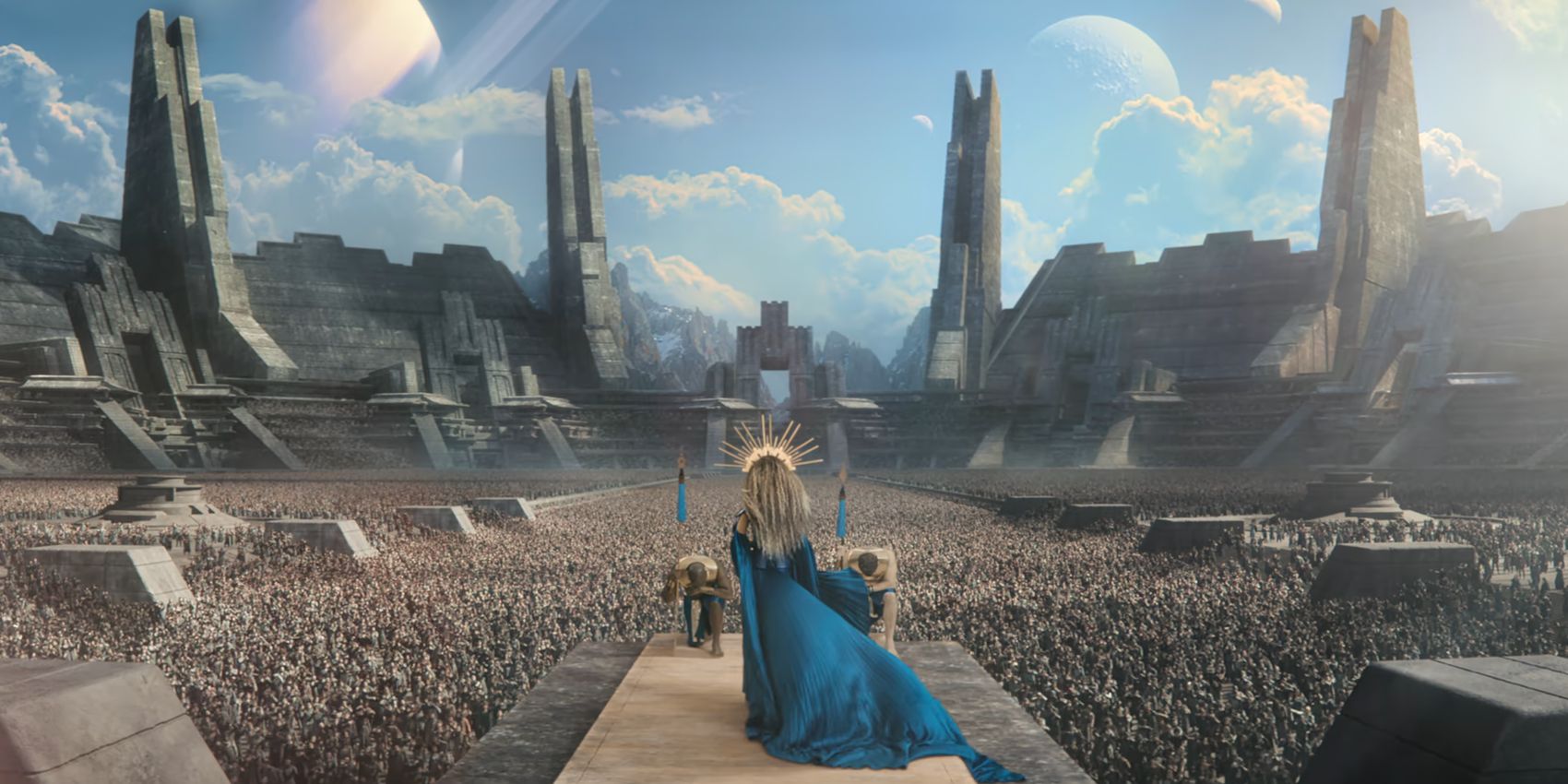
While Black Mirror has presented some peculiar endings in its history that leave viewers pondering their meanings, the conclusion of Bête Noire is significantly more straightforward. Creator Charlie Brooker has shared his thoughts on this ending. In an interview with Tudum by Netflix, Brooker expressed his appreciation for the narrative arc that seemingly sees Maria on the verge of losing everything, only to triumphantly rise from despair. He also noted that this conclusion carries a more playful tone in comparison to some of Black Mirror‘s darker narratives, stating, “It’s kind of a joke ending, but hopefully it’s slightly absurd.”
Related
This 9-Year-Old Black Mirror Episode Deserves a Sequel Just as Much as “USS Callister” & “Bandersnatch”
With Black Mirror about to release its first-ever sequel episodes in season 7, this classic story from the series deserves its own follow-up, too.
In Brooker’s initial vision, he conceptualized a darker ending, where Maria donned a fascist uniform, but ultimately opted for a less ominous aesthetic. He remarked, “It’s more Game of Thrones… A little bit Beyoncé meets Khaleesi.” Additionally, he drew parallels between Verity and Robert Daly from “USS Callister,” as both characters are tech savants who justify their malicious actions through their suffering. Brooker’s insights reveal that both Maria and Verity possess sinister qualities; while they may not inherently be evil, both have perpetrated grievous acts, leading to a playful yet morbid conclusion.
Unraveling the True Ending of Bête Noire
The Episode Title Highlights How Hate and Trauma Shaped Verity’s Existence
The true essence of Bête Noire‘s conclusion is intricately tied to the title itself. Translated, the term refers to a person or thing intensely disliked or shunned, encapsulating the central theme of Black Mirror season 7’s second episode. Throughout her school years, Verity experienced the feeling of being the pariah, and through her complex technical innovation, she sought to impose this reality onto Maria. Verity successfully turned Maria’s coworkers against her, further alienating her by convincing her boyfriend to call the police after believing she had lost her mind.
|
Black Mirror Season 7 Episodes Titles |
Run Time |
|---|---|
|
“Common People” |
57 mins |
|
“Bête Noire” |
50 mins |
|
“Hotel Reverie” |
1hr 17 mins |
|
“Plaything” |
46 mins |
|
“Eulogy” |
47 mins |
|
“USS Callister: Into Infinity” |
1hr 30 mins |
While it’s conceivable that Maria could have altered reality once again after the episode concluded, the events that transpired post-credits are left to the audience’s interpretation. In essence, Bête Noire serves as a commentary on themes of hatred and vengeance, as the callousness shown by Maria and her peers in school ignited Verity’s resentment over the years. While the narrative incorporates <em>Black Mirror</em>‘s signature blend of intricate technology and dark undertones, Bête Noire effectively conveys a poignant tale of revenge and underscores the lasting impact of trauma on individuals, establishing itself as a compelling addition to the anthology series.
Source: Tudum by Netflix