Science fiction movies lend themselves to visual splendor. With stories set in the distant future, galaxies far, far away, and all other manner of otherworldly settings, it’s not at all surprising that some of the most visually stunning films ever made happen to be science fiction. Even from the genre’s nascent period, it was already exploring spectacle, such as in Georges Méliès‘ A Trip to the Moon, and since then, sci-fi films have only gotten more visually impressive with advancing visual effects and camera technology.
Whether it’s cyberpunk dystopias, barren desert planets, or the vast expanse of space itself, the most visually stunning sci-fi films succeed in transporting audiences to worlds far beyond our own. From iconic masterpieces to all manner of cult classics, these movies cover a wide swath of the sci-fi genre, but they all share one thing in common: they are unbelievable to look at. These are the ten most visually stunning sci-fi movies ever made.
10
‘Metropolis’ (1927)
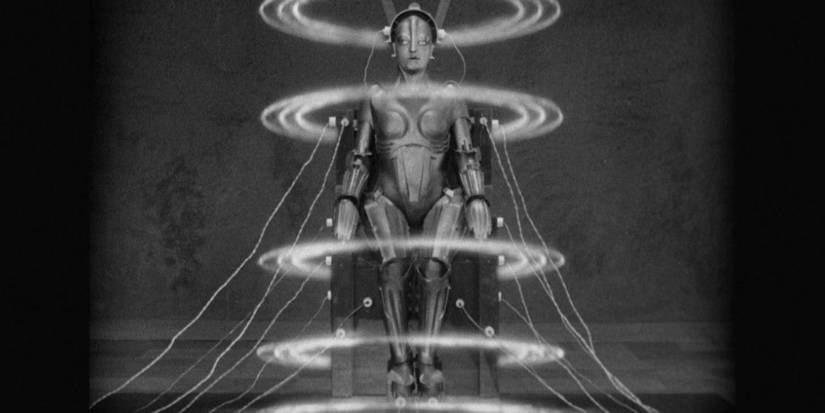
Image via Parufamet
Fritz Lang‘s epic science fiction Metropolis pulled influence from a variety of different visual arts, as well as Gothic architecture and expressionistic filmmaking, to create a sprawling future dystopia that would inspire just about every sci-fi cityscape on film. Set in a world where the population is deeply divided between the ultra-wealthy and the working class, the overwhelming size and structure of its titular city physically manifests that divide with towering skyscrapers inspired by Lang’s first time visiting New York City.
In addition to the impressive miniature effects used to create the futuristic skyline, the film also features one of the most iconic film robots of all time. Almost 100 years later, the visuals of Metropolis are still awe-inspiring, especially because it’s all being captured in-camera without the advantage of digital technology. For a film about the formidable power of technology, it’s the jaw-dropping visuals that sell the effect.
9
‘Akira’ (1988)
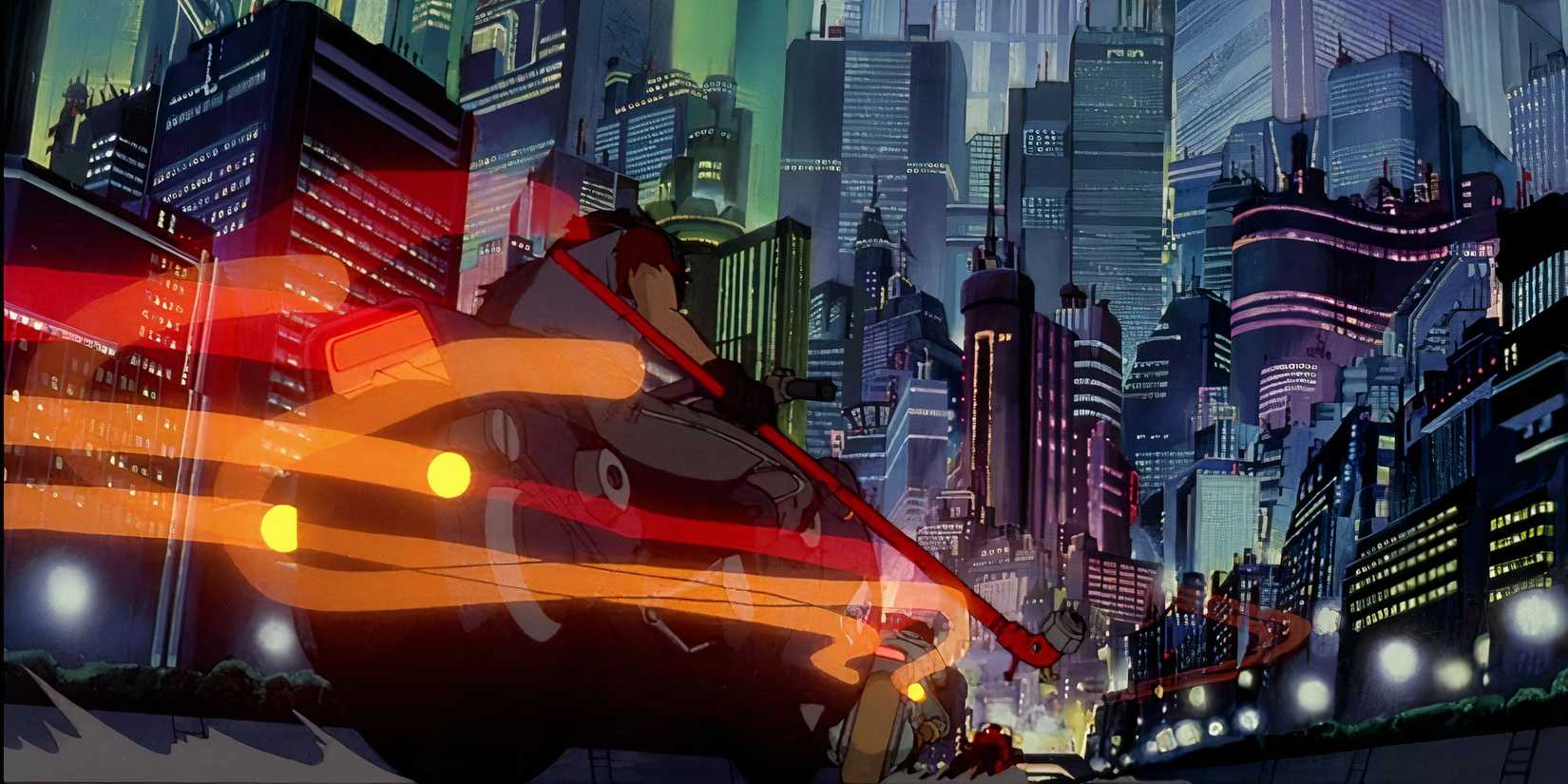
Metropolis would later inspire a manga of the same name that would also be adapted into a visually stunning anime that was written by Katsuhiro Otomo. While that animated feature is undeniably visually stunning, it’s ever so slightly eclipsed by Otomo’s masterpiece, <em>Akira</em>. Based on the writer-director’s own manga, it’s similarly set in a dystopic future city, this one soaked in neon and bright lights that were enhanced with computer-generated imagery.
Following the leader of a biker gang and his conflict with his childhood friend, who becomes an unstoppable psychic beast of body horror, it’s in the film’s action that it becomes an even more visceral viewing experience. It’s all thanks to the sequences being animated at twenty-four frames per second, resulting in incredibly fluid motion. Anime as a medium is host to so many visually arresting sci-fi efforts, including the surreal Paprika and action-packed Ghost in the Shell, and Akira is its most stunning achievement.
8
‘Tron: Legacy’ (2010)
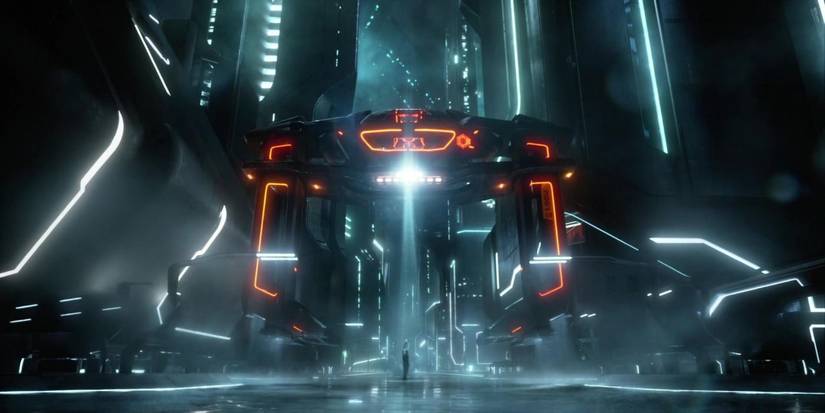
Animation, specifically computer-generated, opened up a universe of possibilities for filmmakers to visualize artificial worlds beyond the physical limitations of reality. While most modern blockbusters contain some level of digital extension, there are also those created almost wholly digitally, such as the jungles of Pandora in Avatar, the low-orbit space of Gravity, and the inside of the digital world itself in Tron: Legacy.
The original sci-fi cult classic Tron introduced audiences to the digital world of the Grid using both traditional hand animation techniques and groundbreaking CGI, but the belated sequel used decades of technological advancements to expand it into a gleaming digital frontier. Tron: Legacy pushed visual effects boundaries to create its virtual reality, and while the de-aging effects used on Jeff Bridges resulted in a villain straight out of the uncanny valley, the Grid itself still never fails to stun.
7
‘Mad Max: Fury Road’ (2015)
The explosive chase sequences that make incredible use of ramping frame rates and awe-inspiring destruction during sandstorm set pieces make it feel like you are huffing pure diesel fumes. It’s a world where every grain of sand feels tangible yet is still starkly stylized so that its outlandish citizens still feel right at home.
6
‘The Fountain’ (2006)
Image via Warner Bros. Pictures
Darren Aronofsky’s thousand-year-spanning epic of love and death manages to tell three stories across vastly different timelines with striking visual styles. The segment set in far-off space captures grandeur through practical effects like macrophotography and minimal visual effects. That it created stunning visuals on a relatively meager budget is a testament to Aronofsky’s efforts with cinematographer Matthew Libatique.
Critics were muted about its narrative structure but could not deny its pure majesty. Its visuals have granted it a long-lasting cult following and are perfectly married to themes about life and death. The expert use of visuals has let it age perfectly compared to other acclaimed visual effects extravaganzas released that year.
5
‘Interstellar’ (2014)
If there’s one filmmaker who champions practical effects whenever possible to enhance digital work, it’s Christopher Nolan. In his first collaboration with cinematographer Hoyte Van Hoytema, Nolan invested in more IMAX cameras than he had used previously,bringing large-scale scope to his space adventure with location work in Iceland.
The film employed miniatures for spaceships and pre-rendered digital effects projected on set to avoid overusing green screen technology. The cumulative effect is one of the most seamless space films since Stanley Kubrick’s2001: A Space Odyssey. It representedthe most significant evolution of Nolan as a visual filmmaker.
4
‘Dune: Part Two’ (2024)
Similar to Nolan,Denis Villeneuve has proven capable of combining visual spectacle with blockbuster entertainment value. Nowhere is this more apparent than in his adaptation of Frank Herbert’sDune. Returning to Arrakis deserts to finish Paul Atreides’ journey as he overcomes his family’s destruction to rise as Fremen’s savior and take vengeance on Harkonnens,this sequel ups action scope and visuals from its predecessor.
whether it’s Timothée Chalamet’s Paul riding on gigantic sandworm or Austin Butler’s Feyd Rautha proving menace in stark monochromatic colosseum,Dune Part Two is one spectacle after another. An epic space opera of immense size and ambition worthy of accolades received.It has few visual equals among sci-fi blockbusters.
3
‘2001: A Space Odyssey’ (1968)
<source media ='(max-width :
480px)'data –
srcset =' https :
// static0 .
collider images .
com /
wp –
content /
uploads /
2023 /
03 /
discovery-one .
jpg ?
q =
49 &
fit =
crop &
w =
500 &
dpr =
=
=
=
=
=
=
=
=
=
=
=
=
=
=
=
=
=
=
=
=
=
=
=